News

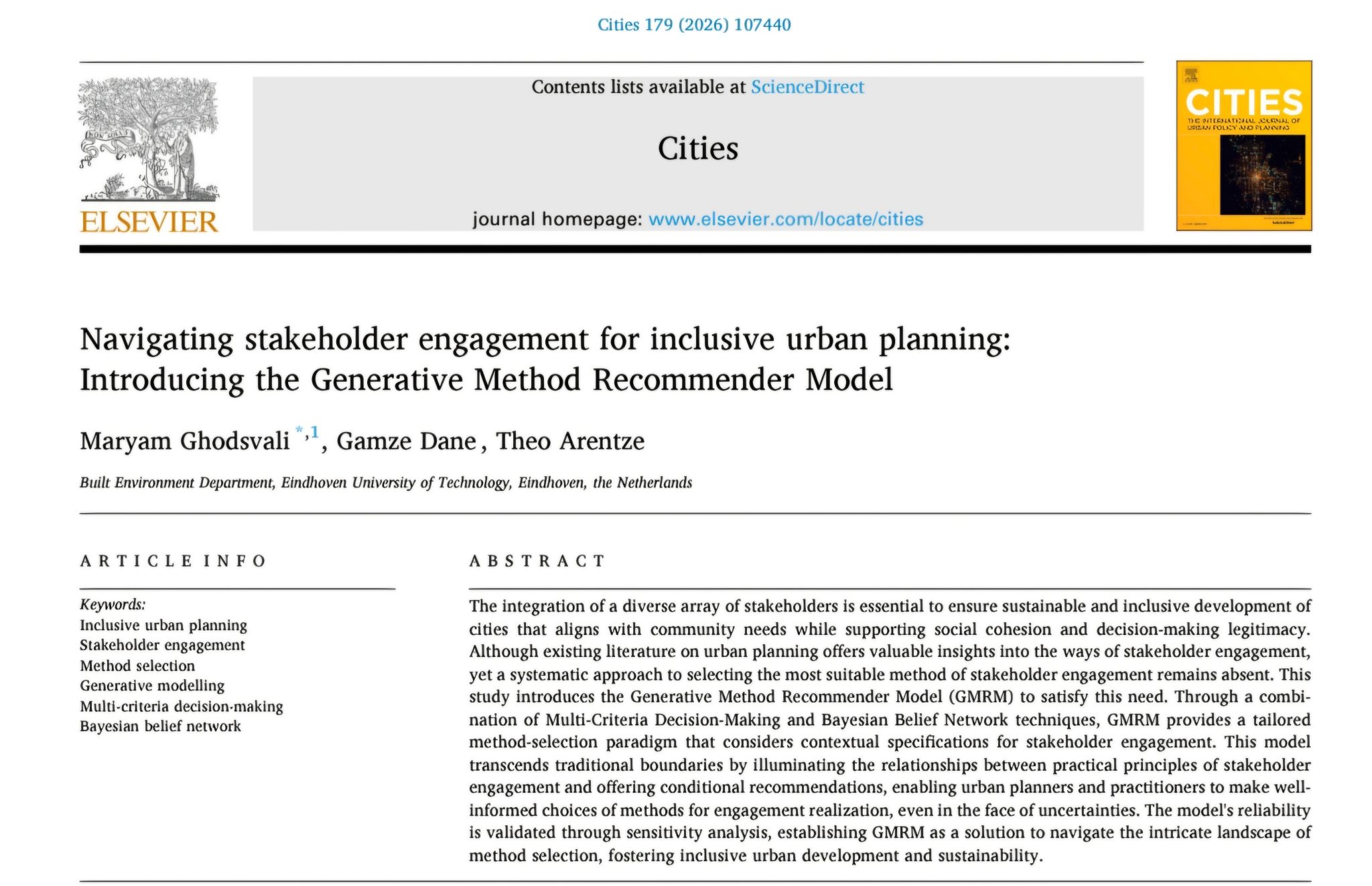

New Article on Navigating Stakeholder Engagement for Inclusive Urban Planning
Inclusive urban planning depends on selecting the right stakeholder engagement method for each planning context. Yet with the wide range of available engagement methods, making that choice remains a challenge for urban planners. In our new article published in Cities, led by Maryam Ghodsvali and co-authored by Theo Arentze and myself, we introduce the Generative Method Recommender Model (GMRM), a decision-support framework that combines Multi-Criteria Decision-Making (DEMATEL) and Bayesian Belief Networks (BBN) to recommend stakeholder engagement methods tailored to the context of an urban planning project. By considering factors such as the urban challenge, planning stage, engagement purpose, stakeholder groups, and spatial scale, GMRM supports planners in selecting context-sensitive stakeholder engagement methods, even when information is incomplete.
You can read the open access paper here.
This research was funded by the Urban Development Initiative (UDI) and builds on the discussions within the UDI Urban Planning Reimagined work group where we explored how digital tools, algorithmic decision support, and data-driven methods can contribute to more inclusive and sustainable urban planning.
Update: 06/08/2026
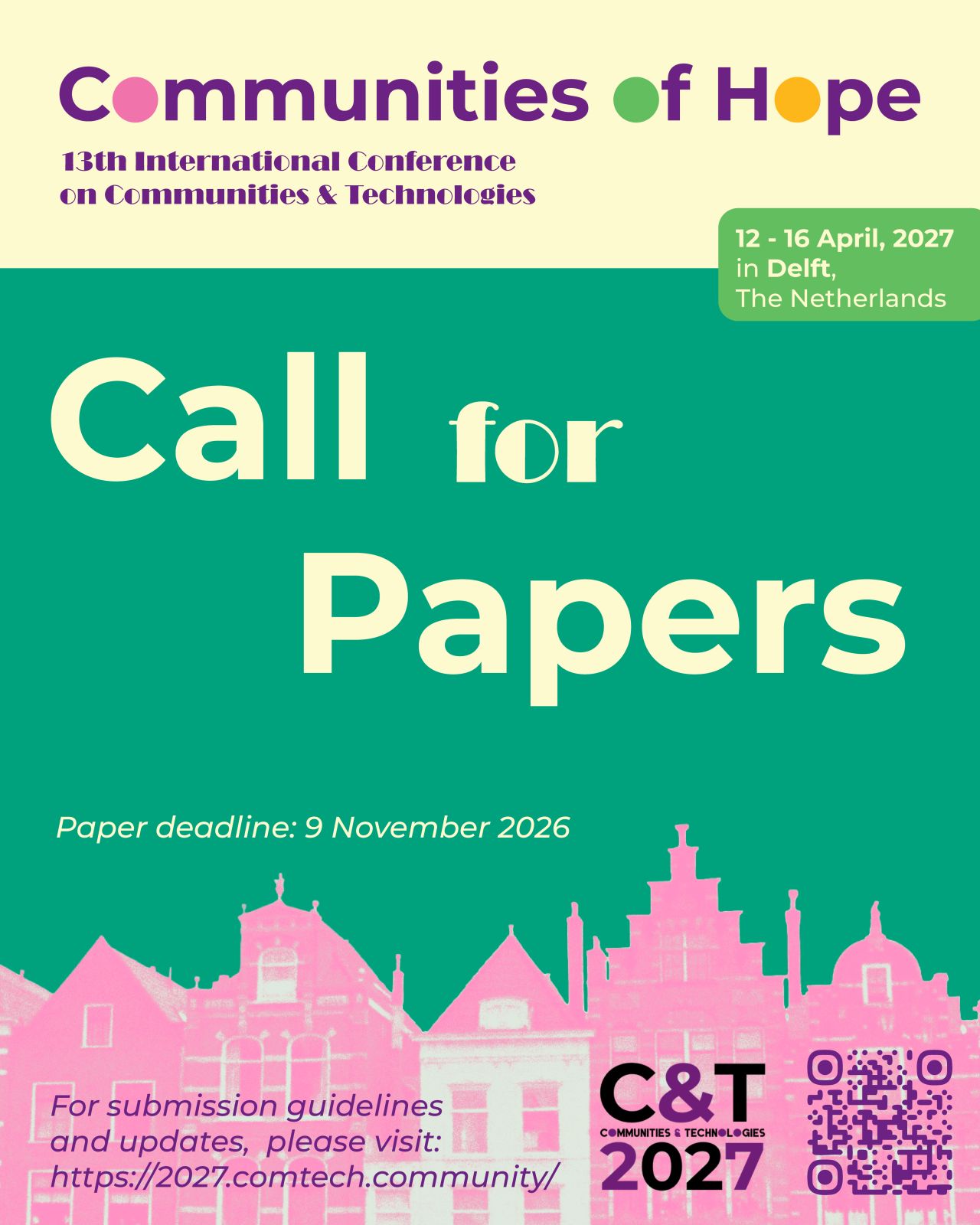
13th International Conference on Communities & Technologies
The 13th International Conference on Communities & Technologies (C&T 2027) will be held in Delft, the Netherlands between 12-16 April, 2027. The Papers Track, which I am chairing together with Frederick van Amstel, Rico Herzog, and Gabriela Marcu, is now open for submissions!
Under this year’s theme, “Communities of Hope”, we invite contributions that explore how hope can be enacted through communities and technologies.
We welcome critical, situated, and community-led perspectives on topics such as community resilience, digital justice, participatory infrastructures, labour, AI, climate challenges, counter-mapping, and alternative technological futures.
Submission deadline: 9 November 2026 AoE
Notification of acceptance: 15 January 2027
Camera-ready deadline: 26 February 2027
Conference: 12–16 April 2027
Learn more and submit: https://2027.comtech.community/papers/
Update: 04/08/2026
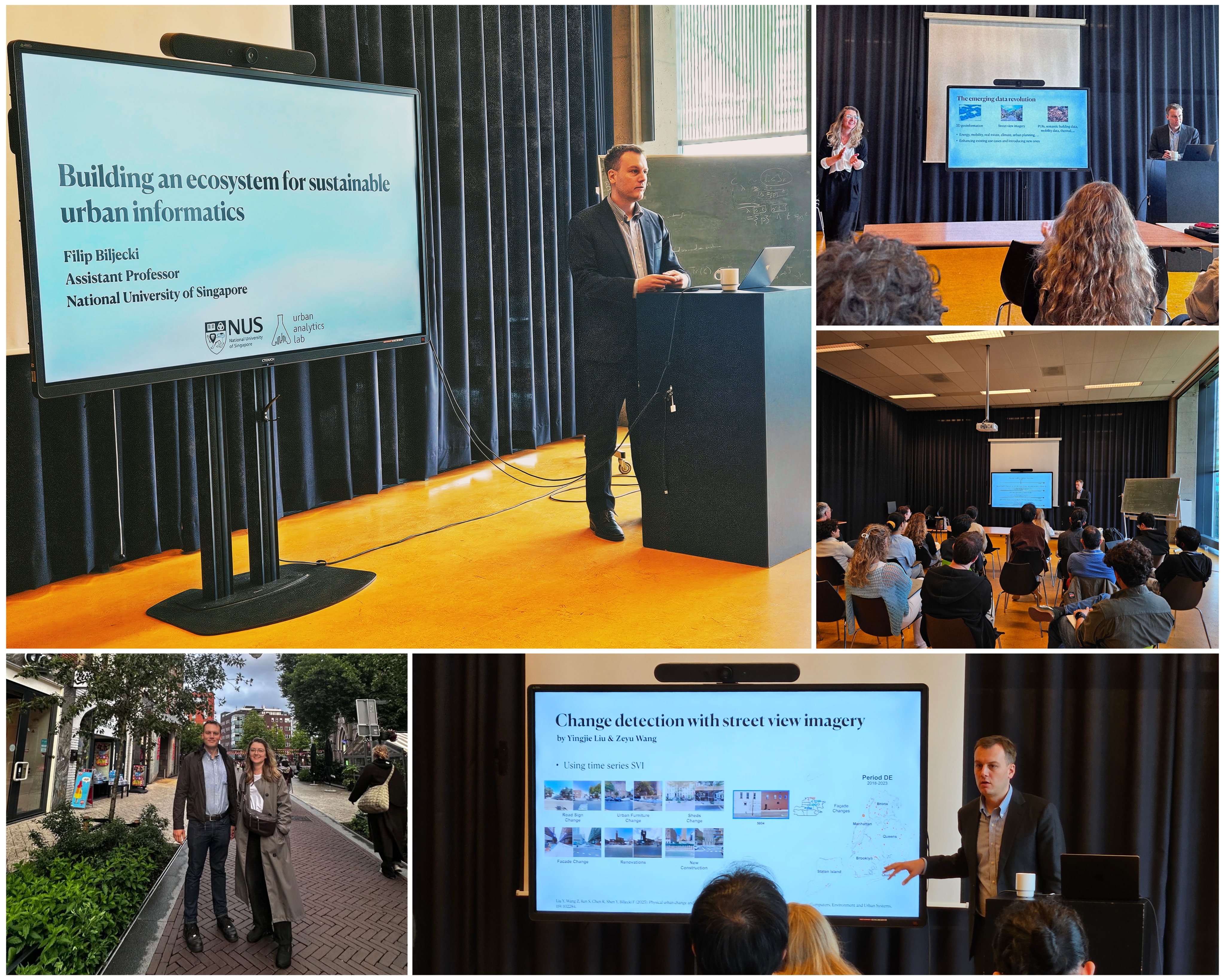
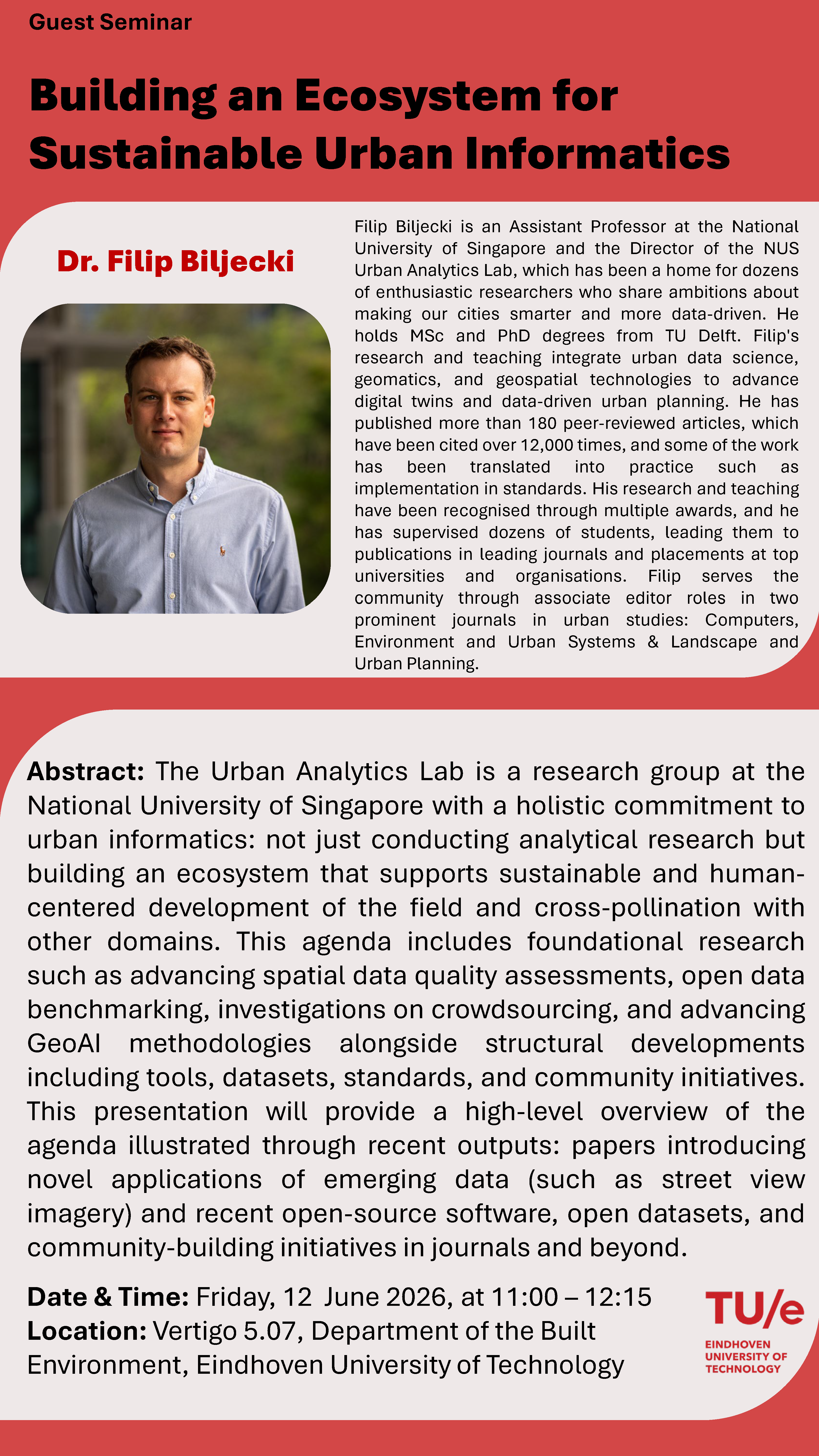
Guest Seminar by Dr. Filip Biljecki
On 12.06.2026, we had the pleasure of hosting Dr. Filip Biljecki, Professor in the Department of Architecture and the Director of Urban Analytics Lab at the National University of Singapore. During his visit, Filip delivered a guest seminar titled “Building an Ecosystem for Sustainable Urban Informatics”. In his talk, Filip shared an inspiring overview of 12 research projects from the NUS Urban Analytics Lab, demonstrating how emerging data streams can support human-centric urban research. Beyond the exciting applications, he also emphasized the need for advancing urban informatics as an ecosystem through standards, quality assessment, open datasets, and community-building initiatives. It was great to see such interest in the seminar, with colleagues joining us from TU/e as well as Wageningen and Ghent!
Many thanks to Filip for the inspiring talk and for sharing his vision. We look forward to our continued collaboration!
Update: 16/06/2026
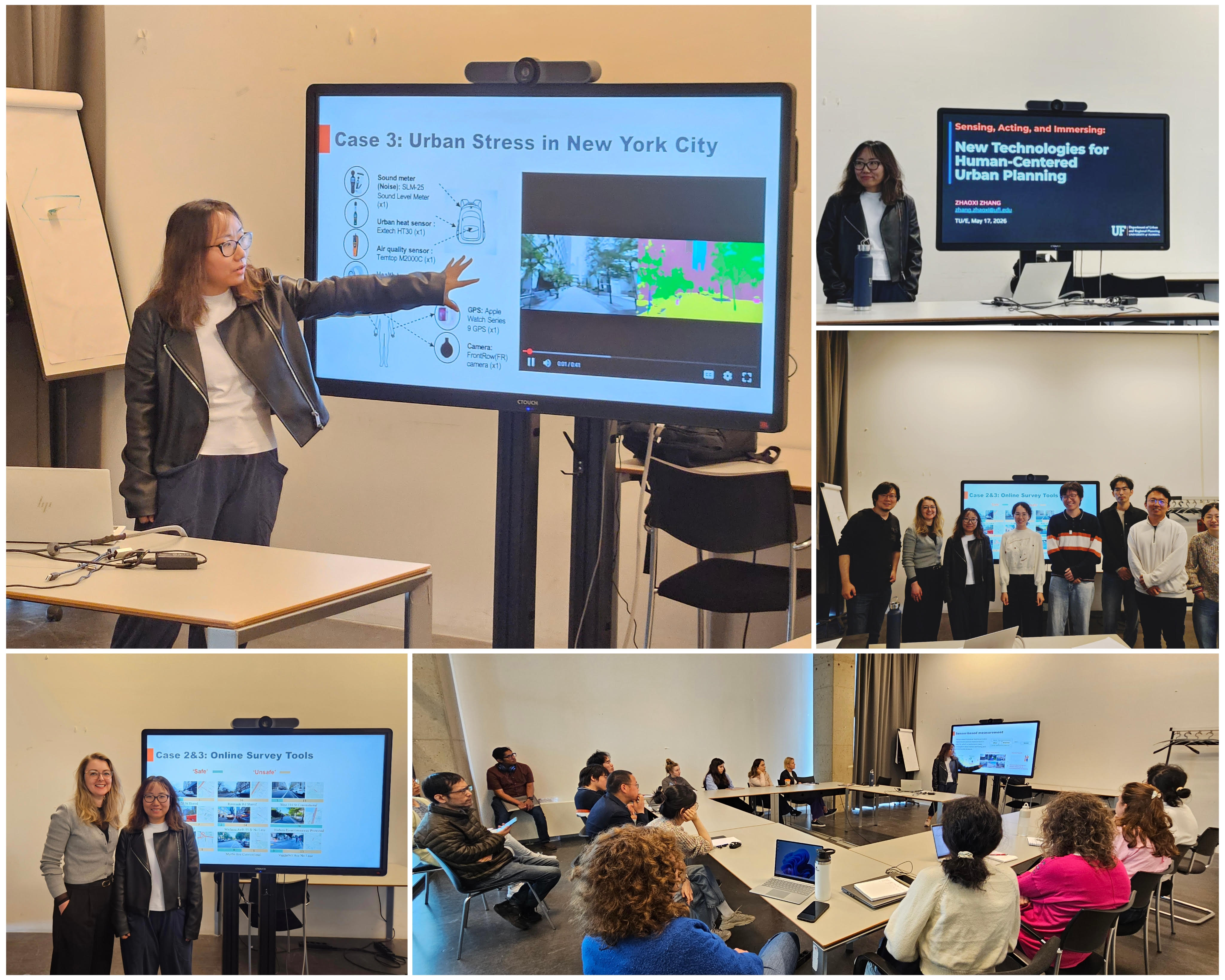
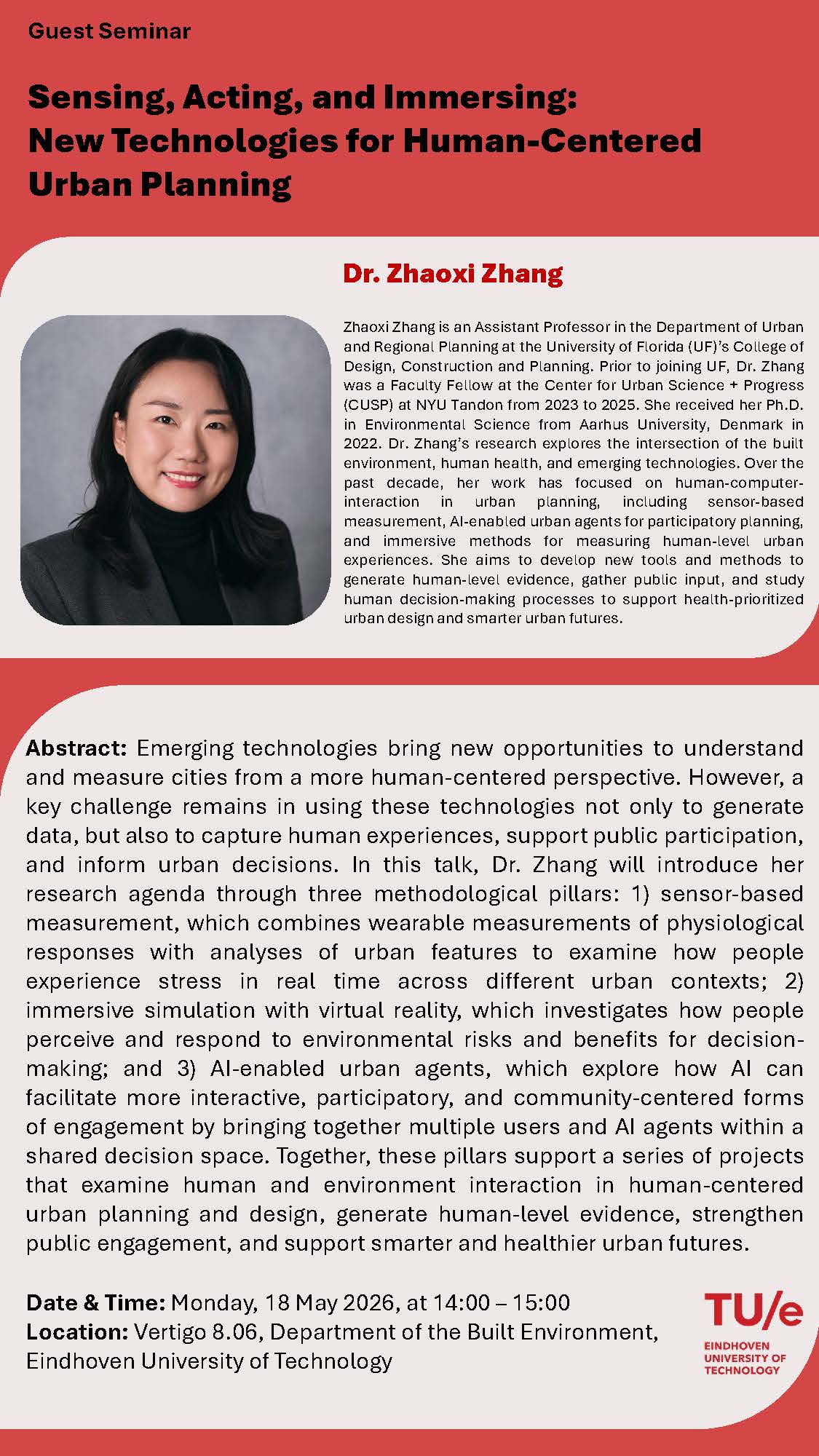
Guest Seminar by Dr. Zhaoxi Zhang
On 18.05.2026, we had the pleasure of hosting Dr. Zhaoxi Zhang, Assistant Professor in the Department of Urban and Regional Planning at the University of Florida. During her visit, Zhaoxi delivered a guest seminar titled “Sensing, Acting and Immersing: New Technologies for Human-Centered Urban Planning”. In her talk, she showcased many inspiring projects that demonstrate how emerging technologies such as sensors, Virtual Reality, and AI can support more human-centered urban planning and decision-making.
We thank her for the engaging talk and insightful discussions around technology, human experiences, participation, and urban futures. We look forward to continued collaboration!
Update: 22/05/2026
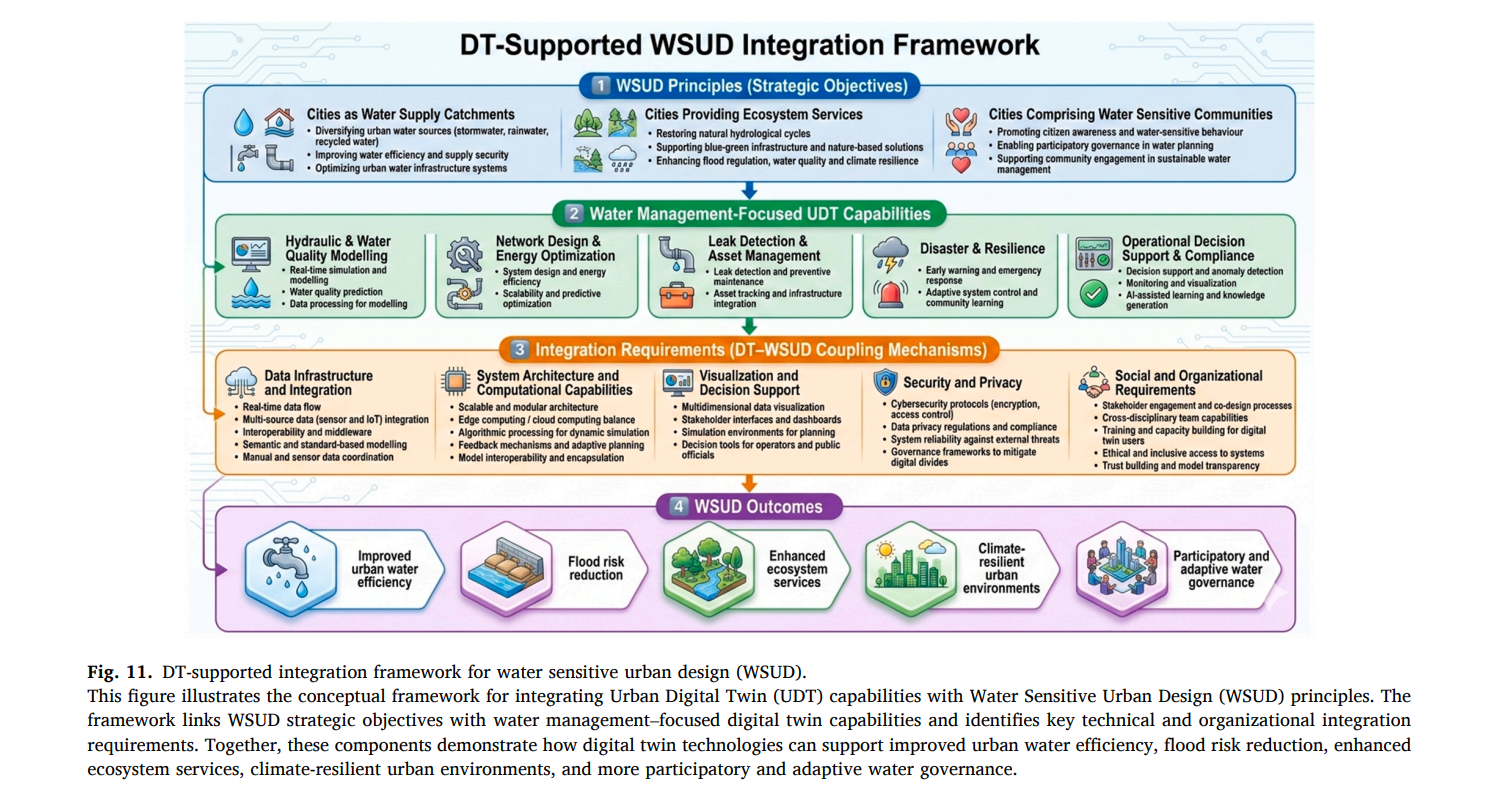
New Article on Urban Digital Twins and Water-Sensitive Urban Design: A Systematic Literature Review
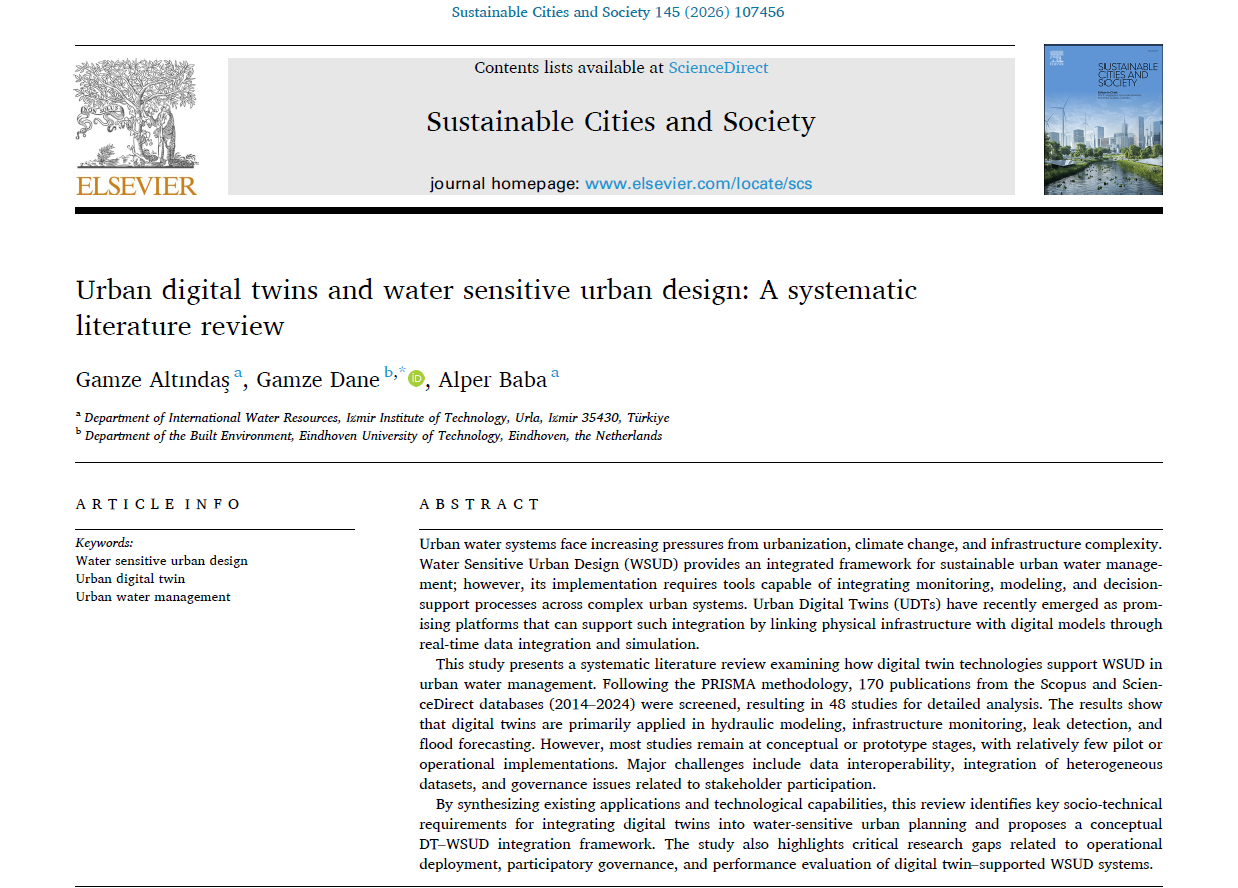
Cities are under increasing pressure from climate change, urbanisation, and ageing water infrastructure. At the same time, urban digital twins are increasingly presented as tools for more adaptive and data-driven urban management. In this new systematic literature review paper, published at Sustainable Cities and Society, we investigated how digital twin (DT) technology can support water-sensitive urban design (WSUD) principles. We found that most existing applications focus on modelling, monitoring, and flood forecasting, while many remain at the conceptual or prototype stage. Key challenges include data interoperability, long-term model reliability, and governance fragmentation.
Based on these findings, we proposed a conceptual DT–WSUD integration framework and identified key socio-technical requirements necessary for more resilient, adaptive, and water-sensitive cities. The review also points toward possible ways forward, including interoperable data infrastructures (such as urban data spaces), more validation of DT practices, and more socio-technical approaches that connect technology, governance, and stakeholder participation.
You can find this open-access article at Sustainable Cities and Society here: https://doi.org/10.1016/j.scs.2026.107456
Update: 12/05/2026
Interview on Human-centric Digital Urbanism in Beijing Planning Review
An interview with me, conducted some time ago by my former PhD student, Senqi Yang, has been published in the Beijing Planning Review Journal.
The interview focuses on the concept of human-centric digital urbanism, emphasizing the integration of citizen experiences, behaviors, and perceptions into digital planning tools. It discusses how technologies such as immersive virtual reality, artificial intelligence, and urban digital twins can support more inclusive and participatory urban decision-making processes.
A central theme of the conversation is the shift from techno-centric approaches toward models that combine data-driven insights with lived experiences. The interview highlights how participatory co-design methods and digital tools can enable citizens to actively shape planning outcomes, rather than merely provide feedback.
The discussion also reflects on the current gap between academic research and practical implementation, particularly in the development of digital tools, and compares European and Chinese approaches to data use, governance, and citizen involvement.
The official publication can be found here (but not accessible outside China). A PDF is provided here on the left panel that includes both the Chinese and English versions.
Update: 04/04/2026

New GitLab Repository for Digital Urban Development Projects
I have recently launched a GitLab repository to consolidate and share work related to Digital Urban Development:
https://gitlab.tue.nl/digital-urban-development-dude
This repository serves as a growing archive of code, data, and educational materials developed in the context of my research and teaching. It currently includes contributions from recently graduated MSc students, mostly focusing on virtual reality (VR) environments and parametric models created as part of their graduation projects.
In addition, I have uploaded materials from previous educational activities, including a series of video tutorials developed to support students in working with digital tools and simulation software.
The idea is simply to share knowledge by keeping this work in one place and making it easier to access and reuse for both students and others interested in these topics.
The repository will continue to expand with new contributions over time.
Update: 04/04/2026

Towards Inclusive Digital Participation Tools: an Interview
I had the opportunity to share insights from our EQUAL (Enhancing Equity for Active Living through Digital Tools) project in an interview featured on the Institute 4 Preventive Health website. The EQUAL project, led by me, explored how digital participation tools can give underrepresented groups a meaningful voice in shaping their living environments.
EQUAL explores the limitations of traditional citizen engagement processes and investigates how digital participation tools, including AI, eXtended reality, and other emerging technologies, can lower barriers, boost engagement, and enable meaningful involvement for underrepresented groups in decision-making processes.
The interview highlights:
• Why top‑down planning often misses the needs of vulnerable groups
• How digital tools can make participation more accessible, safe, and engaging
• Why real inclusion requires building a long‑term “culture of participation”
• The framework developed by the EQUAL team to guide equitable digital participation design
Read the full interview here and learn more about the EQUAL project here.
Update: 05/02/2026
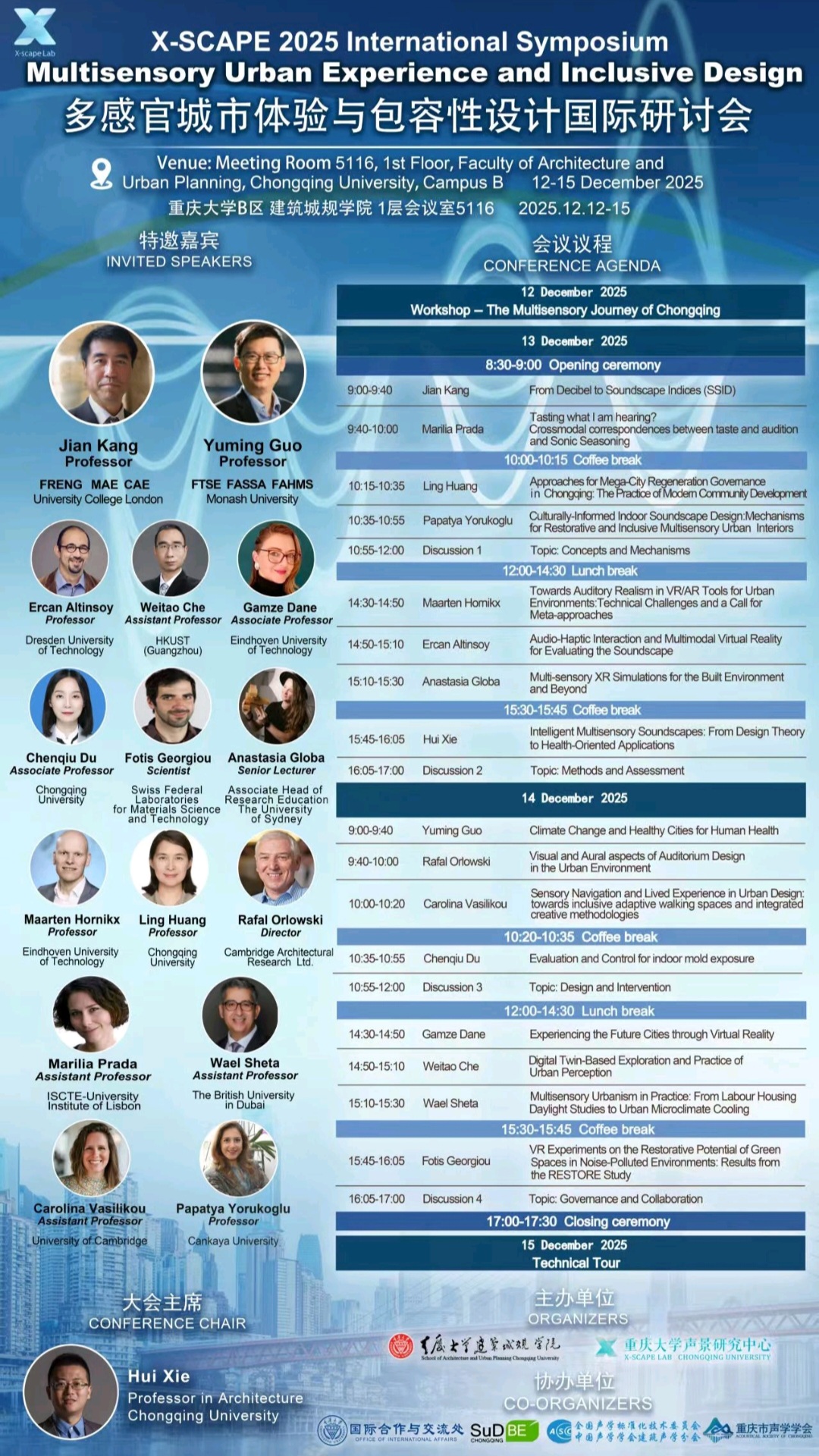
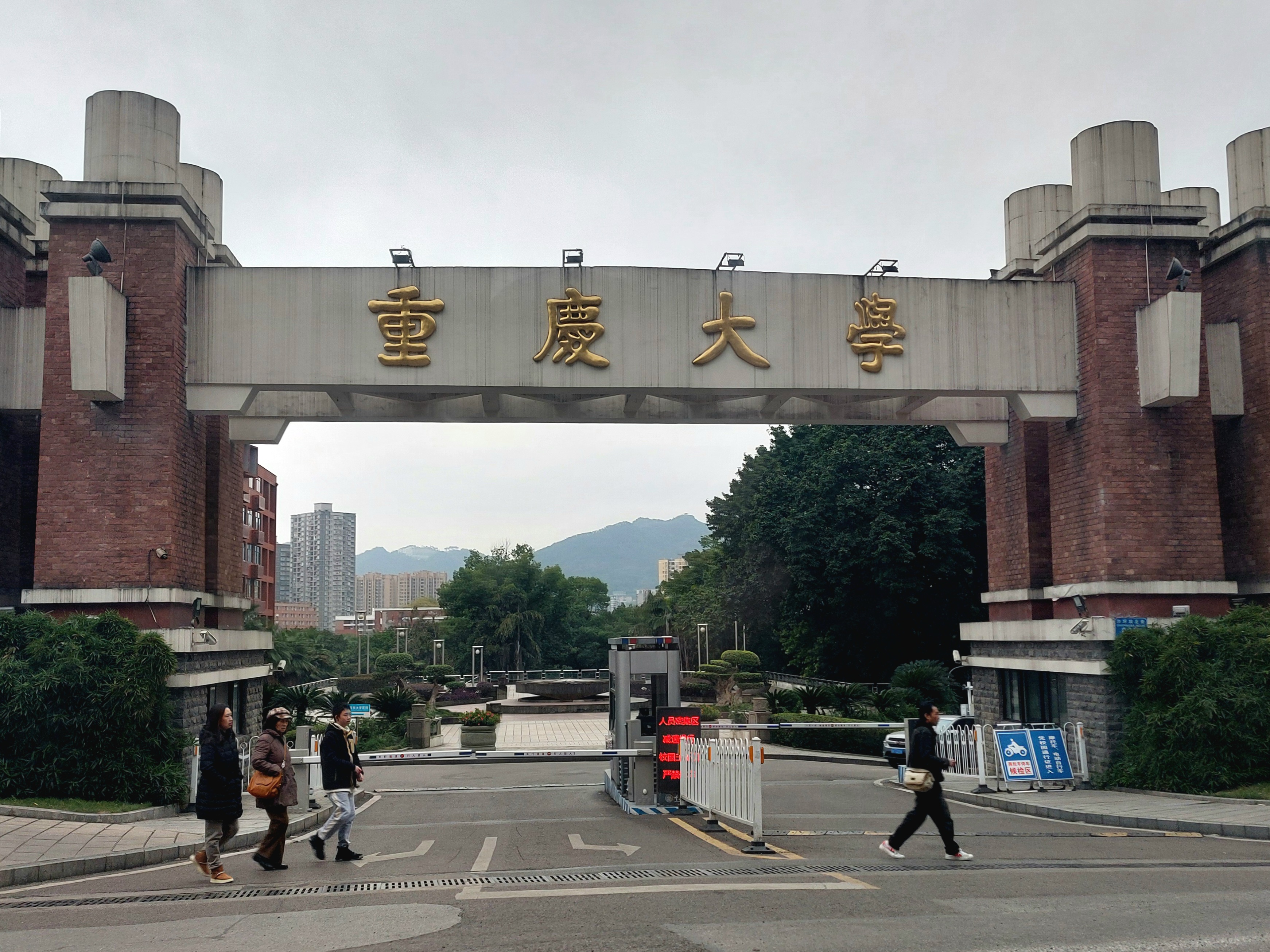
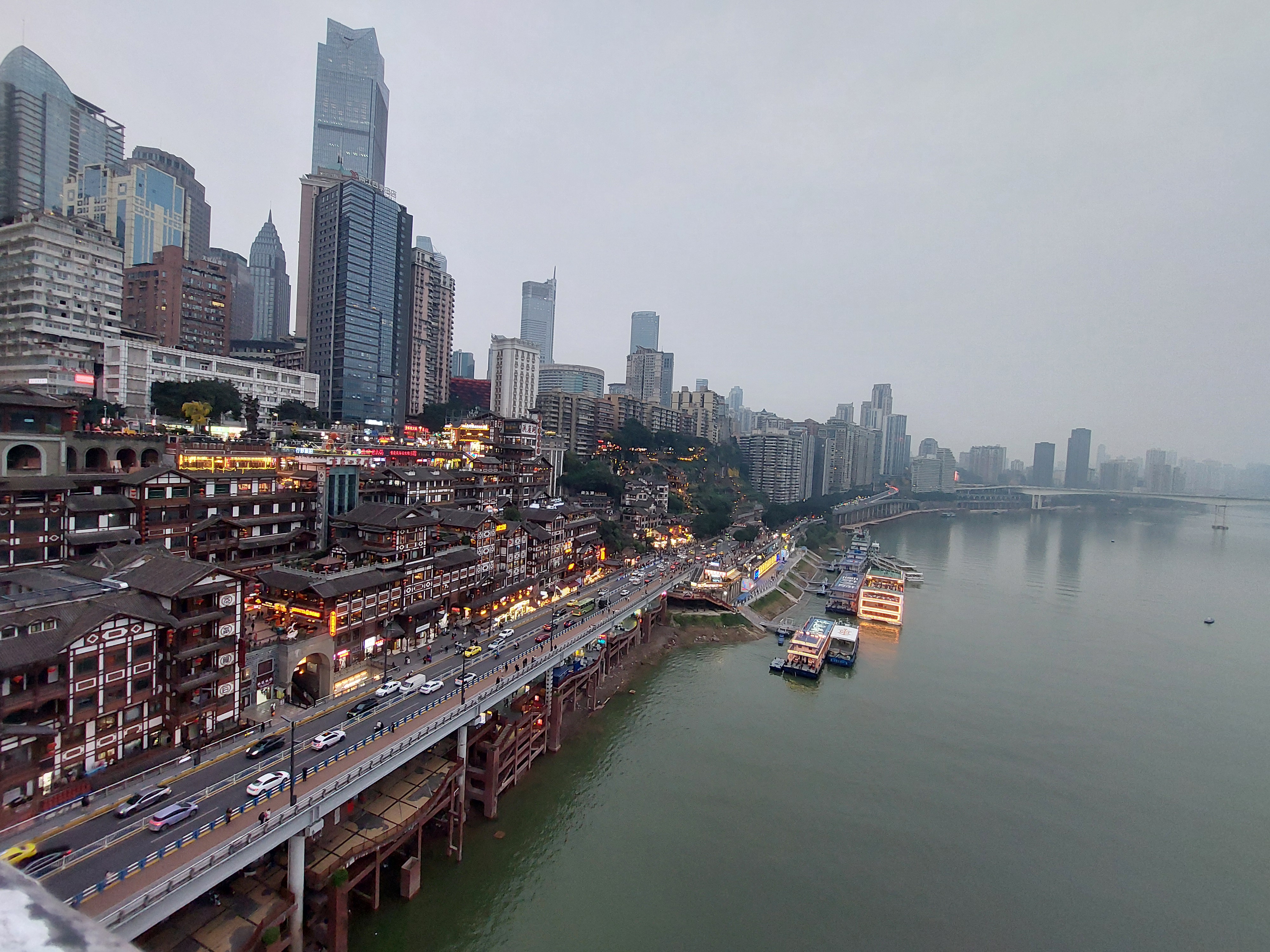

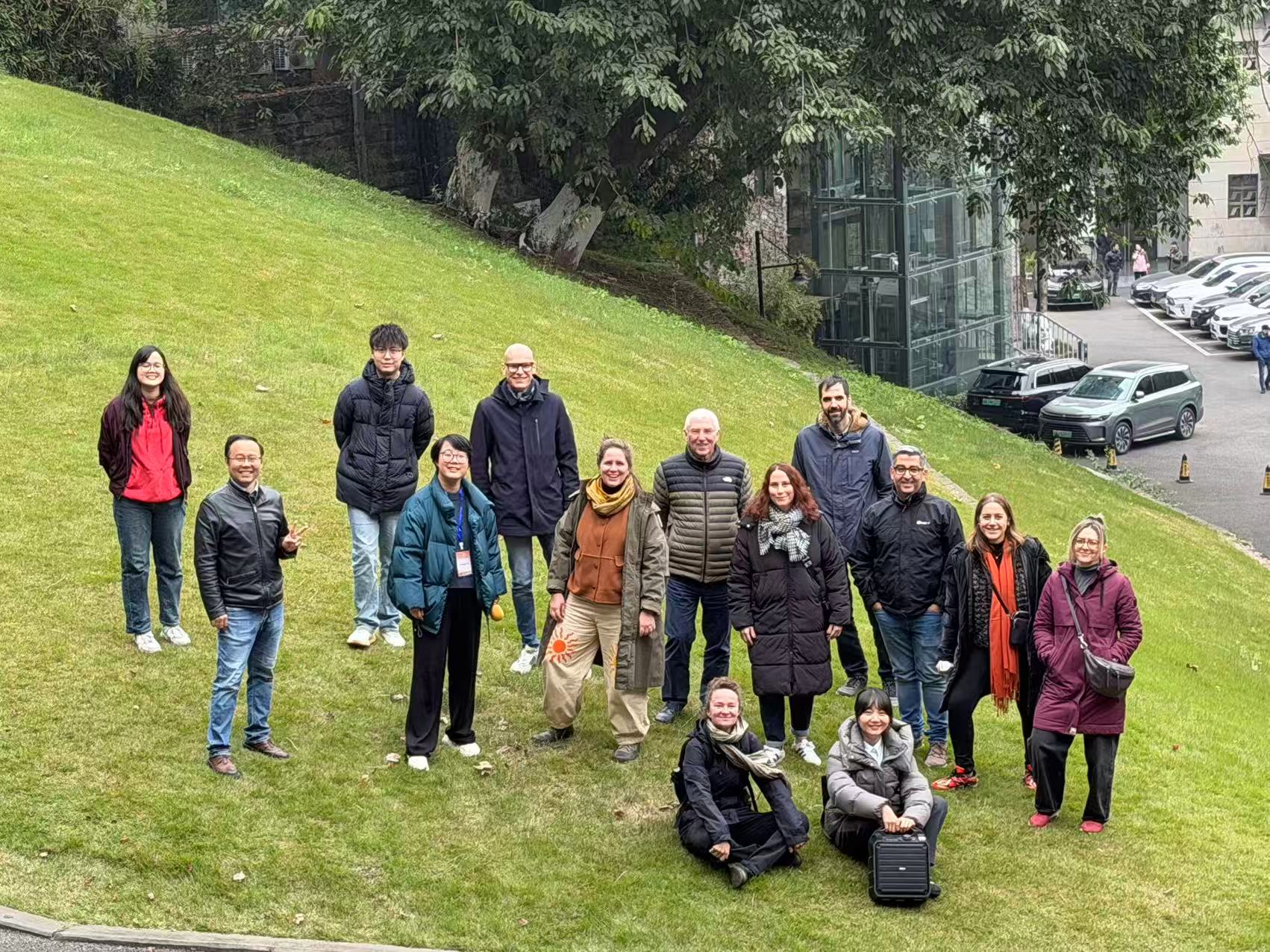
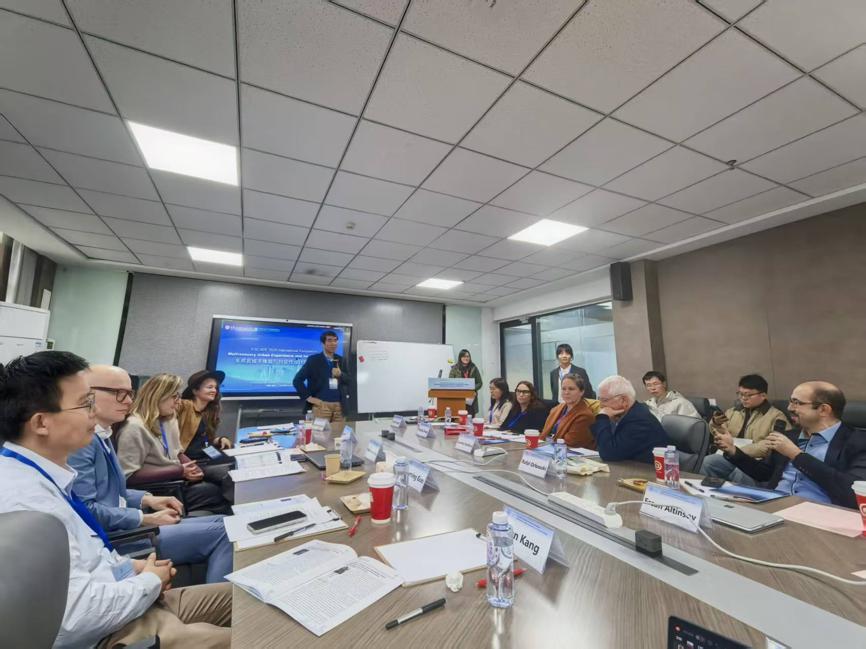
Invited to X-Scape 2025 International Symposium, hosted by Chongqing University, China
From December 12 to 15, I was invited to the X-SCAPE 2025 International Symposium on Multisensory Urban Experience and Inclusive Design, hosted by the X-SCAPE Lab (led by Hui Xie) at Chongqing University, China. The symposium brought together around 30 international and local participants working on the use of multisensory evidence to support more inclusive, healthy, and resilient urban environments.
The programme combined workshops, academic presentations, thematic discussions, and technical visits. During the workshop session, I presented my work on how virtual reality can support the experience of future cities by foregrounding human perception and participatory approaches. Discussions throughout the event focused on how sound, touch, smell, and perception shape urban life, and how these dimensions can be more systematically integrated into planning and design practices. The event was also featured in China Daily (see here).
It was also a pleasure to meet our alumni, Dr. Senqi Yang and Dr. Chang Liu, who are currently members of the X-SCAPE Lab team.
Update: 23/12/2025
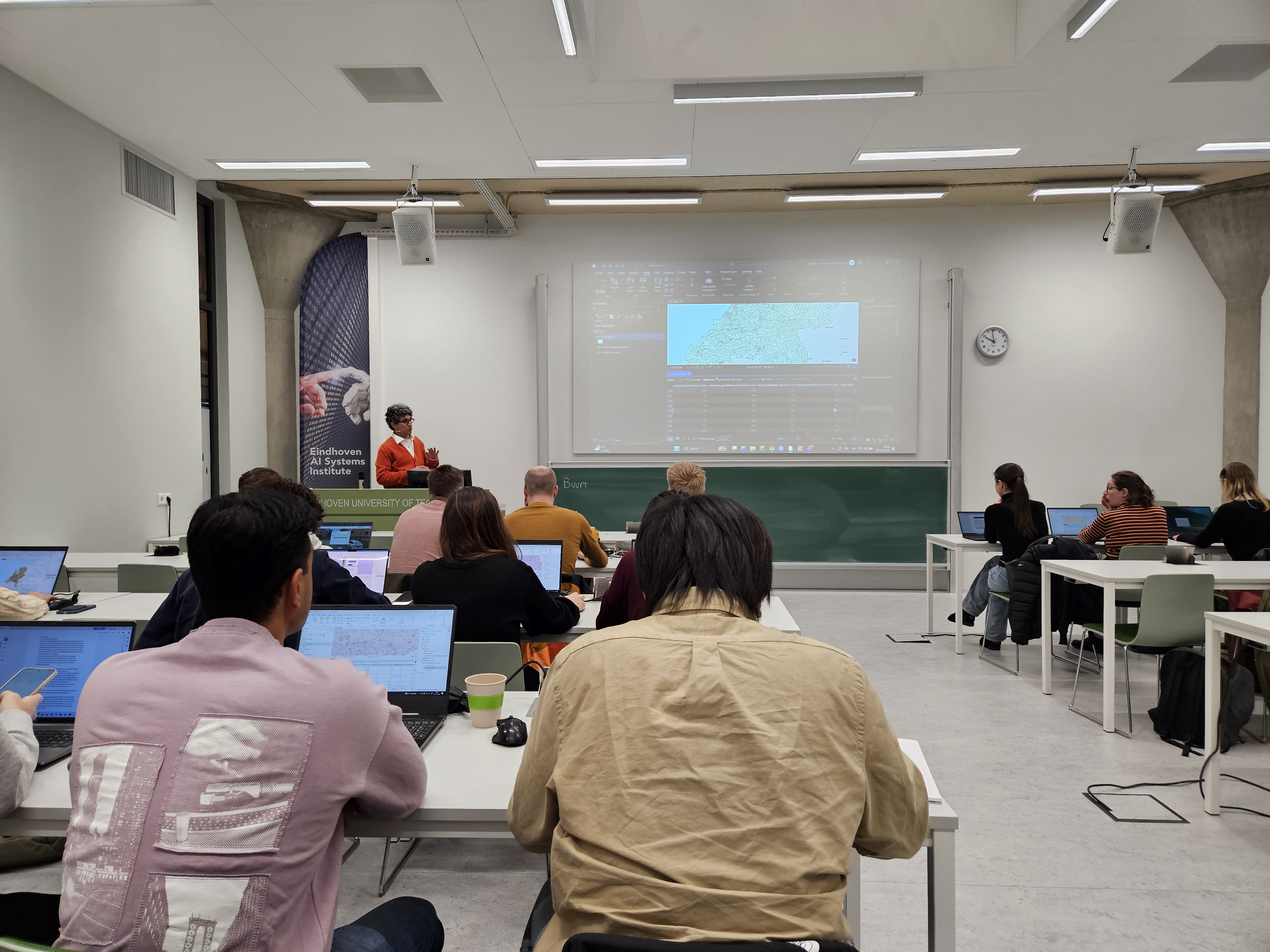
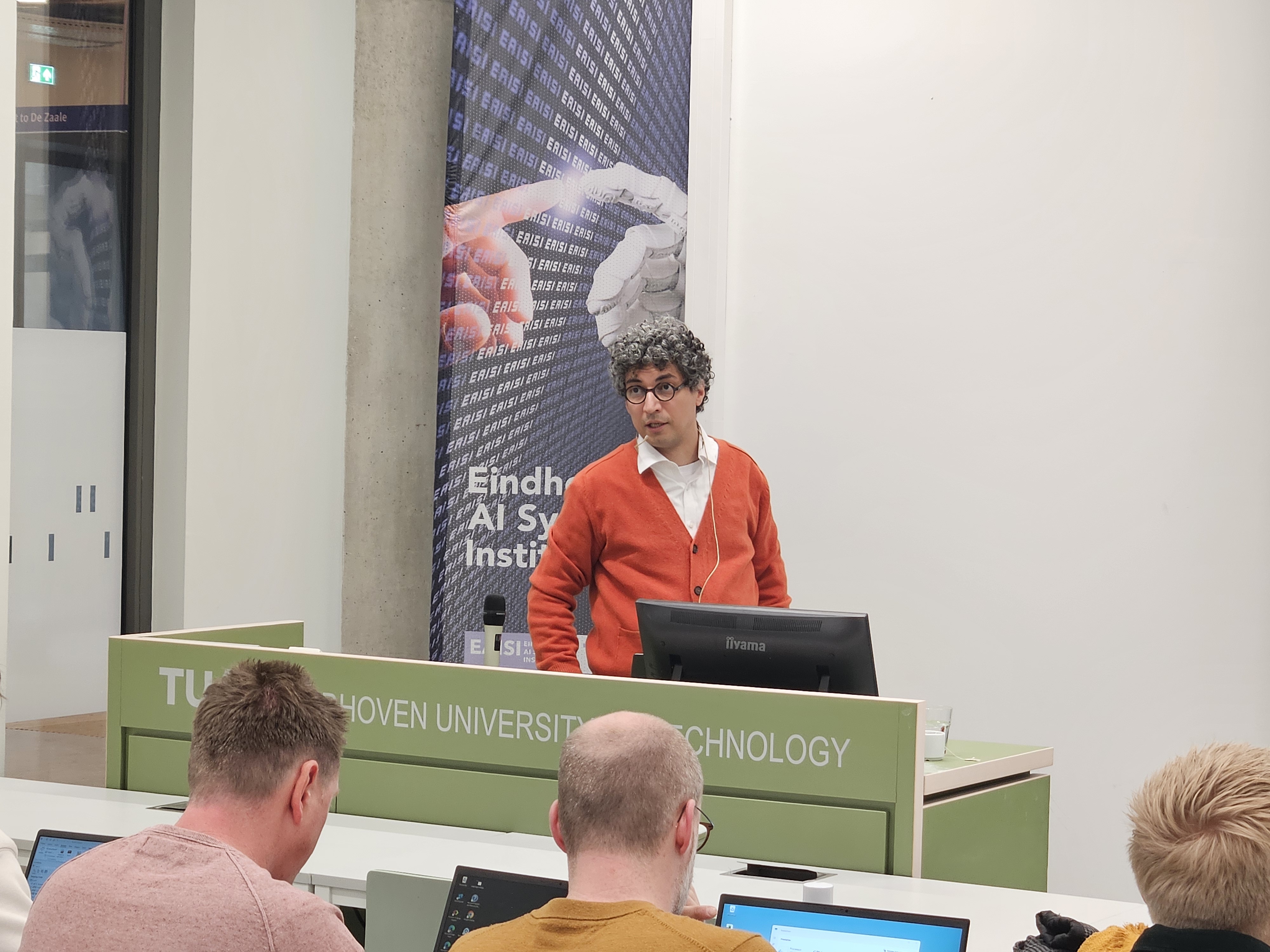

Hosted a Workshop by Dr. Bardia Mashhoodi at TU/e
On 27 November, I had the pleasure of hosting Assoc. Prof. Dr. Bardia Mashhoodi from Greenwich University for a one-day workshop at TU/e on “Introductory Workshop on Machine Learning for Spatial Analysis in ArcGIS Pro”. The event was supported and took place as part of EAISI (Eindhoven Artificial Intelligence Systems Institute).
This one-day workshop introduced participants to ArcGIS Pro and its essential tools for spatial visualisation and analysis. The training focused on methods that are both simple to learn and broadly applicable in research and professional work. The participants were introduced to superimposing and creating bivariate maps, performing multivariate clustering, constructing composited indices, and exploring local bivariate relationships between variables.
A big thank you to Bardia and EAISI for this workshop!
Update: 22/12/2025
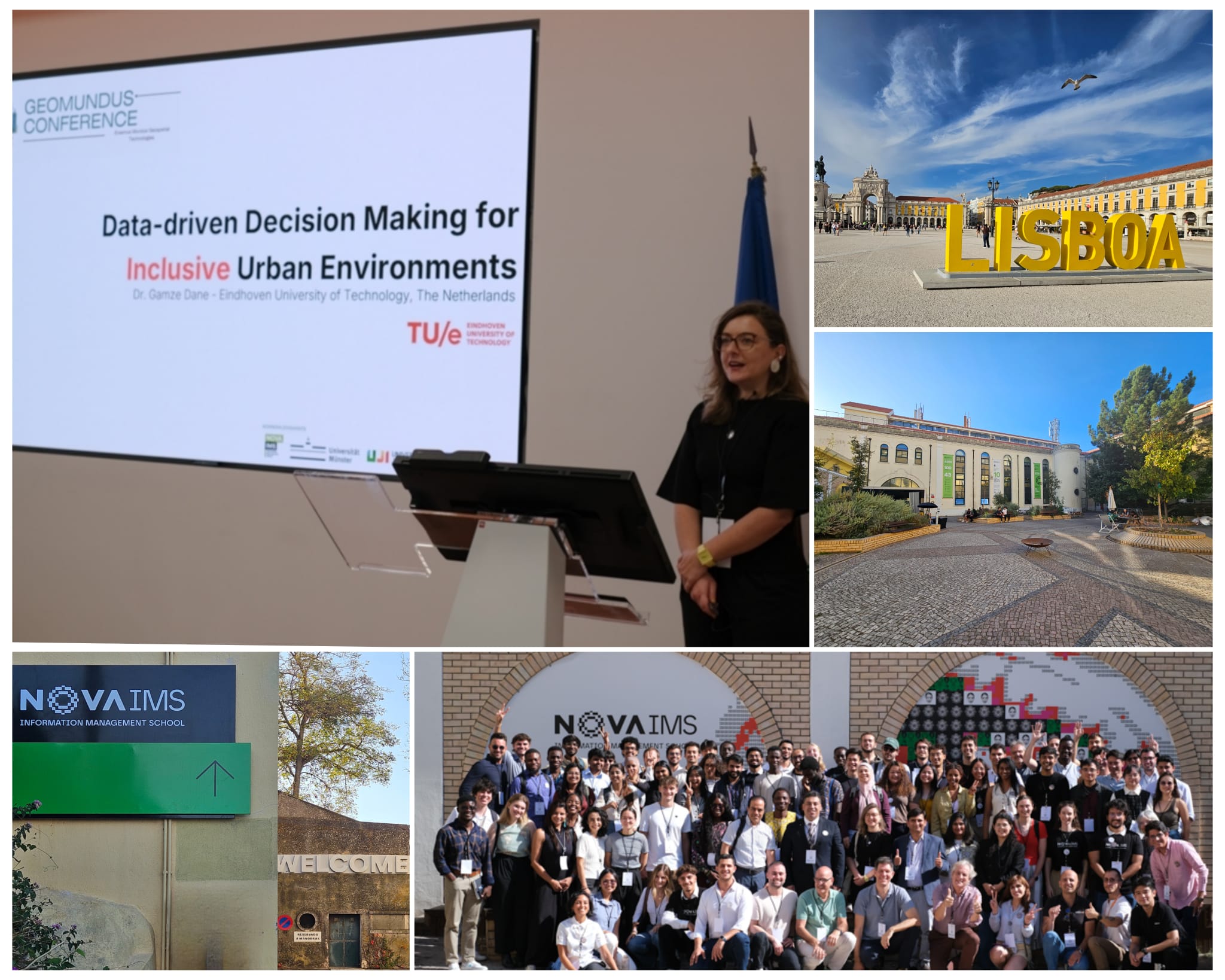
Keynote at 17th GeoMundus Conference!
On 17 October, I had the pleasure of delivering the opening keynote at the 17th edition of the GeoMundus conference, themed “Geospatial Technologies for Smart Cities”. The event took place at NOVA IMS, University of Lisbon, in Portugal.
In my keynote, I shared my team’s approach to creating inclusive and human-centered urban environments through digital technologies and spatial data, supported by behavioral methods and participatory approaches. Drawing on examples from both past and ongoing research, I emphasized the importance of designing cities for everybody and that digital technologies and data should serve this goal, not define it.
A sincere thank you to the wonderful GeoMundus Conference organizers for creating such a positive and inspiring experience.
Update: 22/10/2025

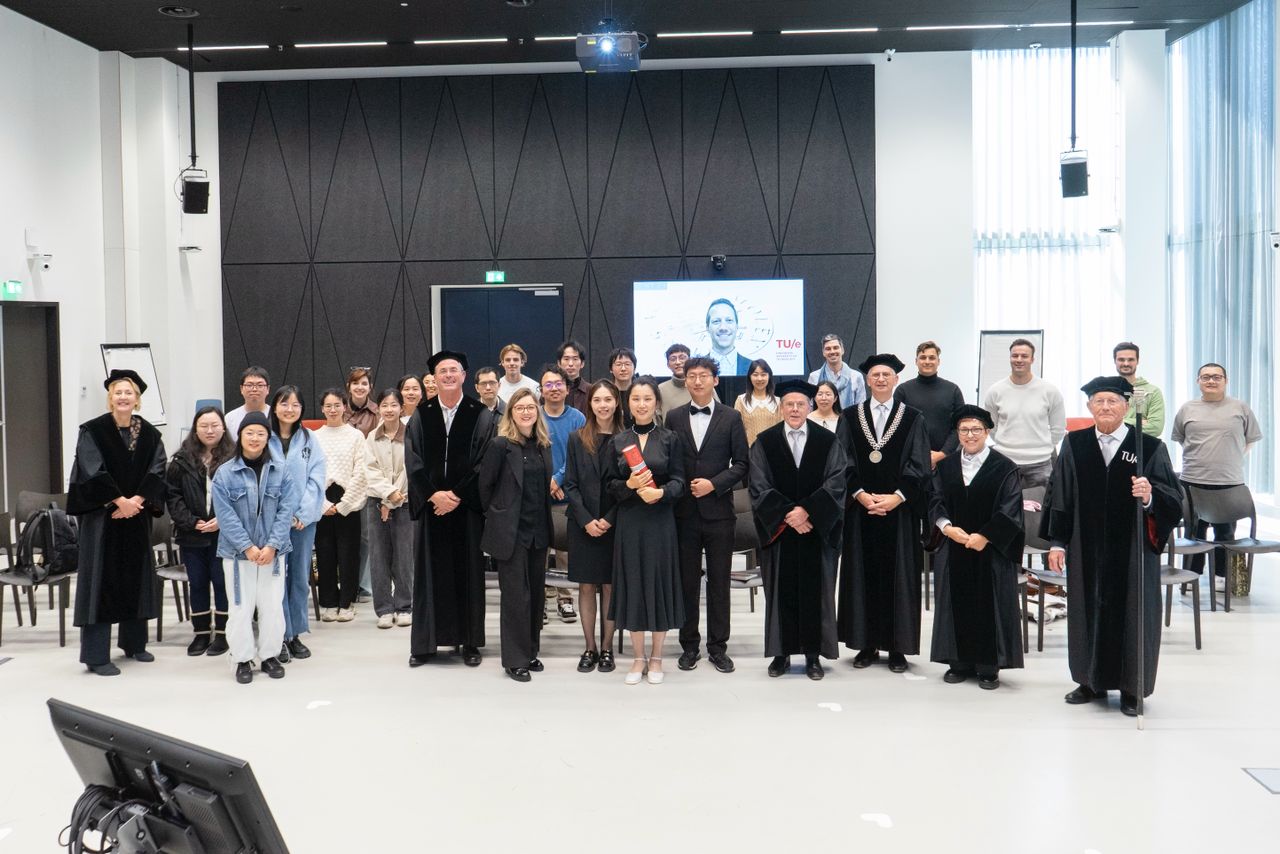
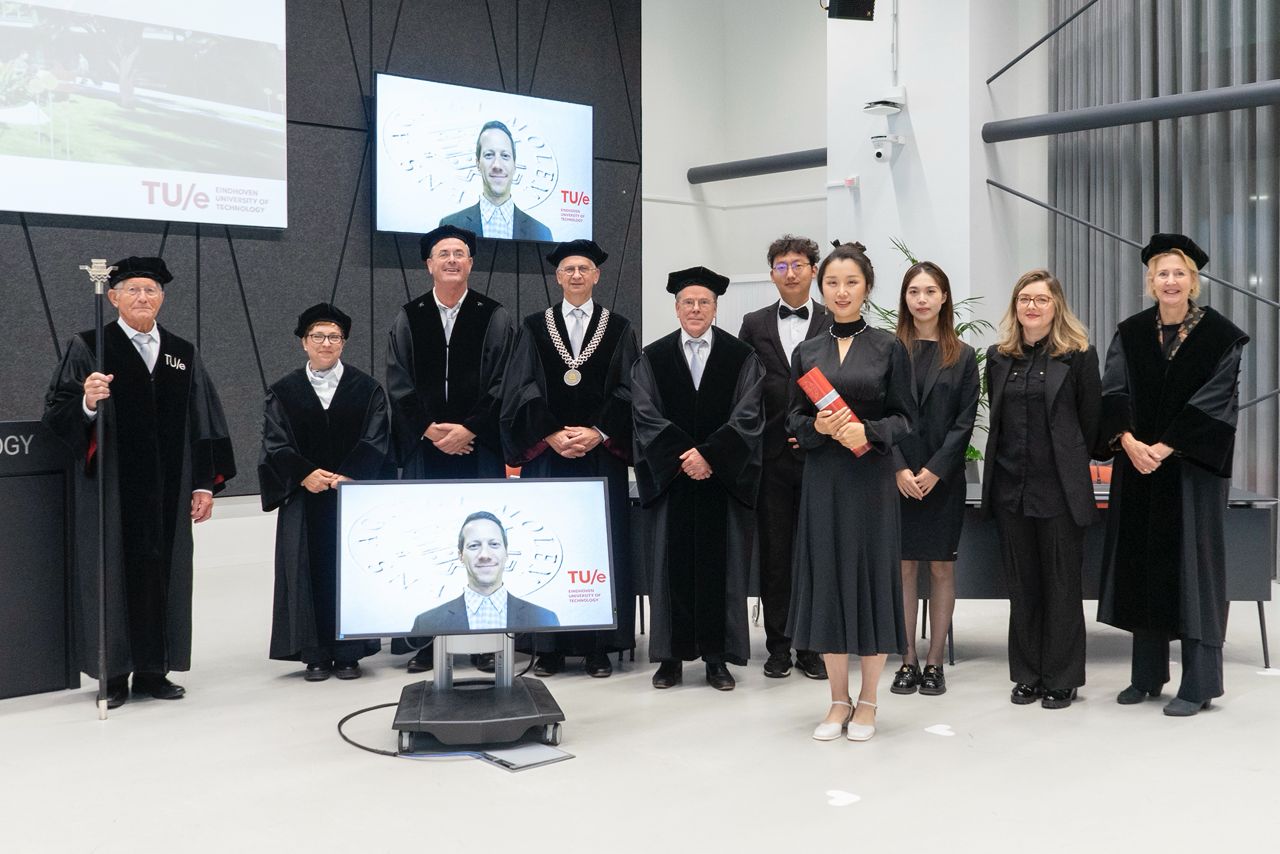

Senqi Yang successfully defended her PhD thesis!
On 1 October, Senqi Yang defended her Ph.D. thesis on “A Framework for Modeling and Simulating Pedestrians’ Affective Experiences, Perceptions, and Activities in Public Spaces“, supervised by Dr. Gamze Dane and Prof. Dr. Theo Arentze. Her thesis explored how urban public spaces can be designed to support emotional wellbeing, inclusivity, and active use, advancing the goals of SDG 3 (Good Health and Wellbeing) and SDG 11 (Sustainable Cities and Communities). It argues that urban design should move beyond functional aspects to address experiential qualities such as how people feel and behave in their environments.
The research fills key gaps in understanding and modeling pedestrians’ affective experiences by integrating emotions, perceptions, and behaviors into urban analysis and agent-based simulation tools. Using the case of public spaces around a central train station, it develops and validates a comprehensive framework that connects environmental attributes, affective responses, and activity patterns.
Overall, the thesis contributes theoretically to human–environment interaction research and provides practical tools for planners and policymakers to create emotionally engaging, healthy, and inclusive public spaces.
Congrats Senqi, and good luck in your future career as an Assistant Professor at Chongqing University!
Update: 05/10/2025
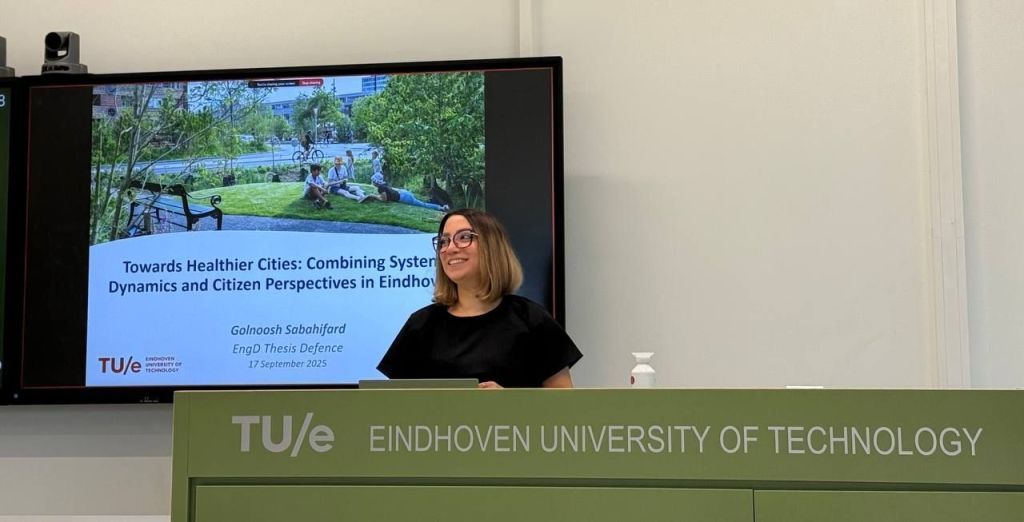
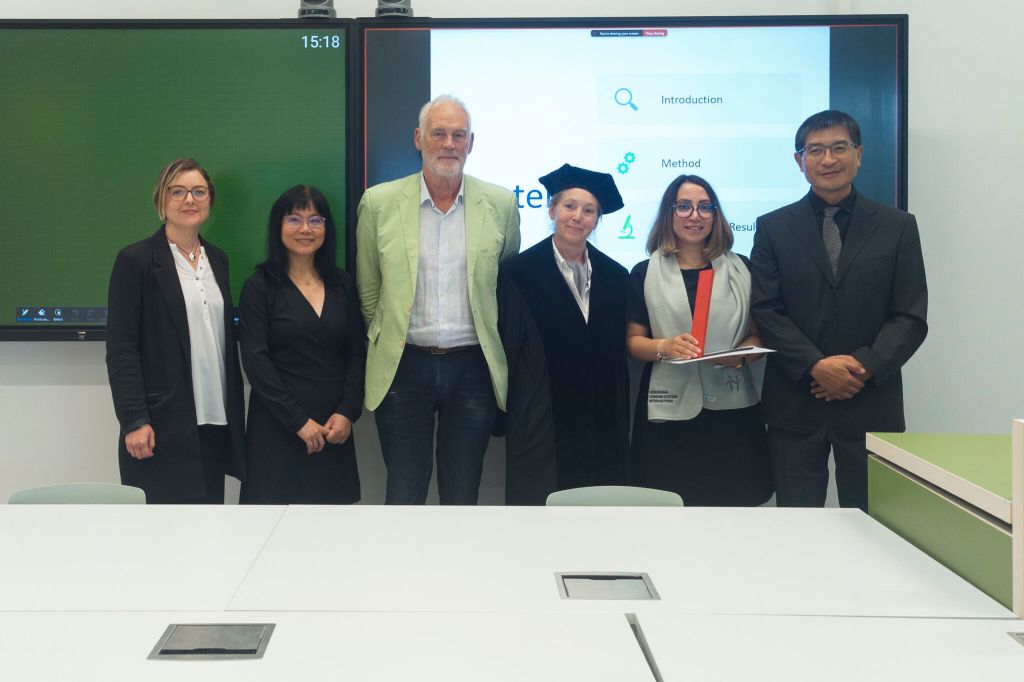
Golnoosh Sabahifard successfully defended her EngD thesis!
On 17 September, Golnoosh Sabahifard defended her EngD thesis on “Towards Healthier Cities: Combining System Dynamics and Citizen Perspectives in Eindhoven“, supervised by Prof.Dr. Regina Bernhaupt, Dr. Walter Baets, and Dr. Gamze Dane. This EngD thesis focused on exploring how system dynamics modeling and citizen perspectives can work together to create healthier neighborhoods in Eindhoven. By combining evidence-based tools with community input, this work investigated the relations between factors like green space, noise, stress, and social well-being. Through collaboration with the Industrial Design TU/e, Built Environment at TU/e, Eindhoven Engine, and the Municipality of Eindhoven, this EngD project developed a decision-support framework that helps policymakers and urban planners design more inclusive, sustainable, and healthier cities.
Congrats Golnoosh, and good luck in your future career!
Update: 05/10/2025

Project CARE (𝗖o-designing Public Spaces to 𝗔lleviate Loneliness and 𝗥estore 𝗘motional Well-being of Young Adults) receives NWO fund
The project CARE – Co-designing Public Spaces to Alleviate Loneliness and Restore Emotional Well-being of Young Adults, led by researchers Gamze Dane and Astrid Kemperman, has been awarded a prestigious €400,000 NWO Open Competition SSH-M grant.
CARE will explore how public spaces can be designed to reduce loneliness and promote emotional well-being among young adults (18–25). Using immersive virtual reality and co-design workshops, the project will develop innovative, human-centered design strategies that support social connection and a sense of belonging. This grant highlights the importance of addressing loneliness through spatial design and strengthens TU/e’s role in shaping inclusive, emotionally supportive urban environments.
Update: 10/08/2025


Presence at 19th Computational Urban Planning and Urban Management (CUPUM) Conference and the Best Poster Award
We attended the 19th CUPUM conference which was hosted by UCL CASA in London, UK, to present our research on:
- Simulating Pedestrians’ Affective Experiences and Activities in Public Spaces: An Agent-Based Model for Urban Design Evaluation, led by Senqi Yang
- Participatory Urban Design and Participants’ Subjective Wellbeing in the Digital Era: A Systematic Review, led by Fazhong Bai
- Do Digital Tools Empower Citizens in Urban Planning? Evaluating Digital Tools Through the Lens of Human-Computer Interaction, led by Juliana Goncalves. This paper was a collaboration between TU Eindhoven and TU Delft.
We are also very pleased that my PhD student Senqi Yang received the best poster award at this conference.
We look forward to the next CUPUM conference in 2027 in Sydney.
Update: 02/07/2025

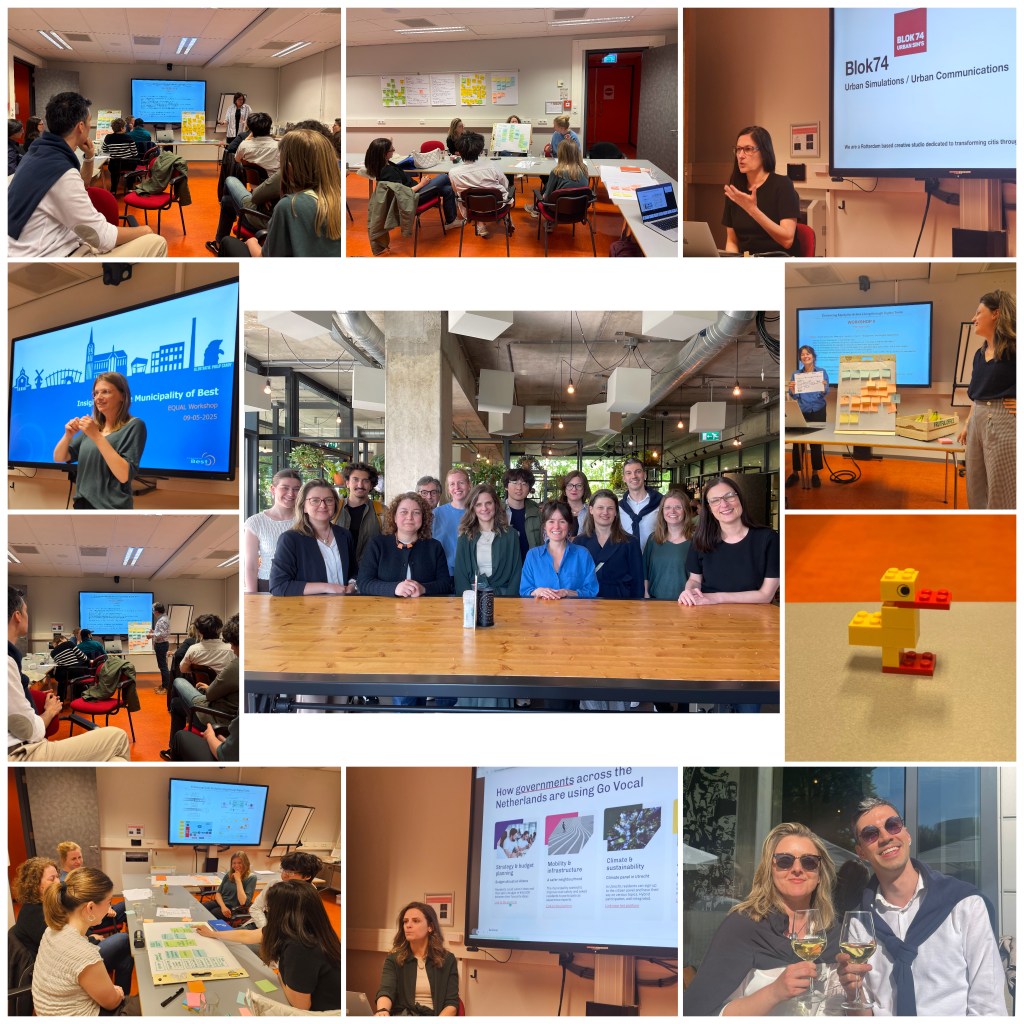
Hosted EQUAL Project’s 2-day Transdisciplinary Workshop
On May 8-9, I, together with Cem Ataman, hosted a 2-day transdisciplinary workshop at TU/e for our EWUU alliance – institute 4 Preventive Health-funded “EQUAL” project. We explored how digital tools and tech, such as VR, AR, and AI, can empower marginalized groups to participate in design and decision-making processes of active living interventions in urban environments.
Thanks to our amazing partners and colleagues from TU/e, Uni Utrecht, WUR, Nexus Design Studio, TU Delft, UTwente, Best municipality, GoVocal, and Blok74, together we:
• worked towards having a shared lexicon,
• reflected on equity barriers in active lifestyle interventions and (digital) participation,
• co-developed a concept for a participation process and tool.
This workshop has been a step toward building a shared understanding and vision between disciplines, and also research and practice, for healthier, more inclusive cities through digital technology and participation.
Feel free to contact me if you are interested in this topic and our findings!
Update: 13/05/2025


Policy and Practice Featured Works in Recent Months
It is always rewarding to see our academic work resonate beyond journals, recognized in real-world practice and policy! Recently, several of our works have been featured in a variety of outlets:
– CoHeSIVE project has been featured in the OECD Observatory of Public Sector Innovation policy paper “Tackling Civic Participation Challenges with Emerging Technologies: Beyond the Hype”. Today, Suzan Evers and I had the pleasure of presenting CoHeSIVE during the launch webinar, showcasing how VR can support civic participation and discussing the opportunities and challenges of using immersive technologies in participatory urban planning. You can check out the policy paper here.
– Xiaoli Gong’s PhD research was recently highlighted by the World Playground Research Institute! Her work (together with Pauline van den Berg, myself and Theo Arentze) explores how to create child-friendly neighborhoods based on parents’ perceptions, with the goal of promoting children’s physical activity and health. Practical guidelines derived from her research are here.
– Senqi Yang’s PhD research (supervised by myself and Theo Arentze) was published in SERVICE magazine, where we demonstrate how urban digital twins and agent-based modeling can be used to simulate and evaluate individuals’ subjective experiences in public spaces, and therefore can help planners and designers anticipate real-world impacts before implementation. You can read the article here.
Grateful to work with such a talented team, and excited to see our research bridging the gap between science, society, and policy.
Update: 11/05/2025
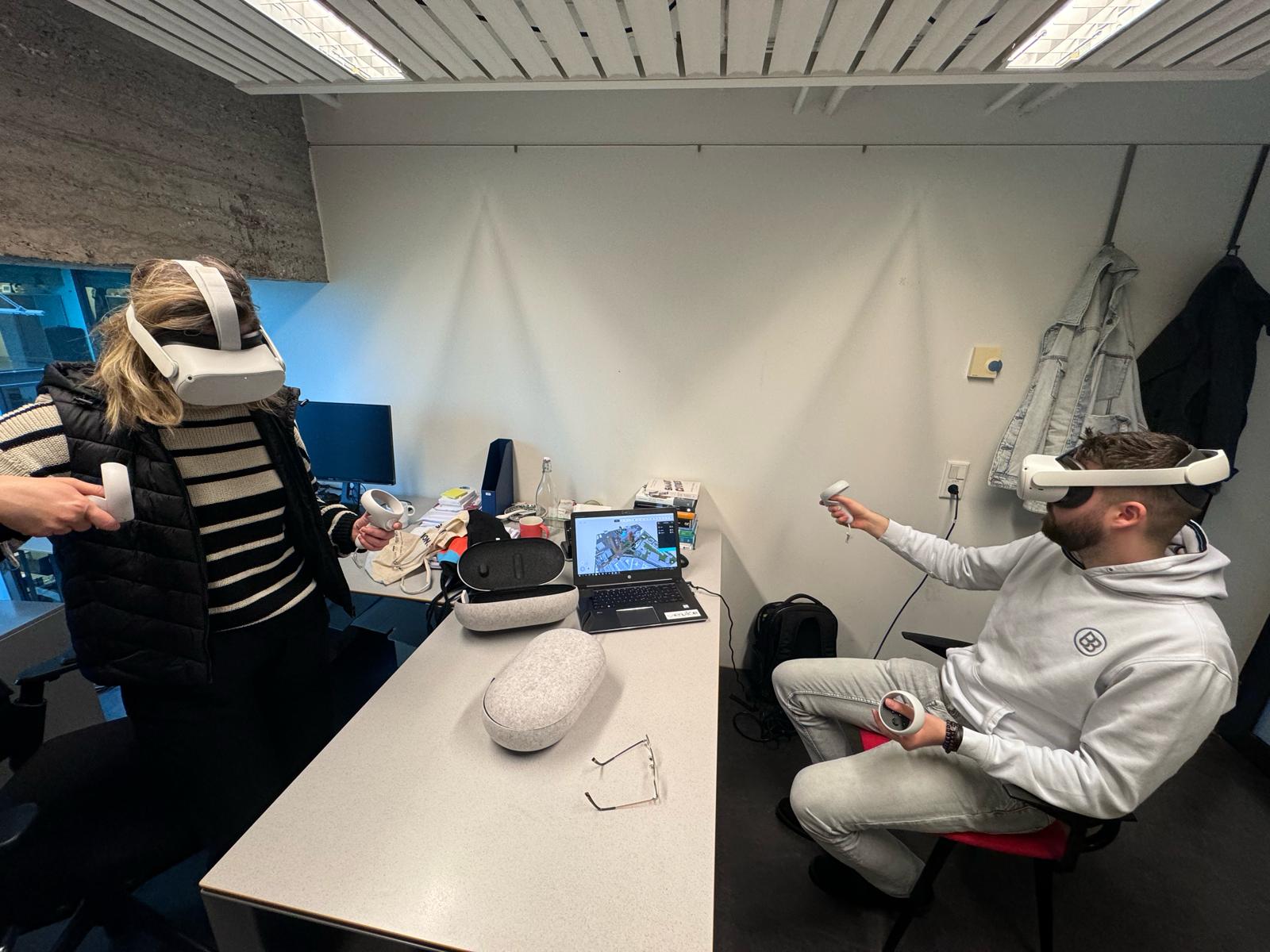
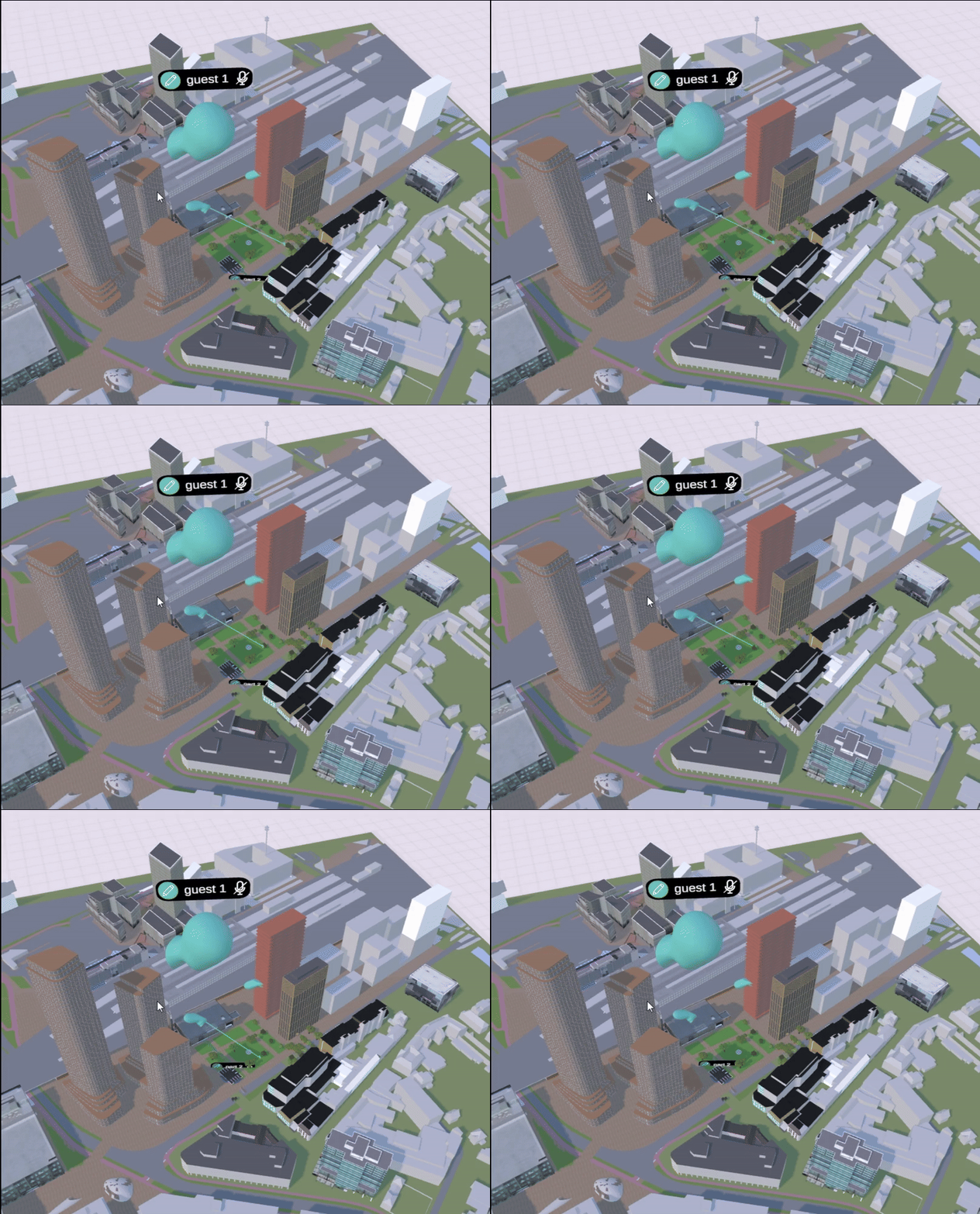
A New Article on “Exploring the Effectiveness of Co-Located Immersive Virtual Reality Experience for Co-Design of Urban Public Spaces” in Buildings
A new article titled “Exploring the Effectiveness of Co-Located Immersive Virtual Reality Experience for Co-Design of Urban Public Spaces: Case Study of the Eindhoven Station Square” is published in journal Buildings. This paper is derived by our alumnus Sem Akkers’ MSc thesis and co-authored by Aloys Borger and Gamze Dane (corresponding author).
In this article, we explored how co-located immersive Virtual Reality (IVR) can support co-design of urban public spaces by enabling non-expert participants to engage, collaborate and communicate in design discussions. Using Eindhoven Station Square as our case, we investigated how co-location in physical and virtual world helps participants visualize, discuss, and negotiate design trade-offs in real time.
We found that co-located immersive VR setup supports participants’ focused and task-oriented communication, reducing social interaction. When tool is intuitive, even participants with no design or VR training can engage in design discussions and have confidence in their design. Digital fluency influences collaboration dynamics: more digitally fluent participant takes leadership in design for efficiency.
Yes, co-located immersive VR setup can open new directions for co-design and participation for urban (re)development projects. However, we also highlight critical challenges around inclusivity such as social dynamics that immersion might alter and the potential power asymmetries stemming from digital fluency. For more, please see the open-access article here.
Note: The picture was captured while Sem and I were testing the tool and the procedure.
Update: 18/04/2025

Special Issue on “Citizen-Centric Urban Planning through Participatory Sensing Data and Digital Tools” in Urban Planning
Call for Papers for our special issue on “Citizen-Centric Urban Planning through Participatory Sensing Data and Digital Tools” in Urban Planning (a peer-reviewed Q1 journal in Urban Studies). This special issue is edited by Bernd Resch (IT:U- Interdisciplinary Transformation University Austria), Peter Zeile (Karlsruhe Institute of Technology) and myself (TU/e). We invite original contributions such as:
✔️Theoretical frameworks and empirical studies on the design, development, and implementation of digital tools for citizen engagement and empowerment;
✔️ Empirical findings highlighting novel human-as-sensors methods to measure and analyze citizens’ experiences in the city and integrate these insights into decision-making processes.
🗓️ Timeline
🔹 Abstract Submission: 1–15 December 2025
🔹 Full Paper Submission: 15–30 April 2026
For more information, check the special issue page here or feel free to reach out to us.
Update: 16/04/2025
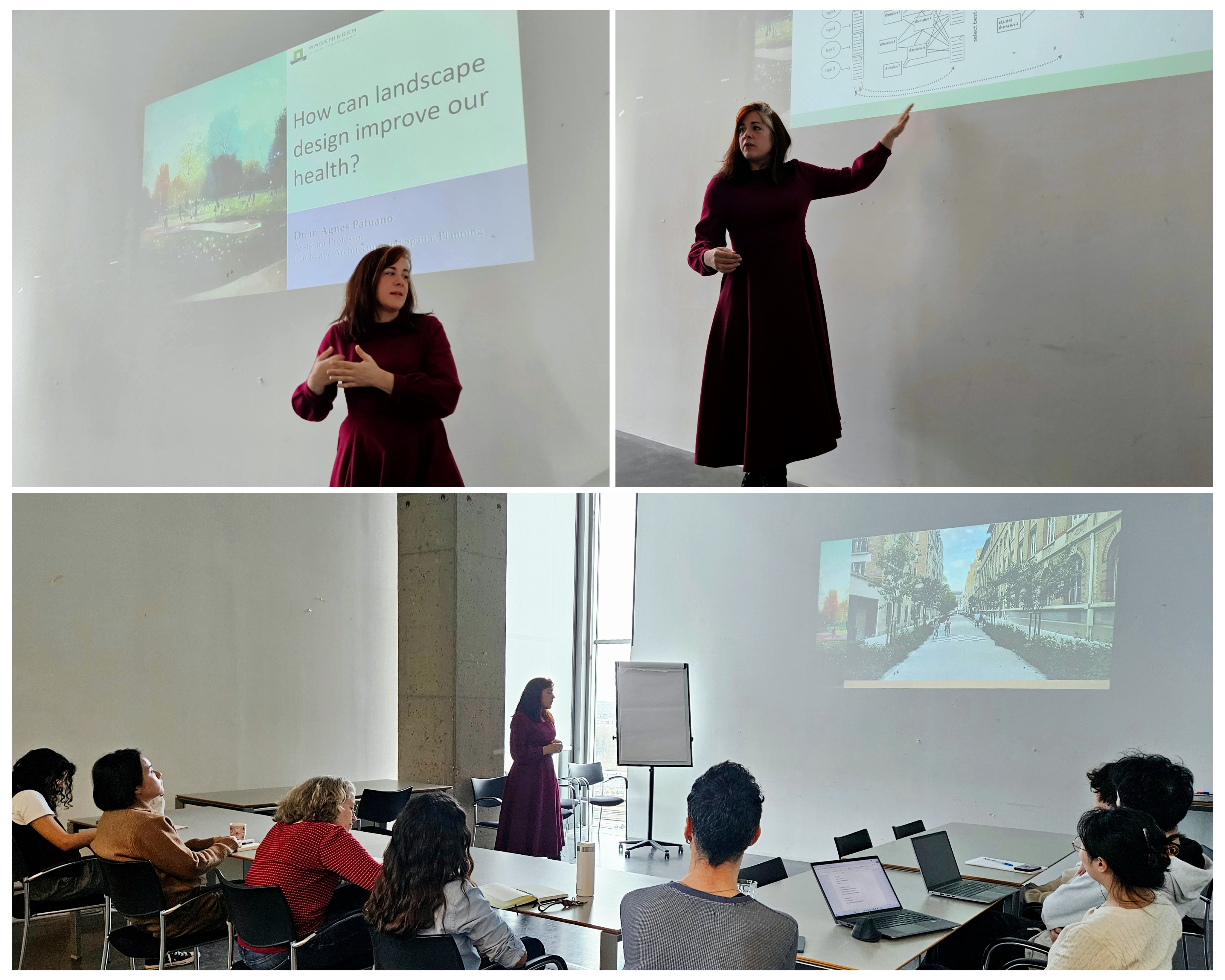
Guest Lecture by Dr. Agnès Patuanno
On 25.02.2025, we had the pleasure of hosting Dr. Agnès Patuano, a tenured Assistant Professor in Landscape Architecture at Wageningen University and Research (WUR). At WUR, she coordinates the Health & Environment research cluster within the Centre for Space, Place and Society, and serves on the board of the International Association of People-Environment Studies.
During her visit, Agnès delivered a guest lecture titled “How Can Landscape Design Improve Public Health? A Research through Design Inquiry.” In her talk, she emphasized the importance of methodological innovations in providing landscape practitioners with evidence-based, practical solutions for designing mixed urban spaces that optimize both environmental and human health outcomes. She illustrated her approach with examples from projects such as SOLOCLIM and BENIGN.
We thank her for the engaging talk and insightful discussion, and we look forward to continued collaboration!
Update: 01/03/2025

Do Urban Digital Twins Need Agents? A New Article in Environment and Planning B
Urban Digital Twins (UDTs) are often seen as high-fidelity digital mirrors of our cities, primarily focused on physical infrastructure. But is this enough to represent our cities? Our collaborative paper, led by Judith Verstegen, published in EnvPlnB: Urban Analytics and City Science, argues that the social and behavioral dynamics of urban life are largely missing from current UDTs and that Agent-based Models (ABM) could be a crucial piece of the puzzle. However, this integration comes with epistemological, conceptual, technical, and ethical challenges which we highlight.
You can read this open-access paper here.
This paper is the final output of our EWUU Alliance HEADS4HEALTH project (led by Judith Verstegen, operationalized by Letícia Marçal Russo, and contributed by Marco Helbich, Arend Ligtenberg and myself). The project’s interdisciplinary workshop was a fantastic opportunity to meet inspiring colleagues, learn from them, and contribute to this paper alongside (Gabriele Filomena, Christian Janssen, Mila Koeva, Pirouz Nourian, Agnès Patuano, Paulo Raposo, Kristina Thompson, Senqi Yang).
Let’s rethink how we digitally represent our cities because “what is the city but the people?”.
Update: 13/02/2025
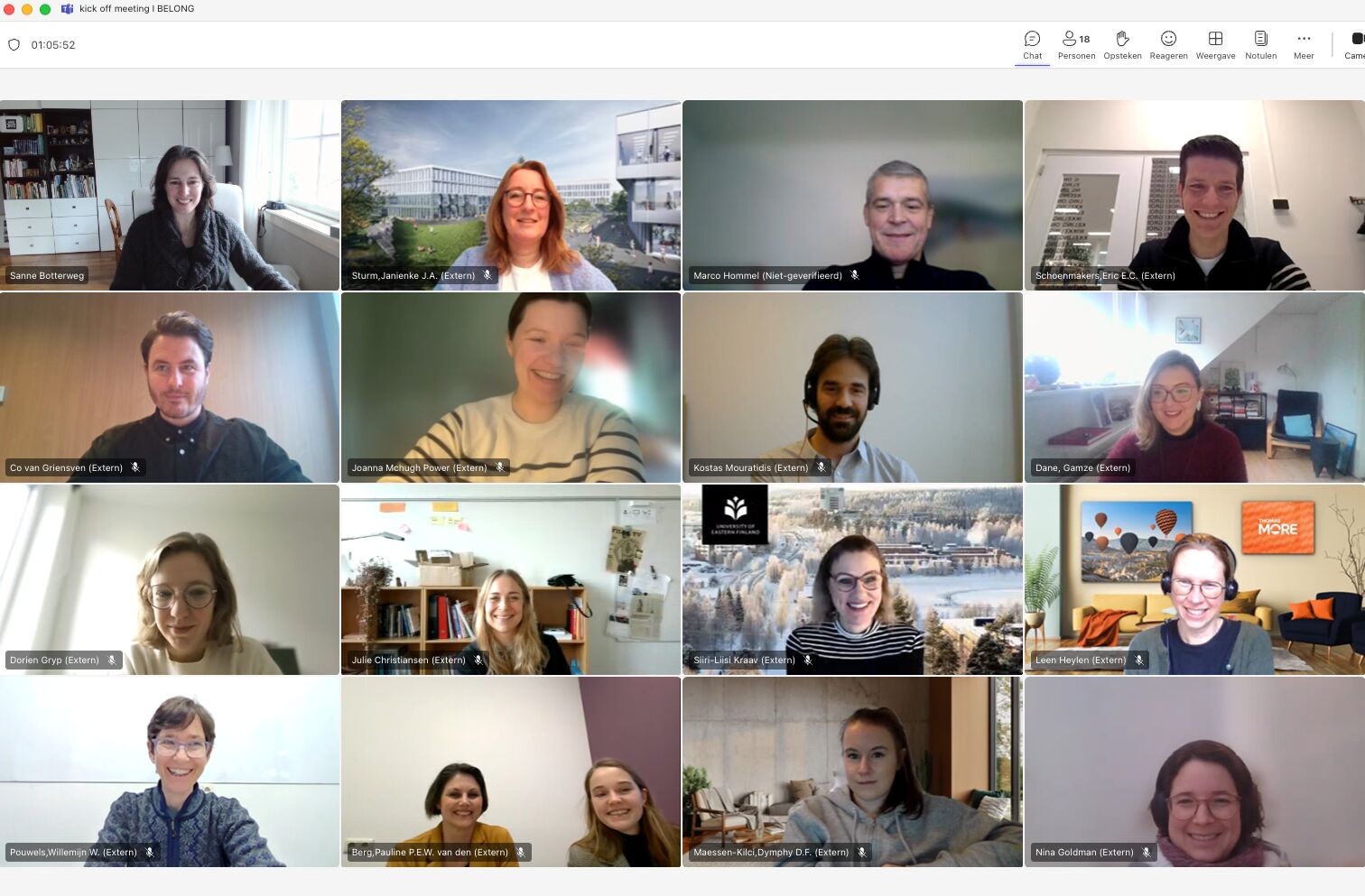
I BELONG Project has kicked-off!
On February 6th, we kicked off the I BELONG project, led by Pauline van den Berg and Eric Schoenmakers from Fontys. The 2-year project is funded by Regieorgaan SIA, part of the Netherlands Organization for Scientific Research (NWO).
I BELONG project explores the relationship between loneliness among young people and the physical living environment. The project focuses on developing spatial interventions aimed at reducing loneliness, specifically targeting young adults. TU/e (represented by Astrid Kemperman and myself) will collaborate with 9 partners from six European countries to share knowledge and build a strong network around the theme of loneliness and the living environment. More information about the project can be found here. We look forward to the next steps!
Update: 09/02/2025
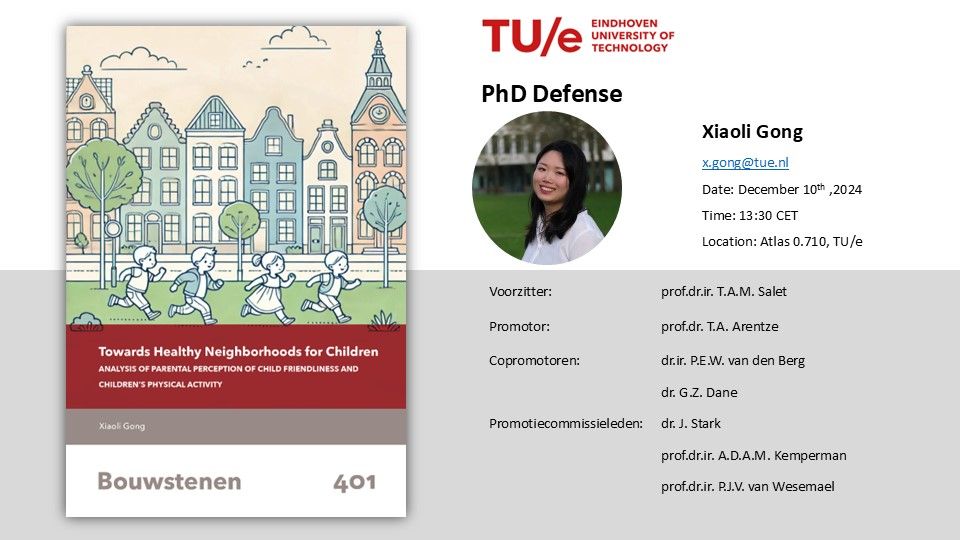


Xiaoli Gong successfully defended her Ph.D. thesis on December 10, 2024!
On December 10th, Xiaoli Gong successfully defended her PhD thesis titled “Towards Healthy Neighborhoods for Children – Analysis of Parental Perception of Child Friendliness and Children’s Physical Activity”, supervised by Dr. Pauline van den Berg, myself and Prof. Dr. Theo Arentze.
During her PhD research, Xiaoli developed a measurement instrument to measure parents’ perception of child friendliness of a neighborhood. Next, she studied to what extent aspects of child friendliness are incorporated in parents’ residential location choice. Her third study focused on the extent to which child friendly neighborhoods can contribute to children’s physical activity.
Congrats Xiaoli, and good luck in your future career!
Update: 01/01/2025
EQUAL Project is funded by EWUU Alliance
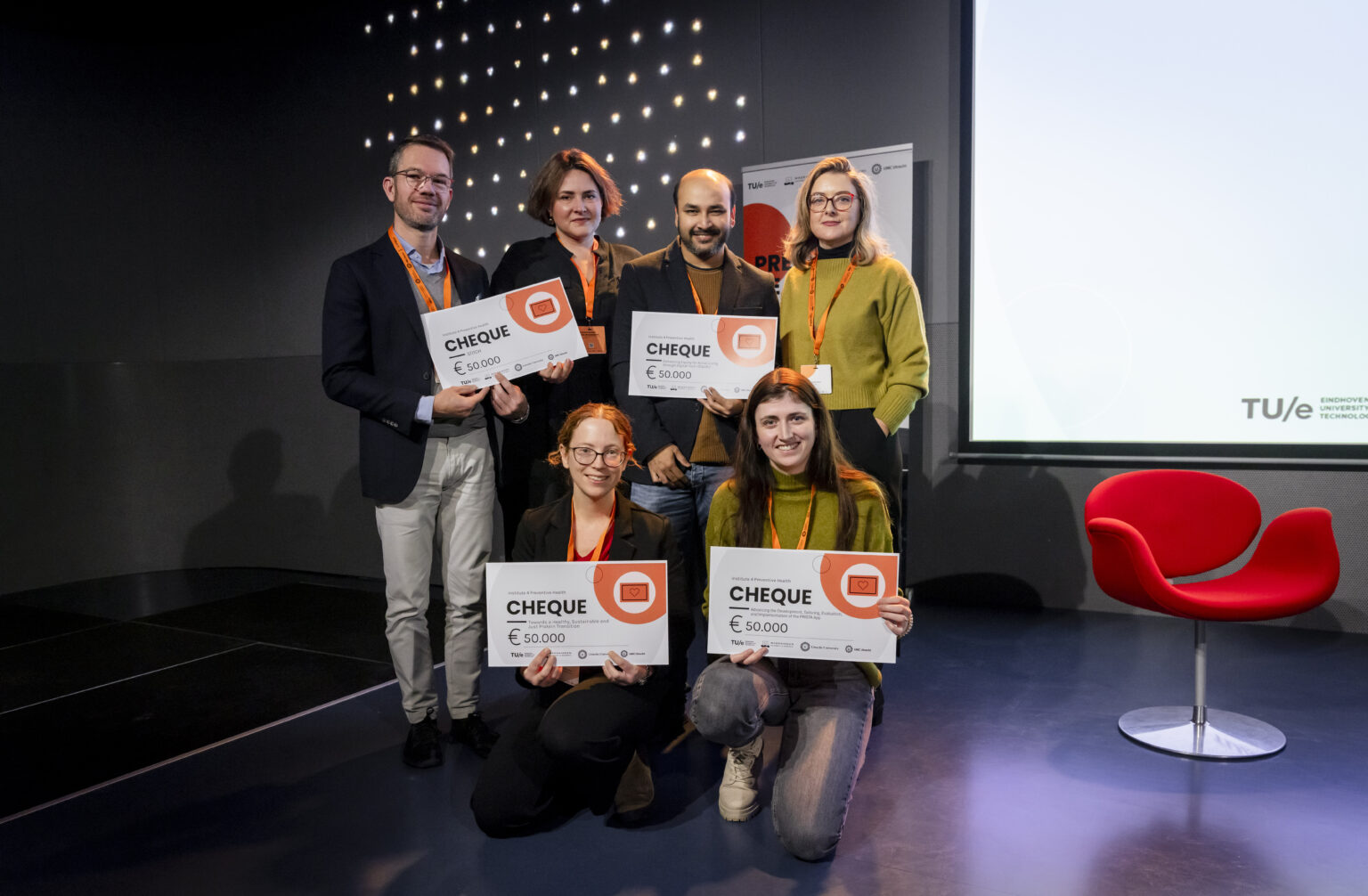
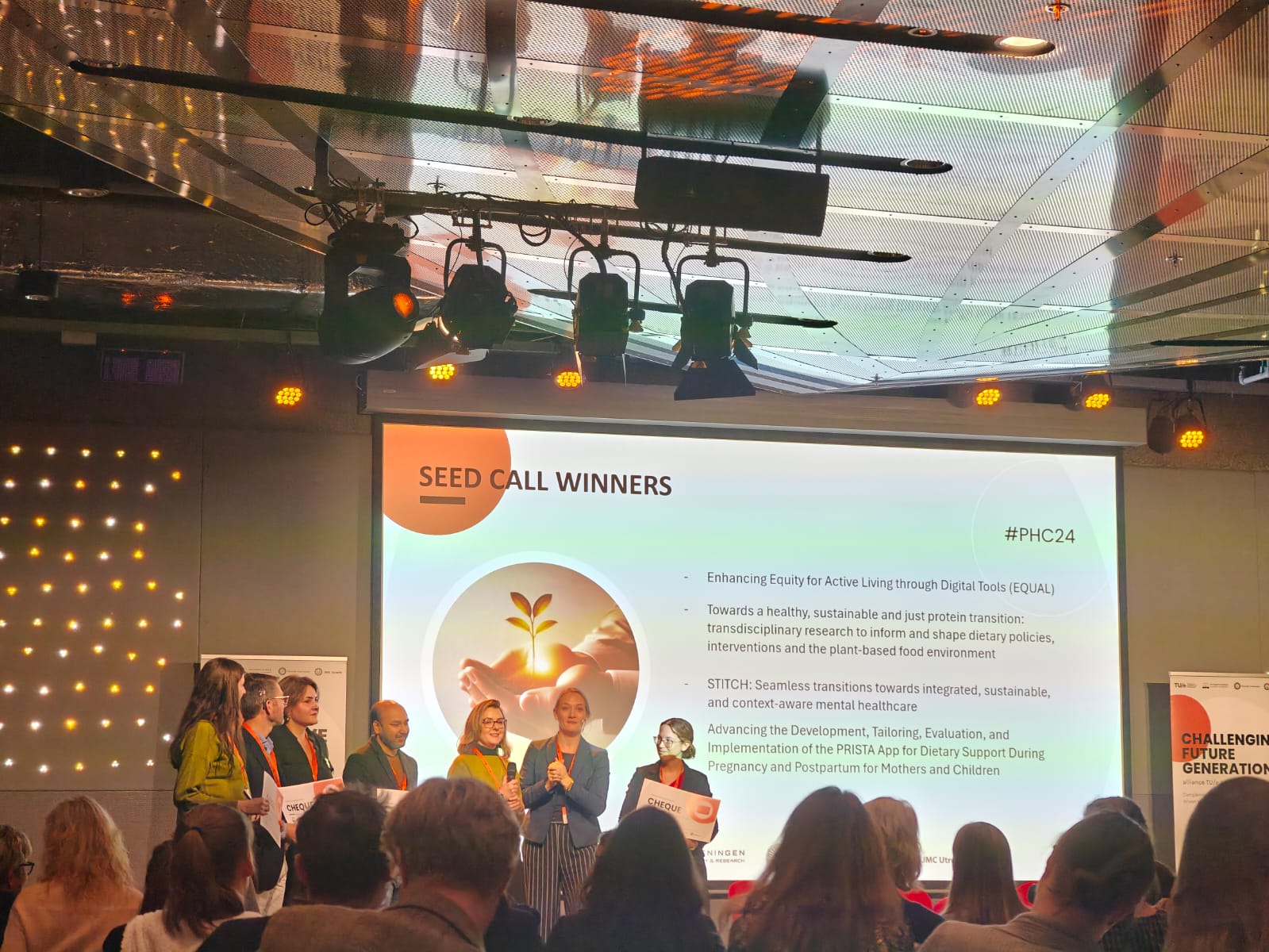
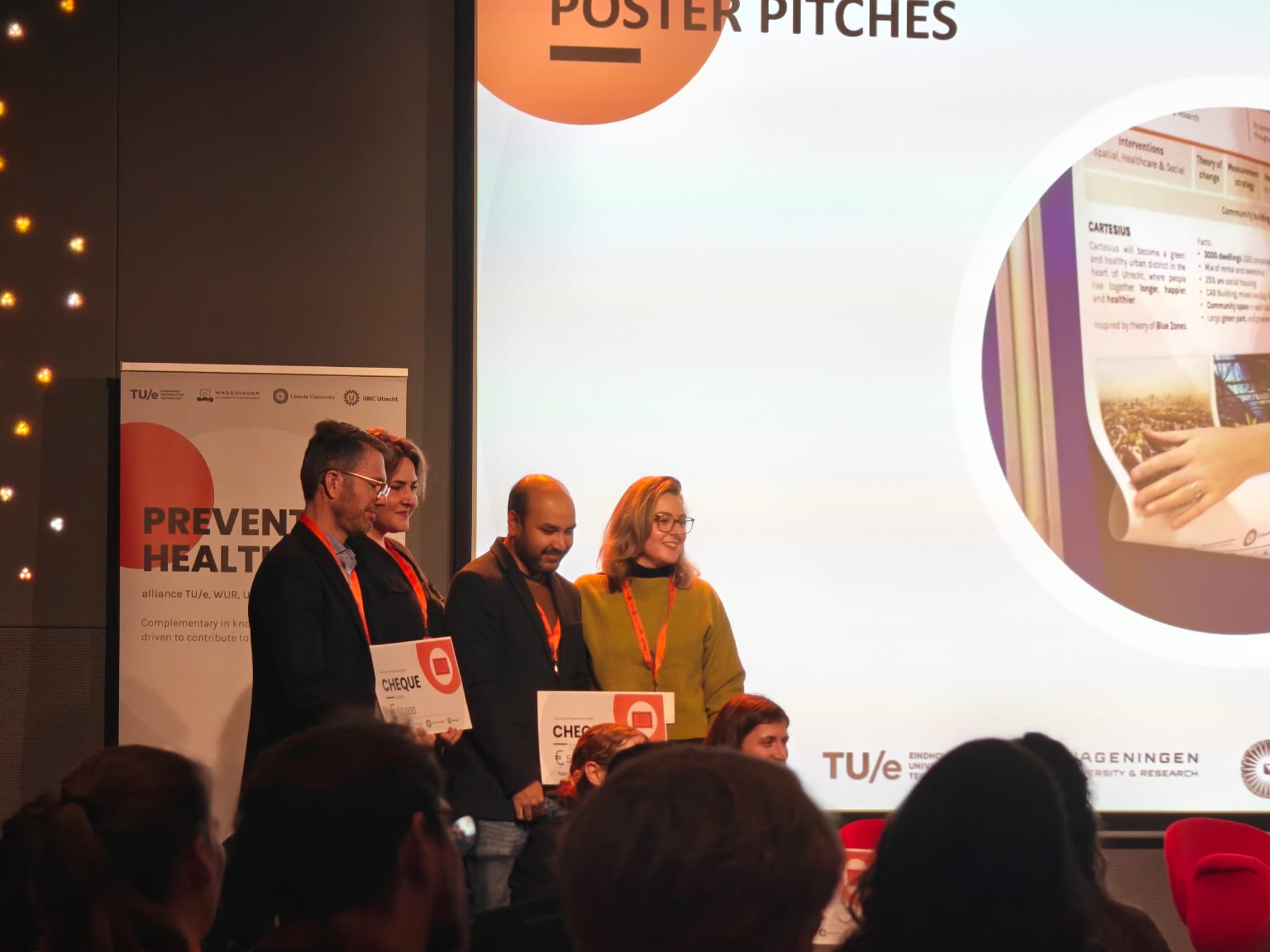
On 21st November, at the EWUU Alliance – Institute 4 Preventive Health Conference with the theme “Just Transformations”, the seed call winners were announced. The seed fund project “EQUAL – Enhancing Equity for Active Living through Digital Tools”, led by me, became one of the 4 awarded projects, out of 27 project applications.
EQUAL will investigate how digital tools can support participation of marginalized groups in design and decision-making of active living environment interventions. The main innovation of the EQUAL project is addressing this socio-technical issue through an inter- and transdisciplinary approach.
Project team involves Gamze Dane (main applicant-TU/e BE, Urban Development Initiative), Bige Tunçer (TU/e BE), S.M. Labib (UU), Hanneke Posthumus (UU and Data- en Kennishub Gezond Stedelijk Leven), Ayla Schwarz (WUR), and Sehnaz Cenani Durmazoglu and Cagdas Durmazoglu (Nexusds).
If you are interested in EQUAL and being in its extended consortium, please contact us.
Update: 26/11/2024
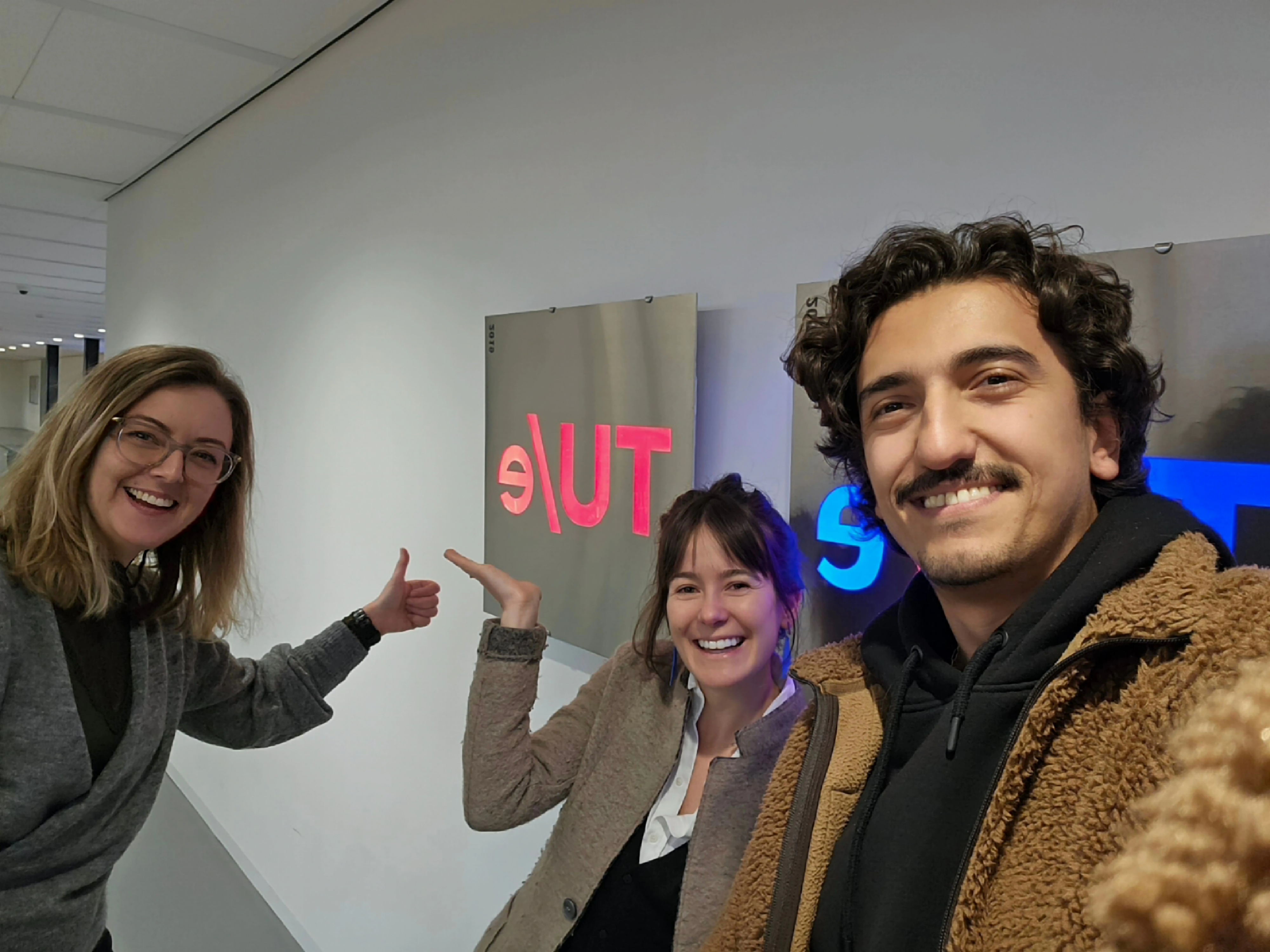

Guest Lecture by Dr. Juliana Gonçalves
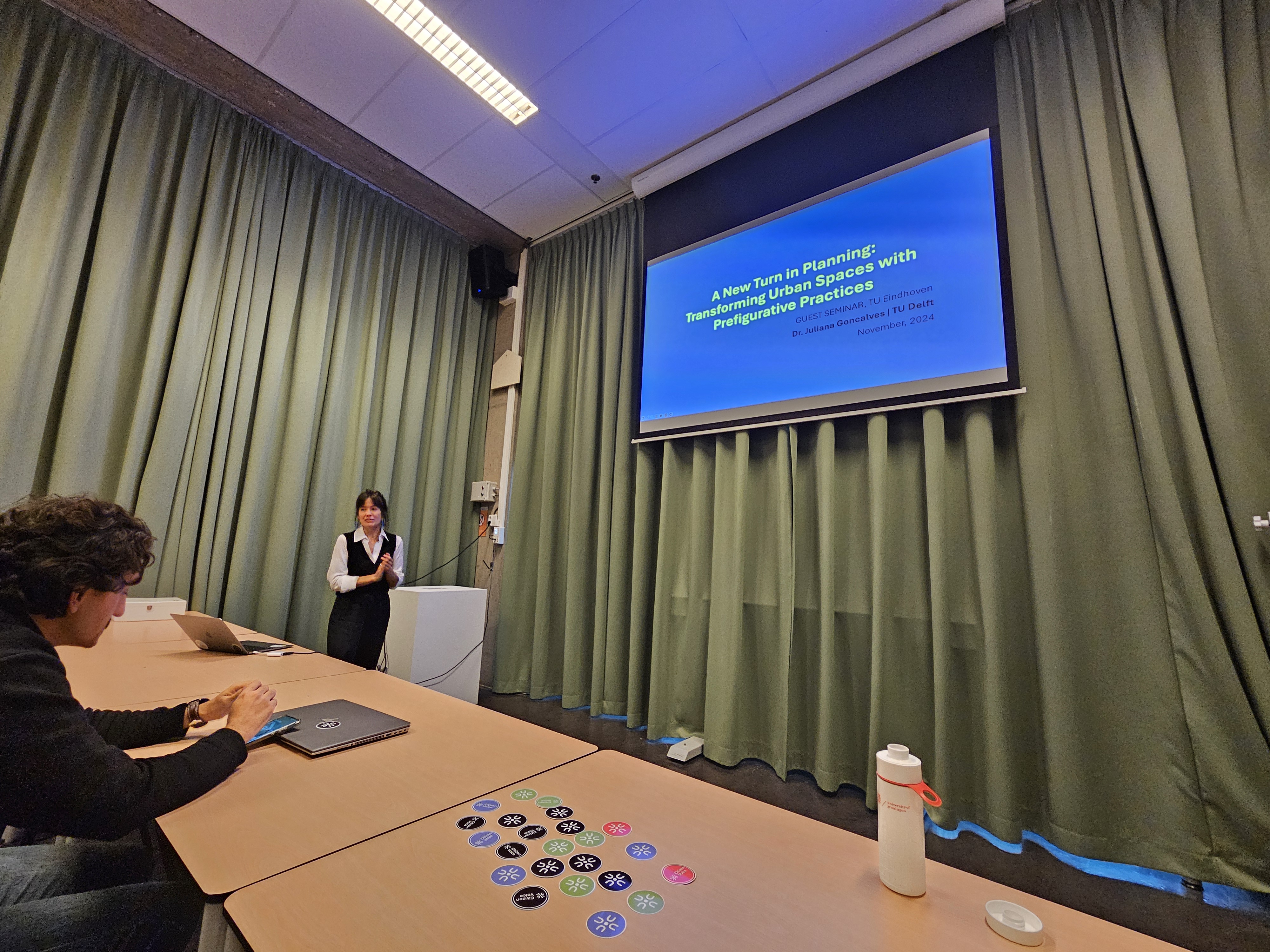
On 7 November, we hosted Dr. Juliana Gonçalves, Assist. Prof. in the Spatial Planning and Strategy Section of the Department of Urbanism at TU Delft. She is also the co-director of Centre for Urban Science and Policy (CUSP), founder of the Citizen Voice Initiative, and co-founder of the Citizens Collective.
At our department, Juliana delivered a guest lecture on “A New Turn in Planning: Transforming Urban Spaces with Prefigurative Practices”. Her talk explained how spatial justice can serve as a lens to reveal the socio-political processes that create and sustain urban inequalities. She argued that these inequalities are rooted in dominant imaginaries that shape how urban spaces are planned and governed.
We look forward to our continuous collaboration!
Update: 13/11/2024

Joined Urban Planning Journal as Editorial Board Member
I joined the Urban Planning journal as an Editorial Board Member. Urban Planning is an international, peer-reviewed and open access journal of urban studies aimed at advancing understandings and ideas of humankind’s habitats — villages, towns, cities, megacities — in order to promote progress and quality of life.
Urban Planning is a Q1 journal in urban studies domain with an impact factor of 1.7, and indexed in Web of Science (ESCI), Scopus, and other databases.
I look forward to contributing to the advancement of this journal and the domain of urban studies.
Update: 30/10/2024


Research Visit and Seminar at BOKU, Vienna
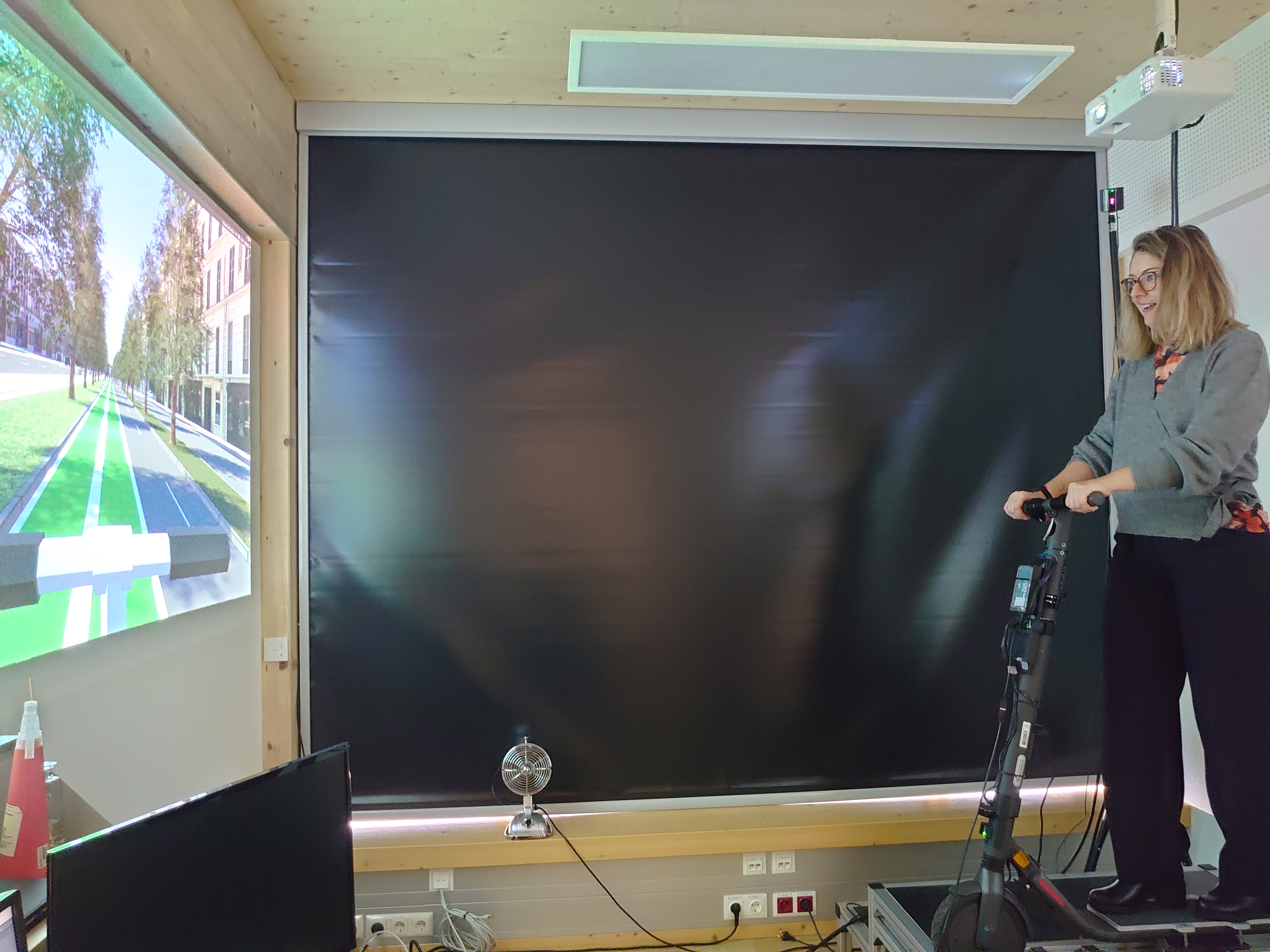
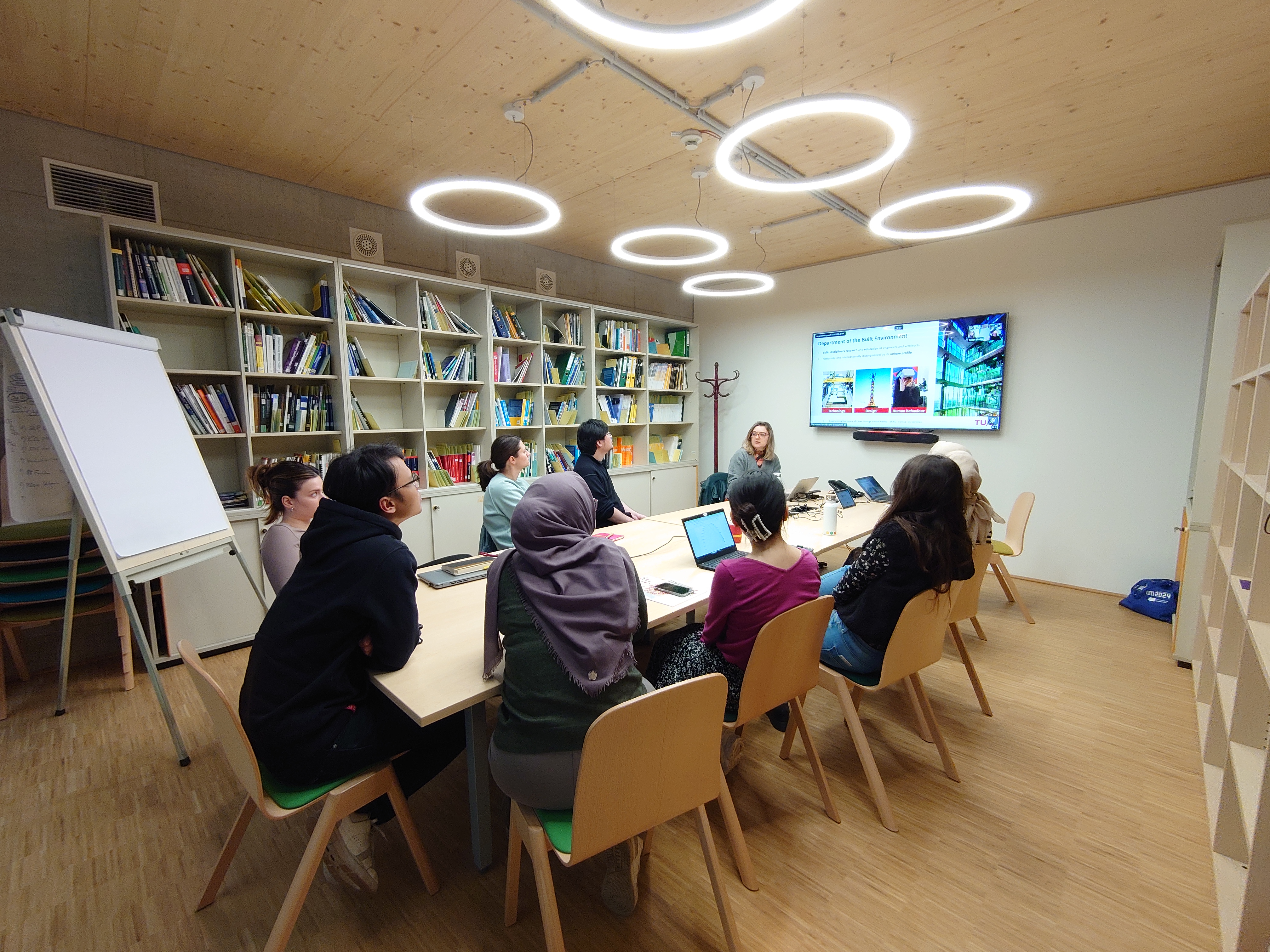
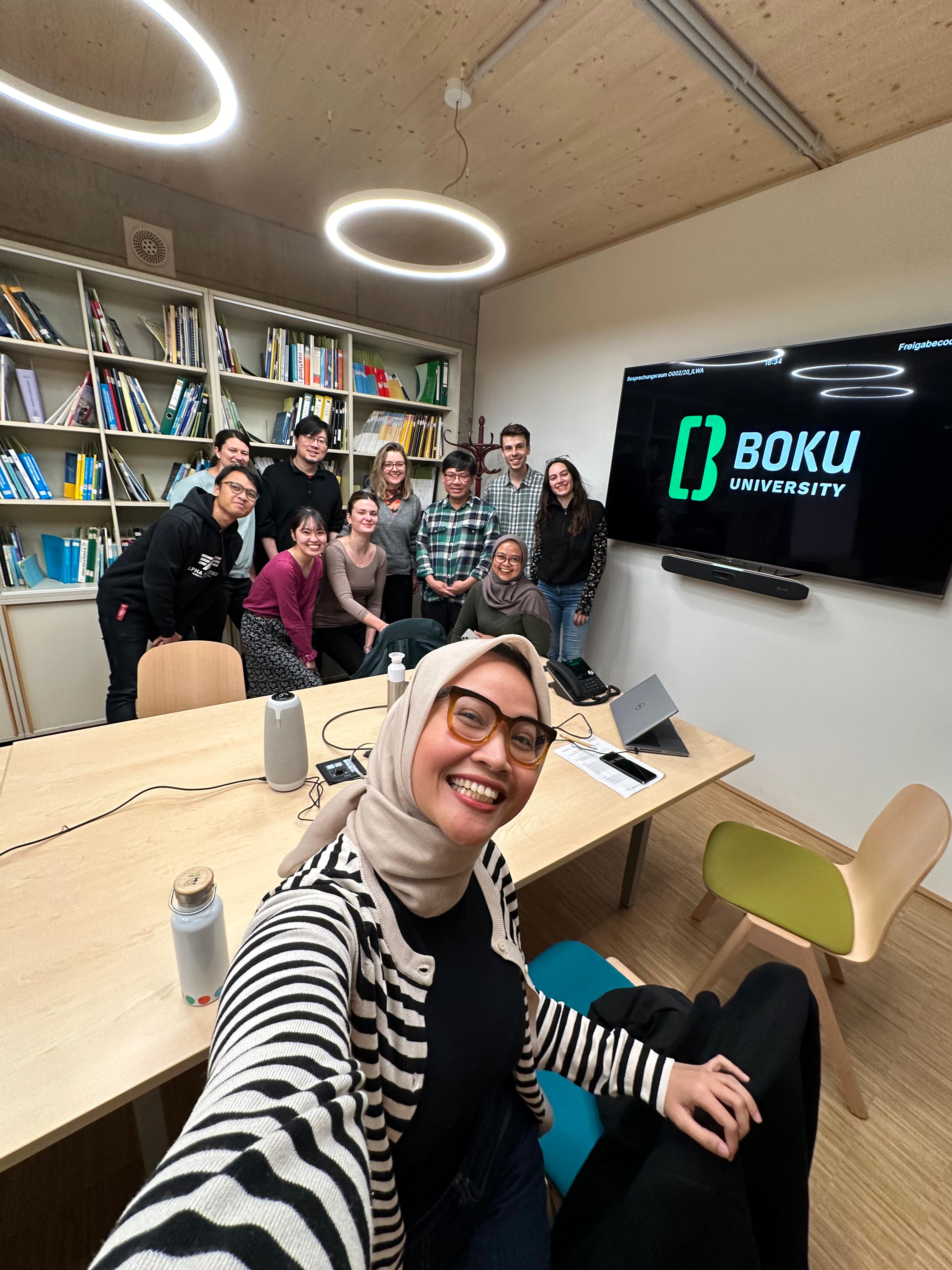
On October 16, I visited Prof. Dr. Yusak Susilo and his group at the Department of Landscape, Spatial, and Infrastructure Sciences at BOKU University in Vienna, Austria.
During my visit, I presented a seminar titled “Experiencing the Future of Cities through Virtual Reality,” which attracted also online attendees from local authorities in Vienna. I also had the opportunity to engage in productive discussions with the PhD students of the group and enjoyed exploring the group’s multi-modal, multi-agent virtual reality lab.
Thank you, Yusak, for organizing this seminar and hosting me. I look forward to future collaborations!
Update: 29/10/2024

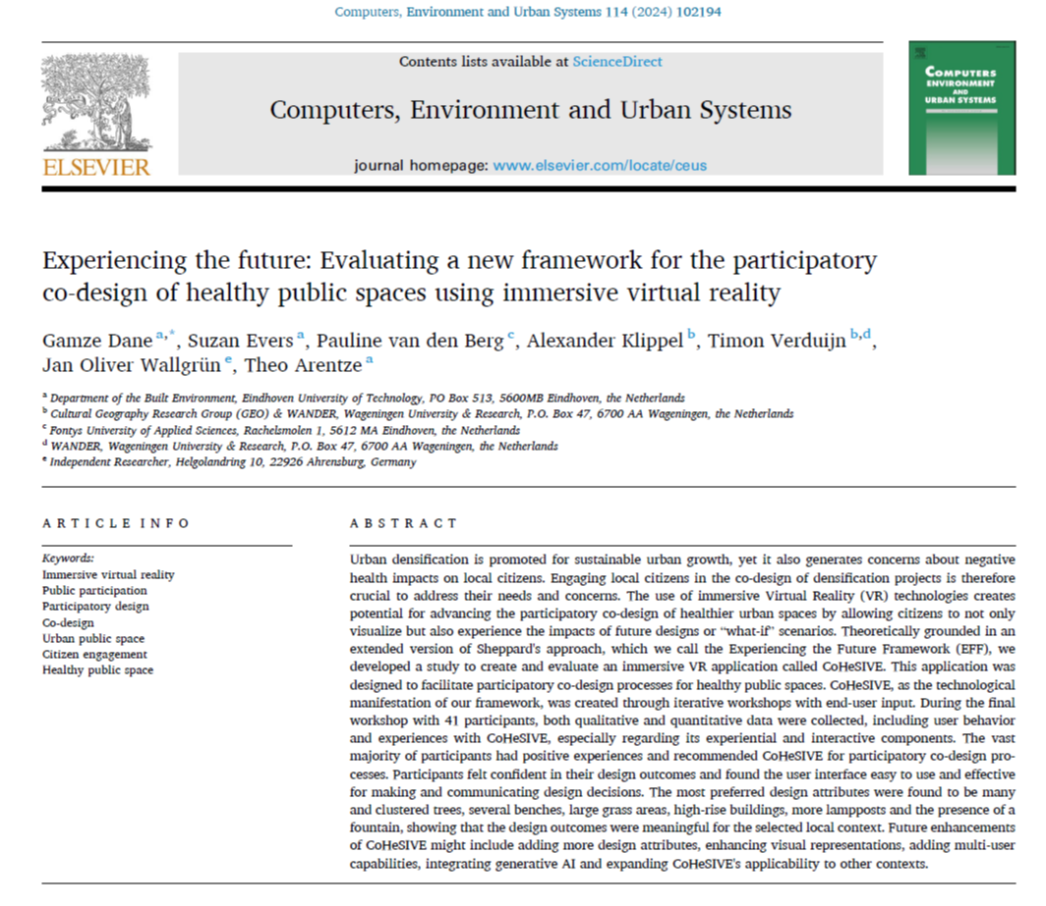
New Article at Computers, Environment and Urban Systems on VR-based Participatory Co-design Framework
A new article titled “Experiencing the future: Evaluating a new framework for the participatory co-design of healthy public spaces using immersive virtual reality” is published in the Journal Computers, Environment and Urban Systems. The paper is led by me (Gamze Dane) and co-authored by Suzan Evers, Pauline van den Berg, Alexander Klippel, Timon Verduijn, Jan Oliver Wallgrün, and Theo Arentze.
VR technology is increasingly being utilized in the participatory co-design of urban areas, thanks to its immersive, interactive, and experiential affordances. However, most VR apps for co-design are developed without the iterative input of the end-users within a local context. This often results in generic applications that require extensive training and fail to align with localized planning needs, limiting the accessibility and democratization of such tools. To address the above issues, we extended Shepperd’s approach and coined a new framework called “Experiencing the Future” for VR-based participatory co-design:
-Make it Local 🌍
-Make it Visual🎨
-Make it Connected 🤝
-Make it Experiential 🏙
-Make it Interactive 🖥
To provide a thorough empirical evaluation of the new framework, we developed and tested an immersive VR application called CoHeSIVE (Co-designing Healthy Public Spaces through Immersive Virtual Environments).
This paper is part of a Special Issue “Digital Planning for Sustainable Futures”, edited by Yanliu Lin, Stan Geertman, Patrick Witte and Nuno Pinto who brought a community together via this SI and its workshop. Thanks to the EWUU alliance (TU/e, WUR, UU, UMC Utrecht) for funding our project CoHeSIVE.
Update: 21/09/2024
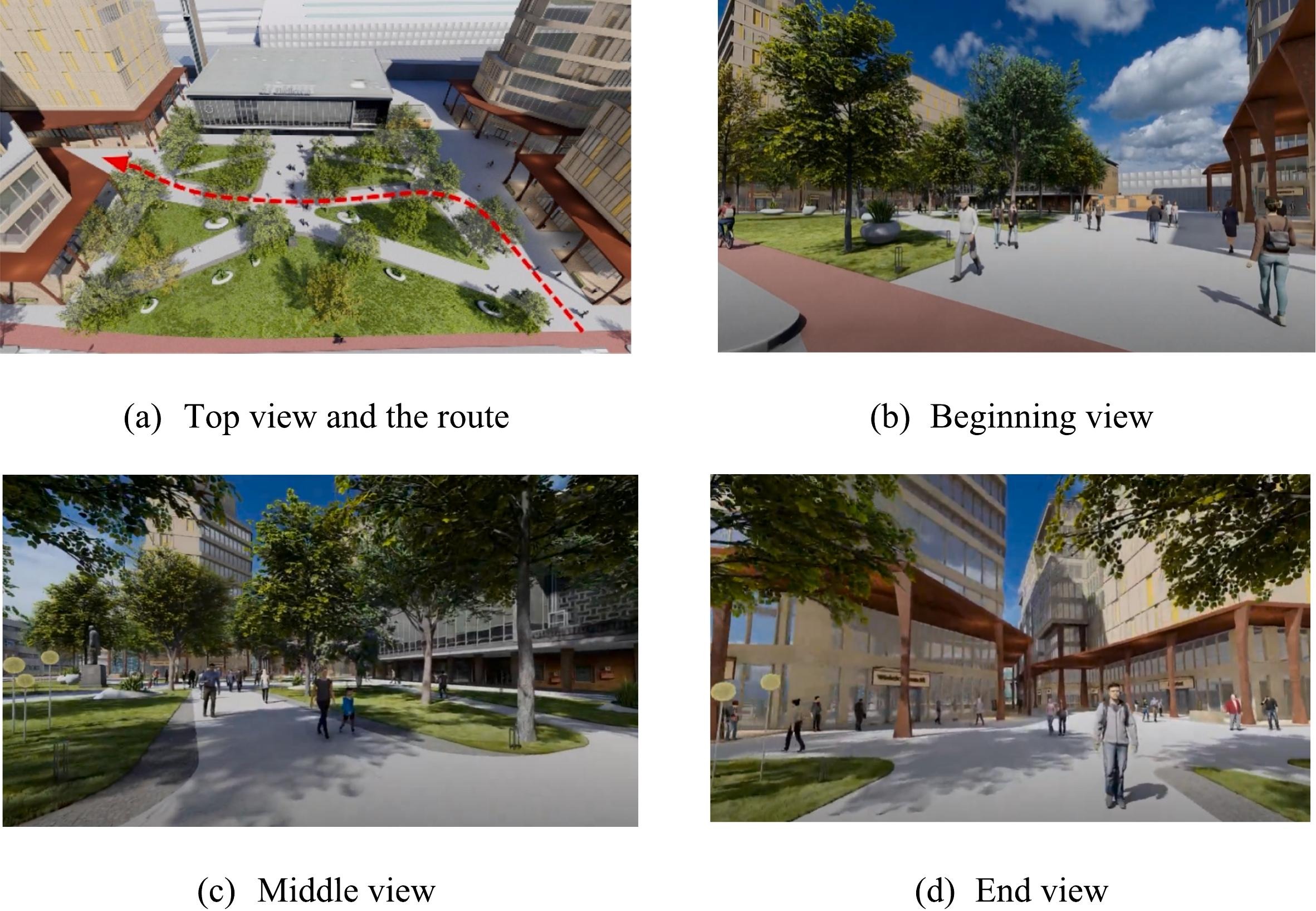

New Article at Cities on “Modeling pedestrians’ activity time-use choices in a virtual urban public space”
A new article titled “Modeling pedestrians’ activity time-use choices in a virtual urban public space: The influences of the environment and affective experience” is published in the Journal Cities. The article is led by our PhD researcher Senqi Yang and co-authored by me (Gamze Dane) and Theo Arentze.
In this study, we investigated the time-use choices of pedestrians on micro-activities at urban public spaces and how these time-use choices are influenced by pedestrians’ experience-based factors (emotions and perceptions). To do so, this study employed the multiple discrete-continuous extreme value (MDCEV) model to estimate the effects of public space environmental attributes, visit purpose, emotion, and perceptions on individuals’ activity time-use choices using data collected in varying virtual hypothetical public spaces. A latent class MDCEV model incorporating personal variables is used to further examine individual heterogeneity. Differences in activity time-use choice patterns between two groups are revealed – one more emotionally driven and the other more cognitively driven.
Building on the findings of this paper, and our previously published paper “Influences of Cognitive Appraisal and Individual Characteristics on Citizens’ Perception and Emotion in Urban Environment: Model Development and Virtual Reality Experiment” at the Journal of Environmental Psychology, we are developing an agent-based model for simulating pedestrian experiences with the aim of supporting experience-based urban public space design.
Update: 27/08/2024

Our Work is Featured in Gebiedsontwikkeling.nu
Our PhD student Senqi Yang’s work is featured in a leading Dutch urban area development platform Gebiedsontwikkeling.nu. The Dutch article can be found here. The article brings our scientific findings into perspective for the redevelopment of the Eindhoven Station area which is planned in the coming 20 years.
This professional article is based on our recent scientific article titled “Influences of Cognitive Appraisal and Individual Characteristics on Citizens’ Perception and Emotion in Urban Environment: Model Development and Virtual Reality Experiment” which is published in the Journal of Environmental Psychology, co-authored by me (Gamze Dane), Pauline van den Berg, and Theo Arentze.
Update: 05/07/2024
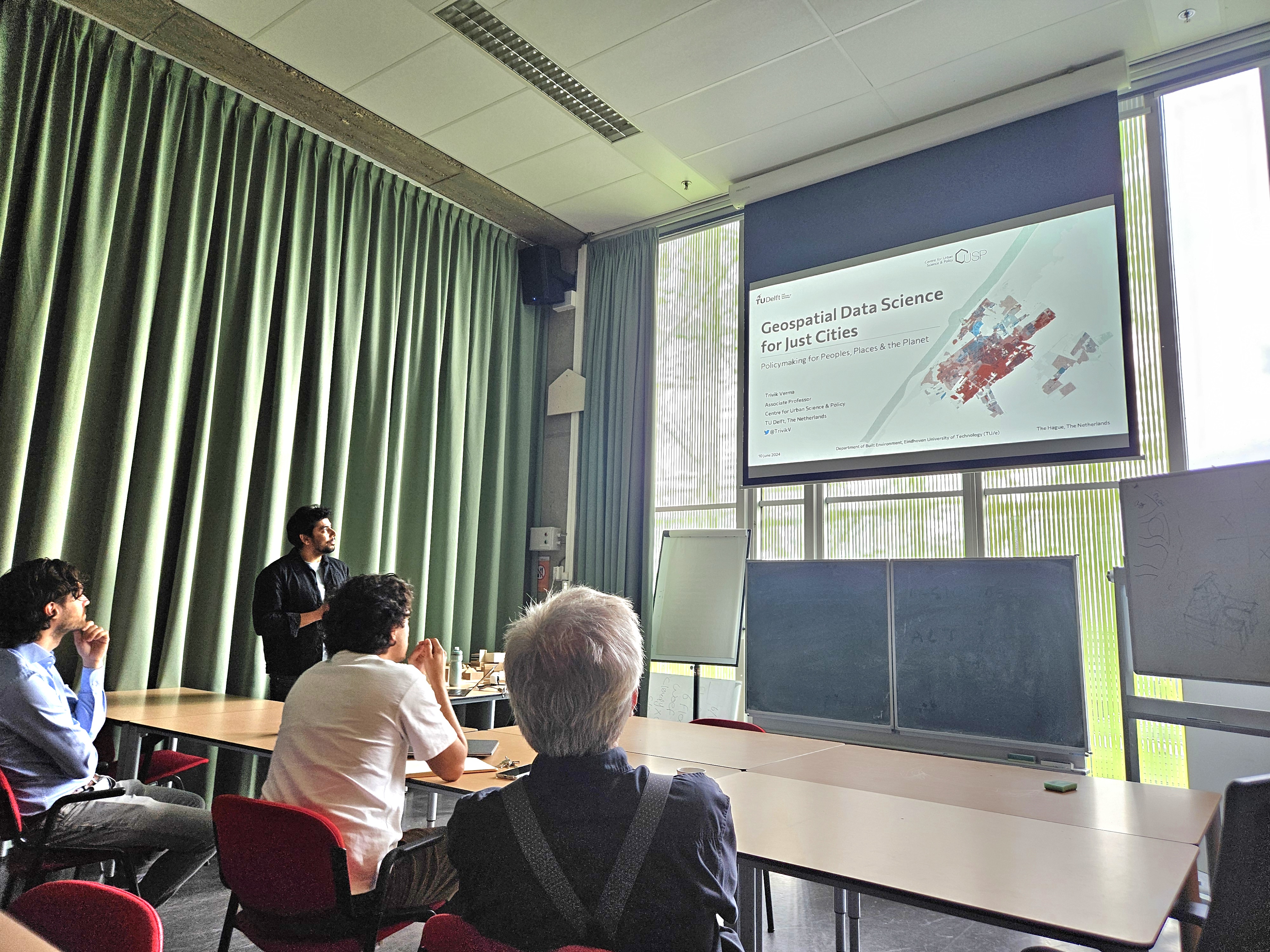
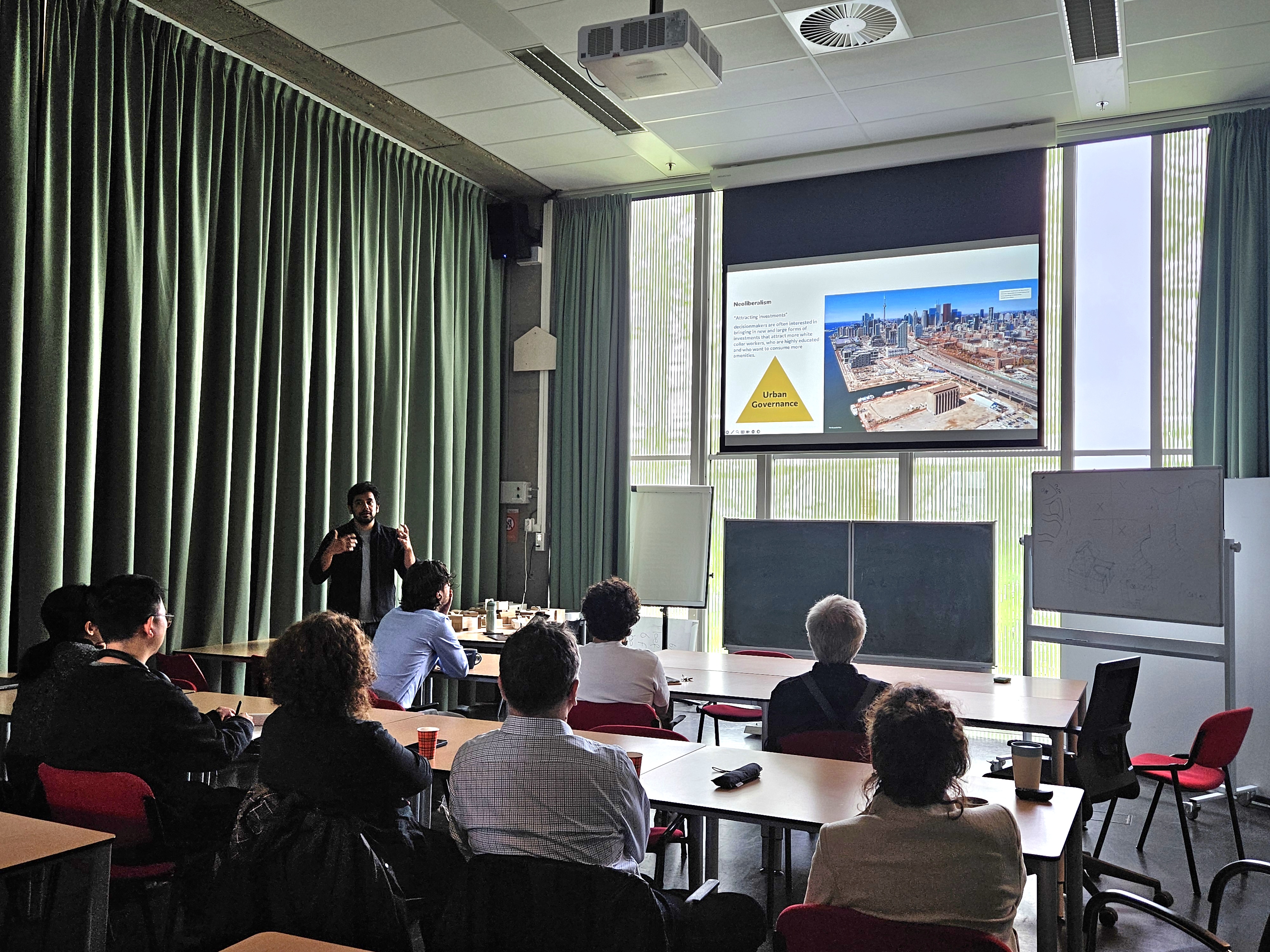
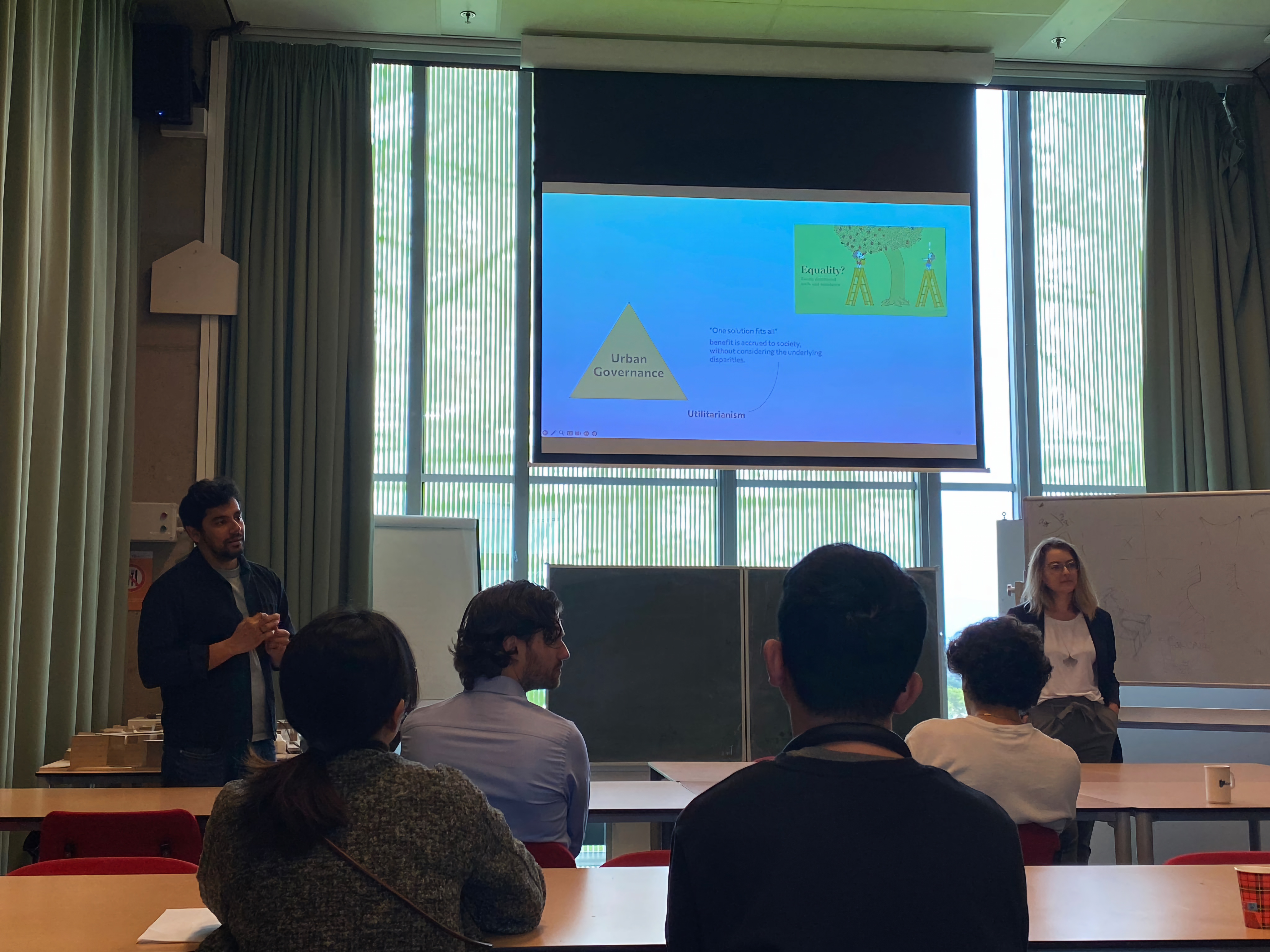
Guest Lecture by Dr. Trivik Verma
On 10 June, we hosted Dr. Trivik Verma, Assoc. Prof. at Delft University of Technology where he co-directs the Centre for Urban Science and Policy (CUSP) and leads the faculty community on critical AI scholarship.
At our department, he delivered a guest lecture on “Geospatial Data Science for Just Cities”. He elaborated on the current state of spatial inequalities that manifest among communities in urban spaces. Through examples of energy, housing, and mobility, he illustrated how designing infrastructure at scale for a better quality of life for all requires us to think in an integrated and systemic manner, while using transdisciplinary and participatory approaches.
Update: 10/06/2024

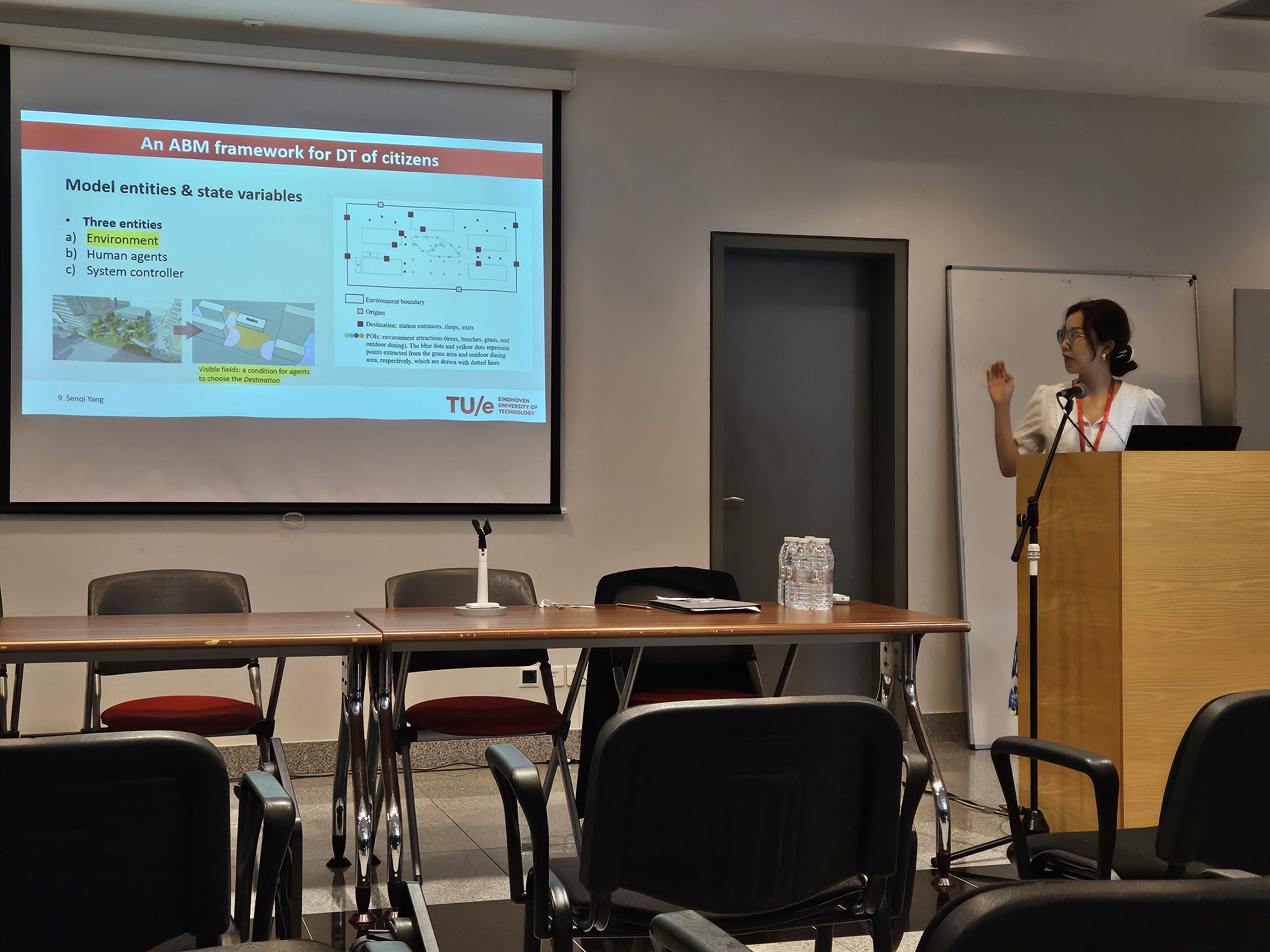


Presence at the 8th Smart Data Smart Cities Conference in Athens
We presented three research studies at the 8th Smart Data and Smart Cities Conference which was held in Athens between 4 and 7 June, 2024.
- Senqi Yang, Gamze Dane, and Theo Arentze – Developing Digital Twins of Citizens in Urban Public Spaces: An Agent-based Modeling Framework
- Shengchen Yin, Dena Kasraian, Gamze Dane and Pieter van Wesemael – Children’s Interaction with Urban Green Infrastructure with(out) a Digital Tool: Results from Spatial Analysis and Observations in the Netherlands
- Sem Akkers, Aloys Borgers, Gamze Dane – Exploring the Effectiveness of Immersive Virtual Reality for Co-design of Urban Public Spaces
Presentations were well-received by the conference audience and resulted in discussions for further collaborations. We look forward to the next conference.
Note: Since we will publish these studies soon in leading journals in the coming months, they are not included in the conference proceedings. If you have any questions regarding these studies, please reach out to us.
Update: 08/06/2024

A New Article on “Human-Centric Computational Urban Design: Optimizing High-Density Urban Areas to Enhance Human Subjective Well-being”.
A new article titled “Human-Centric Computational Urban Design: Optimizing High-Density Urban Areas to Enhance Human Subjective Well-being” is published in Computational Urban Science journal from the Springer Nature Group. The article is based on our alumnus Joppe van Veghel’s MSc thesis and co-authored by me (Gamze Dane), Giorgio Agugiaro (3DGeo Group at TU Delft) and Aloys Borgers.
In this study, we used street view images and a computational design approach to generate optimal high-density urban area design scenarios that can contribute to human subjective well-being. We utilized the street view images from the Place Pulse 2.0 data set to estimate the influence of volumetric built environment attributes on human perception of safety, liveliness, and beauty. Then we incorporated these estimates into a Grasshopper model to quantify the effect of a design scenario on human perceptions by generating sets of 3D isovists automatically at selected positions in the streets of the virtual urban scenarios. Simultaneously, we used single- and multi-objective optimizations on human perception categories to find the optimal design scenarios.
Our approach can pave the way for human-centric computational urban design and contribute to the efforts of representing social processes in urban digital twins.
The open-access paper is now available on here.
Update: 28/05/2024
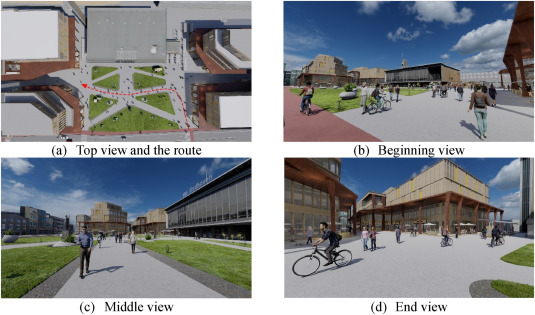


A New Article on “Citizens’ Perception and Emotion in Urban Environment: Model Development and Virtual Reality Experiment”.
A new article titled “Influences of Cognitive Appraisal and Individual Characteristics on Citizens’ Perception and Emotion in Urban Environment: Model Development and Virtual Reality Experiment” is published in the Journal of Environmental Psychology. The article is led by our PhD researcher Senqi Yang and co-authored by me (Gamze Dane), Pauline van den Berg, and Theo Arentze.
In this study, we developed a model that describes individuals’ emotion generation process in the built environment, drawing on multidisciplinary knowledge from AI (Computational Model of Emotion) and environmental psychology. The model was estimated with data collected through an online Virtual Reality experiment.
Our findings help to capture the dynamic process of diverse individuals’ experiences and will support experience-centered design decision-making. The results can be useful inputs for individual-level simulation and prediction, which we are currently working on.
The paper is now available on here.
Update: 02/05/2024


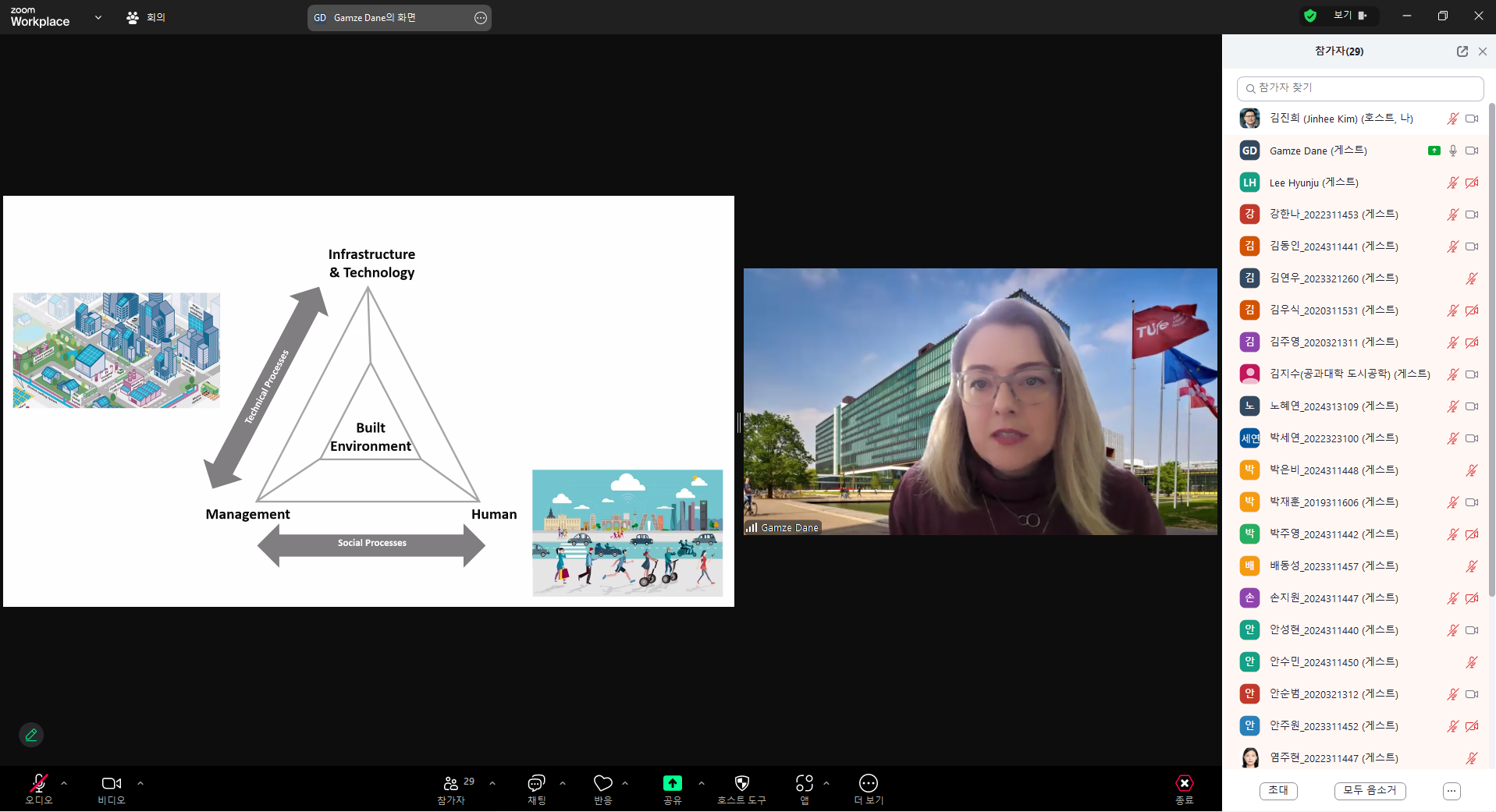
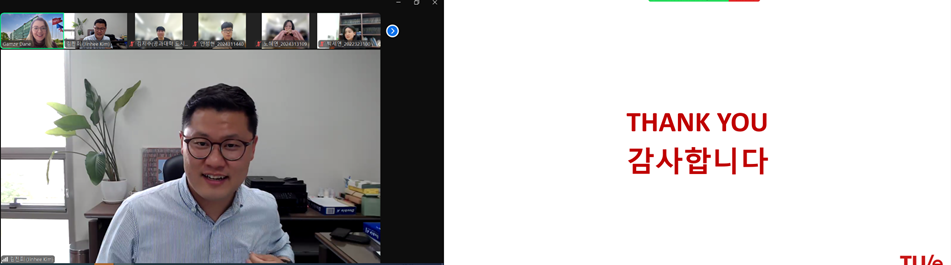
Invited Online Lecture at the Department of Urban Planning and Engineering of Yonsei University in South Korea
On 25 April, I gave an online lecture on “Empowering Inclusive Urban Development through Digital Participatory Methods” to the graduate students of the Department of Urban Planning and Engineering of Yonsei University in South Korea. The lecture was organized for the Sustainable and Smart Regional Development for Inclusive Society graduate education program of the department. Approximately 30 graduate students, including MScs and PhDs, attended the lecture. It was a great pleasure to engage with students from one of the best universities in South Korea.
Many thanks to Dr. Jinhee Kim (Assoc. Prof. and Dean of the department) for inviting me and moderating the session.
Update: 25/04/2024
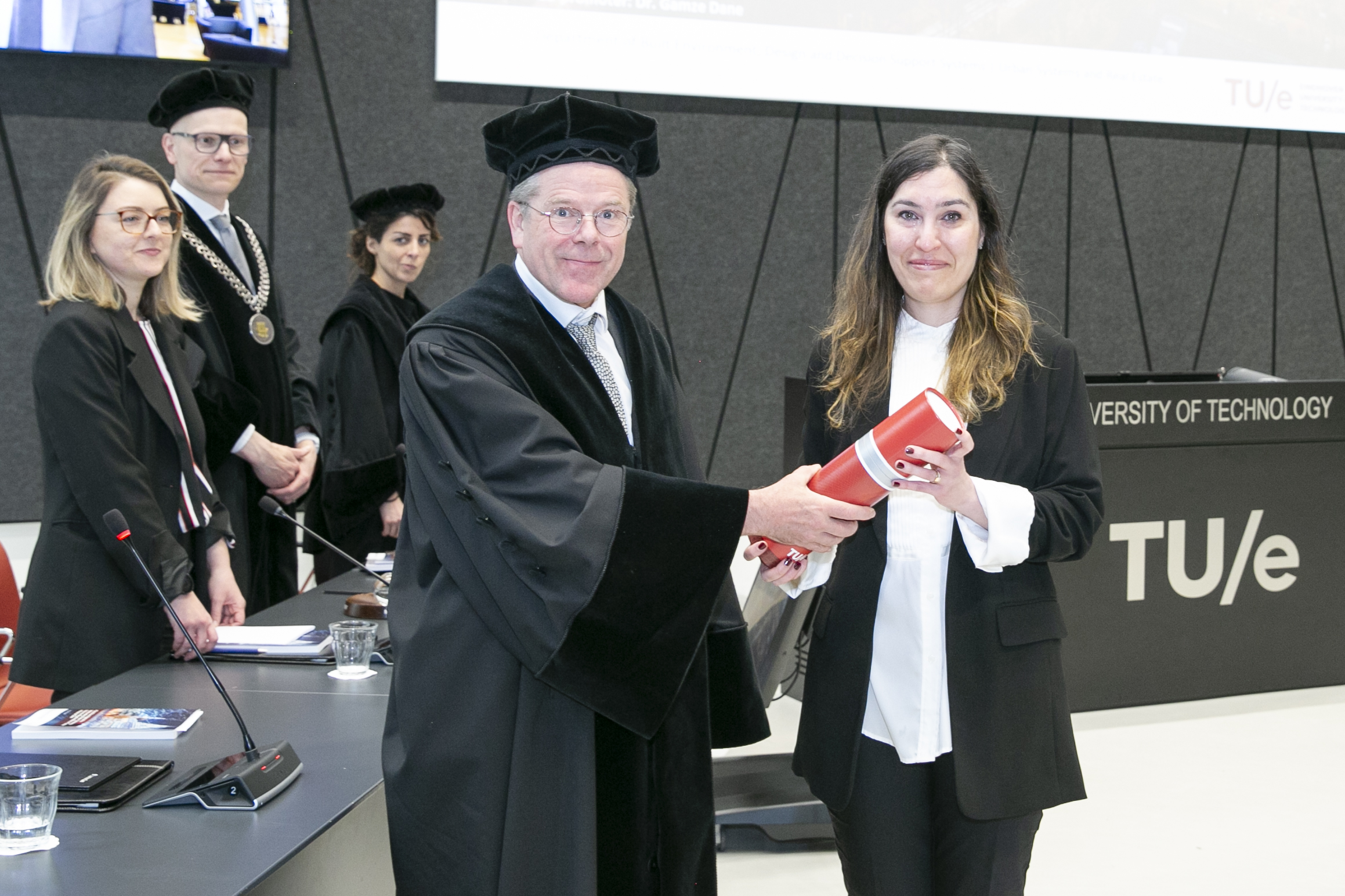


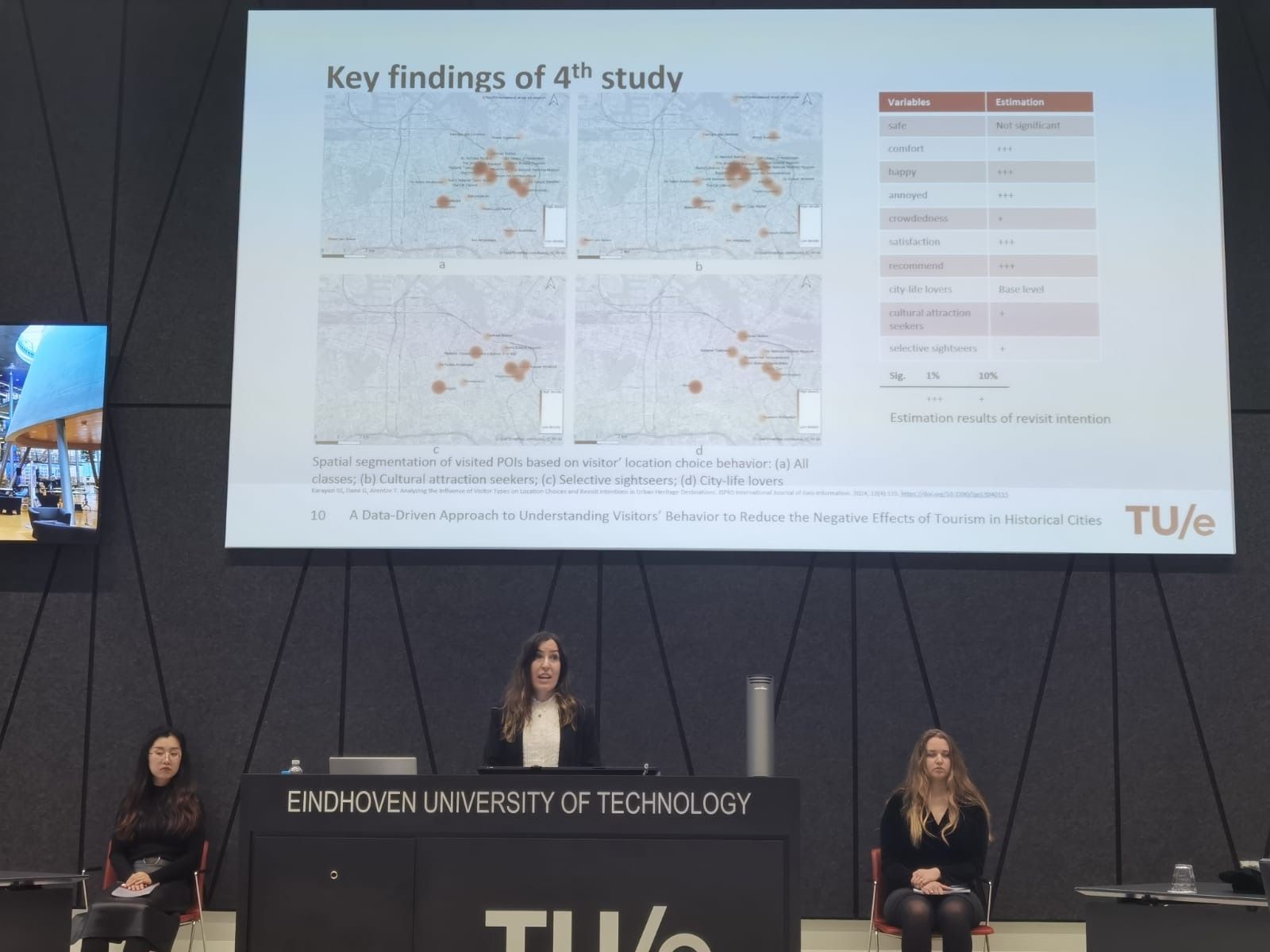

Sezi Karayazi successfully defended her Ph.D. thesis on 16 April!
On 16 April, Sezi Karayazi defended her Ph.D. thesis on “A Data-Driven Approach to Understanding Visitors’ Behavior to Reduce the Negative Effects of Tourism in Historical Cities“, supervised by Dr. Gamze Dane and Prof. Dr. Theo Arentze. This PhD thesis primarily focuses on enhancing the equal accessibility of urban heritage to reduce the spatial concentration of crowds in historical cities and emphasizes the importance of identifying alternative points of interest (POIs) for visitors as a strategy to alleviate overcrowding and promote lesser-known heritage sites. The main research gap lies in comprehending the factors that make certain areas attractive to certain types of visitors and how these factors can be harnessed to guide visitors toward alternative POIs. This research aims to obtain a better understanding of (i) the current behavior of visitors in a historical city and (ii) how we can address this question using revealed data derived from internet sources and complementary survey data.
Congrats Sezi, and good luck in your future career!
Update: 24/04/2024

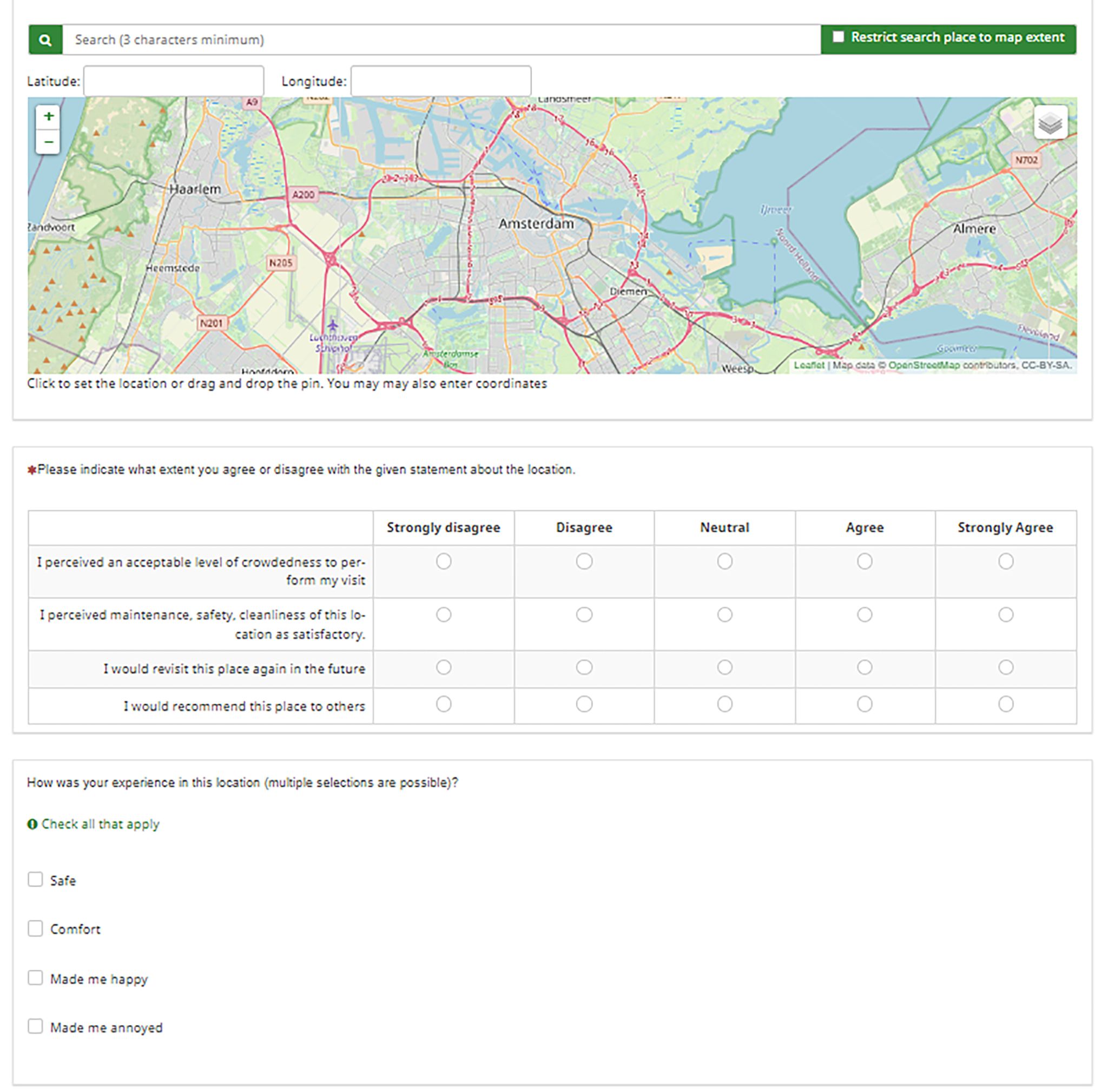
Two Articles on Visitors’ Heritage Location Choices are out!
Two journal articles on Visitors’ Heritage Location Choices are published in the lead of my PhD student Sezi Karayazi.
The first article titled “Visitors’ Heritage Location Choices in Amsterdam in Times of Mass Tourism: A Latent Class Analysis” is published in the Journal of Heritage Tourism. This study aimed at identifying visitor segments based on their location choice behavior under the context of over-tourism challenges. For that purpose, a choice experiment was implemented and completed by 437 individuals who visited Amsterdam (our case area) in recent years. A latent class analysis revealed three segments of visitors that can be labeled as cultural-attraction seekers, selective sightseers, and city-life lovers. The results show that crowdedness and entrance fees for additional experiences significantly influence visitors’ location choices across all segments.
The second article titled “Analyzing the Influence of Visitor Types on Location Choices and Revisit Intentions in Urban Heritage Destinations” is published in the ISPRS International Journal of Geo-Information. This study investigated the location choice behavior of visitors in urban heritage areas in the context of overcrowdedness and visitor experiences. We looked at the relationship between visitor segments (identified in the first paper) and their choice of specific POIs, and the impact of visitors’ experiences on their intentions to revisit. In our case area Amsterdam, we identified relationships between various POIs, including popular museums such as the Rijksmuseum and Madame Tussauds, and different visitor segments such as “cultural attraction seekers”, “selective sightseers”, and “city-life lovers”. Our findings revealed that affective experiences, such as comfort, happiness, and annoyance, significantly influence visitors’ intentions to revisit.
Both articles are open access. Enjoy reading!
Update: 02/04/2024
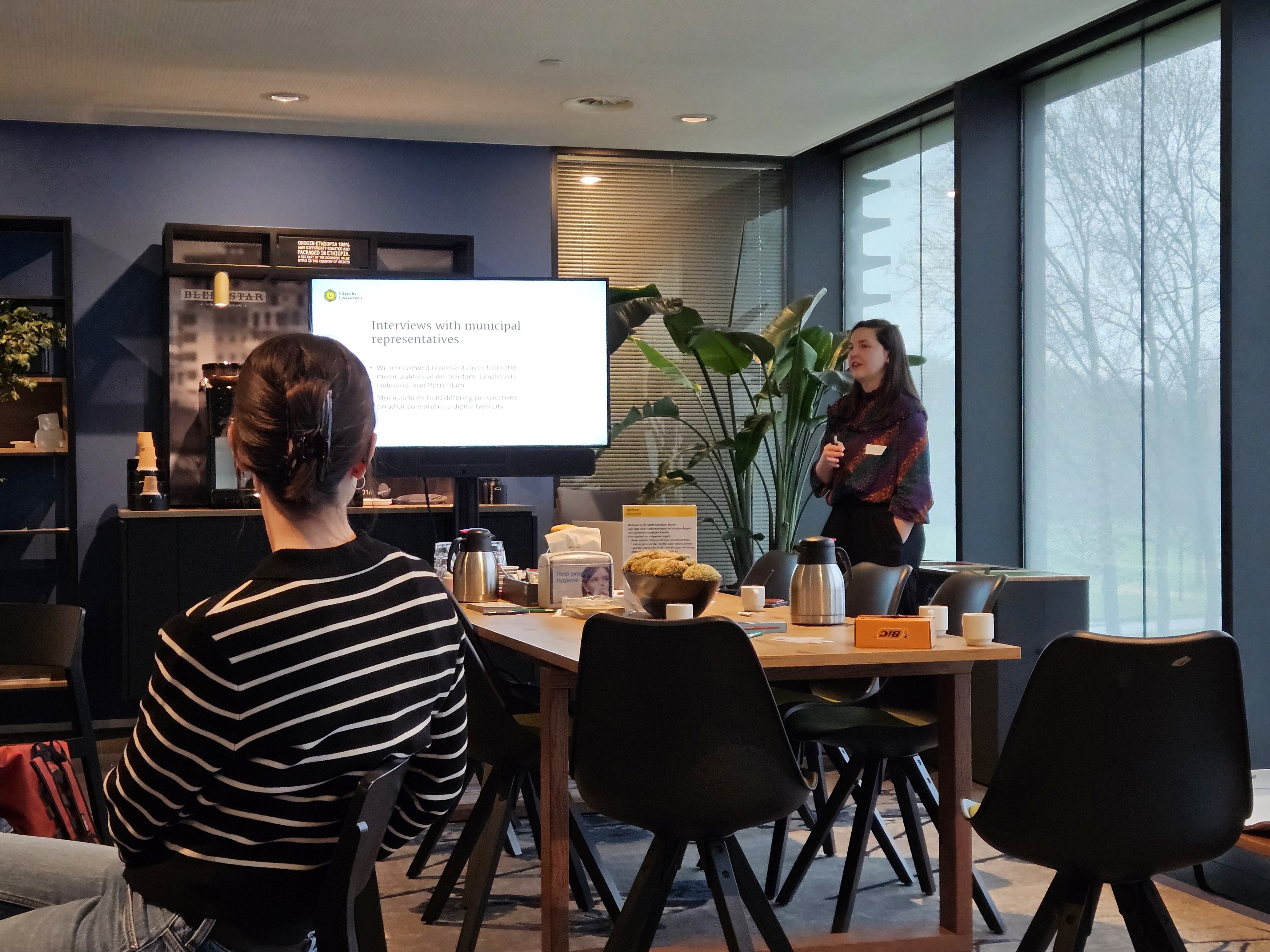
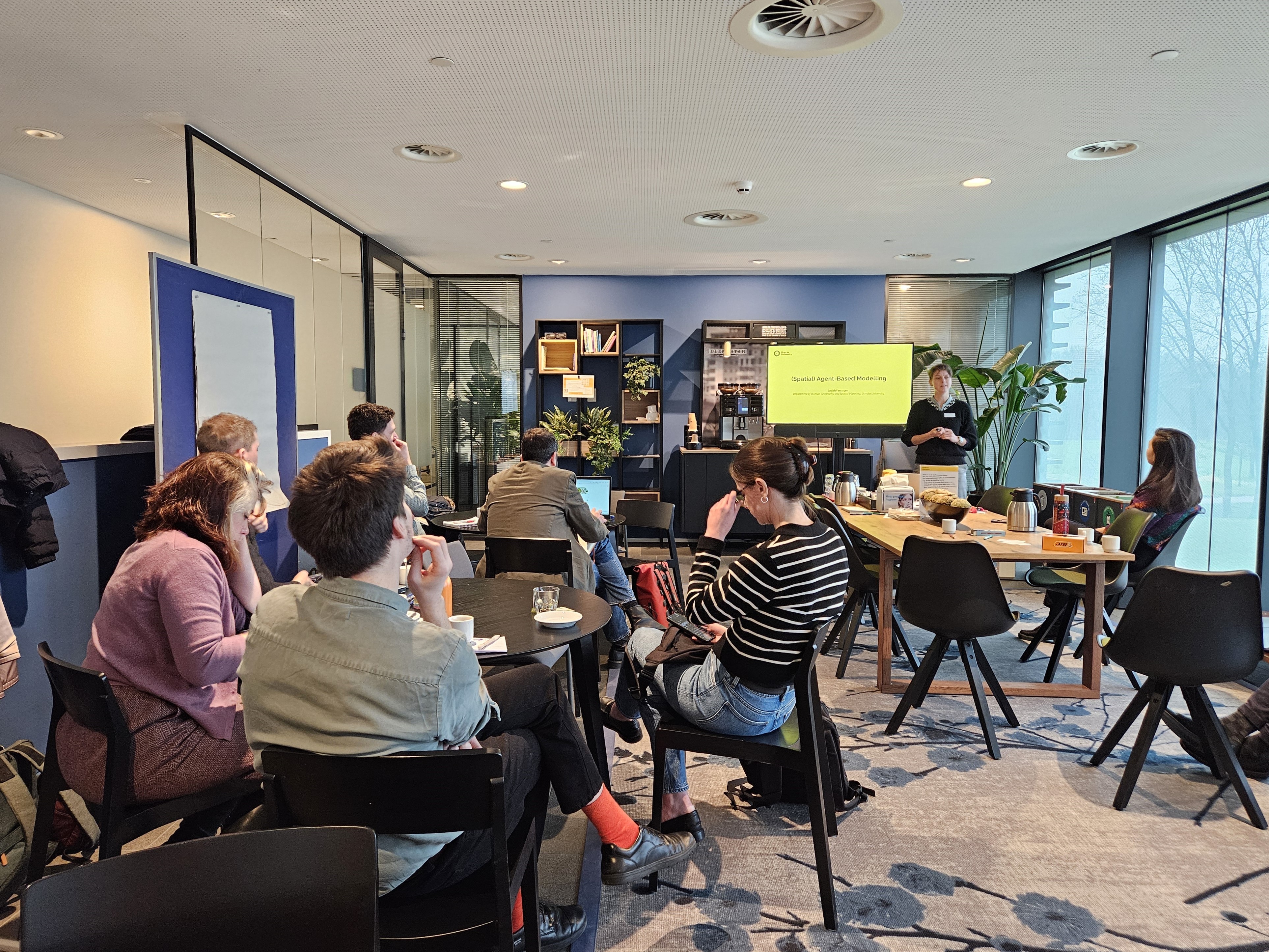


Interdisciplinary Workshop on “Human-Emotional Agents in Urban Digital Twins for Healthy Cities: Challenges and Opportunities“
As part of the HEADS4HEALTH project funded by EWUU Alliance, a 2-day workshop on “Human-Emotional Agents in Urban Digital Twins for Healthy Cities: Challenges and Opportunities” was organized by Letícia Marçal Russo (UU), Judith Verstegen (UU), Gamze Dane (TU/e), Marco Helbich (UU) and Arend Ligtenberg (WUR). We aimed to facilitate an interdisciplinary discussion among professionals from different domains on “urban-scale digital twins and the integration of human representation in them”. Digital twin cities typically consist of 3D buildings but mostly lack the representation of humans. That is, they do not incorporate virtual citizens, i.e., software agents, that can experience the digital environment and react to it, as real citizens would. Incorporating agents in digital twins may allow testing of how these citizens would respond to possible urban design scenarios and how this new design scenarios would affect their health and well-being.
In the workshop, we had presentations about best practices of urban digital twins (by Letícia Marçal Russo and Roland Geraerts), agent-based modeling (by Judith Verstegen), modeling experiences of humans in the built environment (by Gamze Dane and Senqi Yang), as well as interactive sessions about Human-Emotional Agents in Urban Digital Twins for Healthy Cities with our interdisciplinary group of participants from domains of geo-sciences and remote sensing, urban planning and design, landscape architecture, cognitive psychology, health demography, human geography, and computer science. (Participants: Agnes Patuano (WUR), Chris Janssen (UU), Gabriele Filomena (Uni of Liverpool), Kirsten de Beurs (WUR), Kristina Thompson (WUR), Mehdi Dastani (UU), Mila Koeva (UT), Pirouz Nourian (UT), Roland Geraerts (UU), Senqi Yang (TU/e))
Thanks to all participants for making this workshop a great event and we are looking forward to working together on our shared future agenda on the topic.
Update: 02/03/2024
Special Issue “Research on Smart Healthy Cities and Real Estate” in Buildings
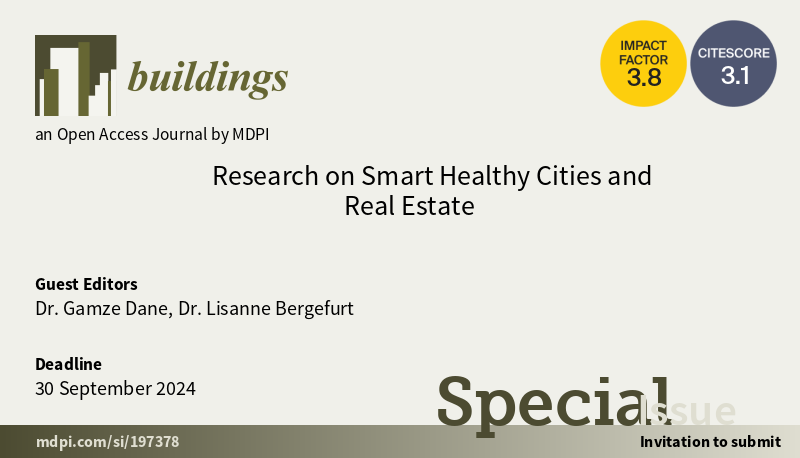
My colleague Dr. Lisanne Bergefurt and I will be guest editors of the Special Issue “Research on Smart Healthy Cities and Real Estate” in the journal Buildings. We welcome papers that address the potential positive influence of smart technologies within cities and real estate (i.e., IoT and sensor networks, digital applications for citizen engagement) on people’s experiences and behavior. Additionally, we would like papers that emphasize the use of smart technologies for developing new design guidelines for the built environment. We aim for empirical papers on the perception of smart technologies within the built environment and also encourage the use of novel methods to make cities and real estate smarter and healthier. High-quality systematic reviews related to this topic are also welcome. The deadline for manuscript submissions is on the 30th September 2024. More information regarding the special issue and the journal can be found here.
Update: 23/02/2024


Invited Seminar “Digital Planning for Sustainable Urban Future” at Utrecht University
The seminar on “Digital Planning for Sustainable Urban Future”, organized by Yanliu Lin, Stan Geertman, Patrick Witte, and Nuno Pinto, was held on 24 January 2024 at Utrecht University. The hybrid seminar featured several engaging presentations and insightful discussions, covering new theoretical perspectives, innovative methodological approaches, and valuable lessons in digital planning. The presentations from the international community of digital planning highlighted the implementation and application of various digital technologies (e.g., digital twins, generative AI, virtual reality, social media, and planning support science) in planning processes and their profound impacts on sustainable development.
During the seminar, I gave a presentation on the CoHeSIVE project which received positive feedback resulting in follow-up discussions on future collaborations. Thanks to organizers for the productive seminar.
Update: 02/02/2024

3rd Hackathon of the Dutch Societal Innovation Hub (DSIH) was held in Eindhoven
3rd Hackathon of the Dutch Societal Innovation Hub (DSIH) was held in Eindhoven on 23 January 2024. DSIH project funded by the Digital Europe Program of the European Commissi`on and the Dutch Ministry of the Interior, aims to help cities and regions with major societal transformations using innovation, digitization and new technology. For that purpose, it focuses on Digital Twinning and Urban Platforms and their use for Sustainable, Safe and Healthy Cities by creating a multiple helix ecosystem where citizen participation is the center of attention.
During the 3rd Hackathon of DSIH, work groups of “ecosystem building”, “citizen science and participation”, and “integral urban planning” came together and engaged in activities to define a functioning 2024 DSIH program. In this project, TU/e is represented by me and Dena Kasraian.
Update: 27/01/2024
New Researcher, Carlos Campoverde, on the topic of Responsive Immersive Digital Twin for Public Space Design
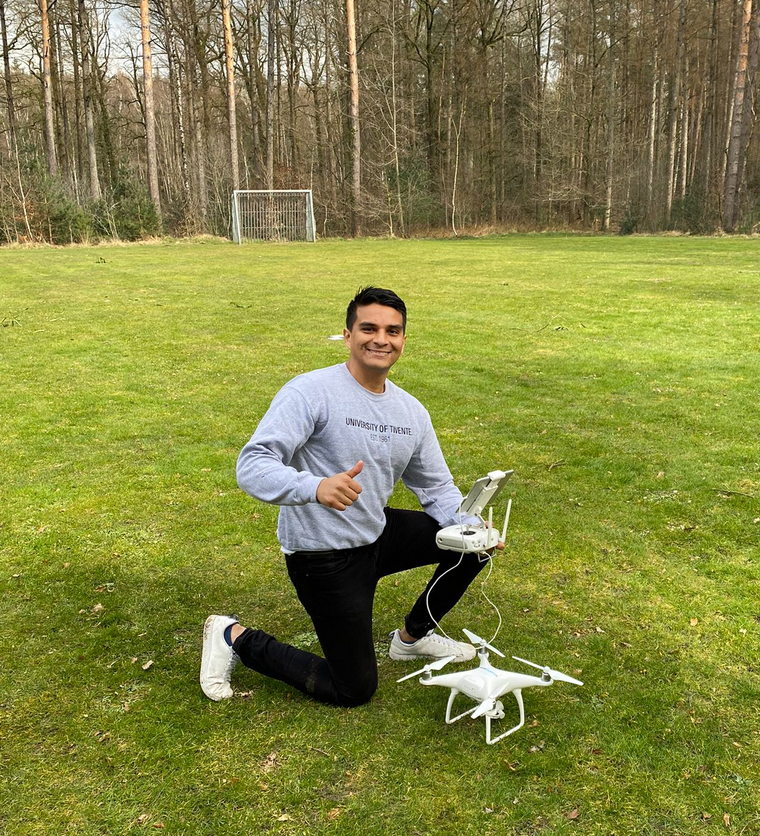
Carlos Campoverde joined us at UDI to strengthen our urban digital twinning efforts in the Brainport region. During an 8-month project, he will develop a responsive immersive digital twin framework to support co-design and decision-making for public spaces. This project is an extension of the CoHeSIVE project. This will be a cross-university collaboration between the Department of Built Environment of the Eindhoven University of Technology (represented by Dr. Gamze Dane) and the Faculty of Geo-Information Science and Earth Observation of the University of Twente (represented by Dr. Pirouz Nourian and Dr. Mila Koeva).
We wish Carlos success in this journey!
Update: 02/12/2023
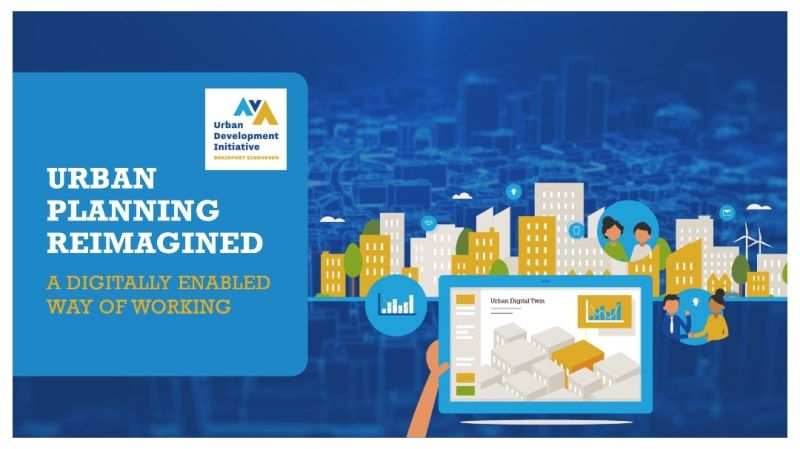
“Urban Planning Reimagined: a digitally enabled new way of working” our manifest at UDI is out!
The future is urban. It is also increasingly complex to plan for and manage. It is beyond the capabilities of any individual sector to solve multiple interrelated
environmental, socio-economic, and spatial challenges in a dynamic and complex multi-stakeholder system that faces an unpredictable future. Therefore, a holistic approach is needed to plan for future urban systems while considering the complexities and interdependencies of their many subsystems.
Fortunately, the digital revolution provides the potential for addressing this complexity and enables a new way of working for integrated urban planning.
In this manifest, we discuss how digitalization can change the way of working in urban planning processes to make it smarter, sustainable and inclusive.
Read the manifest here.
Update: 25/11/2023


Invited Lunch Lecture at Center for Urban Science and Policy at Delft University of Technology
I was invited to give a lunch lecture on the topic of “Empowering Inclusive Urban Development through Digital Participatory Methods”, as part of the Centre of Urban Science & Policy events at Delft University of Technology. The lecture took place on 21 November, at the Department of Technology, Policy and Management, and it was also open to researchers from the Department of Architecture and Built Environment of TU Delft.
Thanks to Trivik Verma for inviting me and organizing this lecture!
Update: 23/11/2023
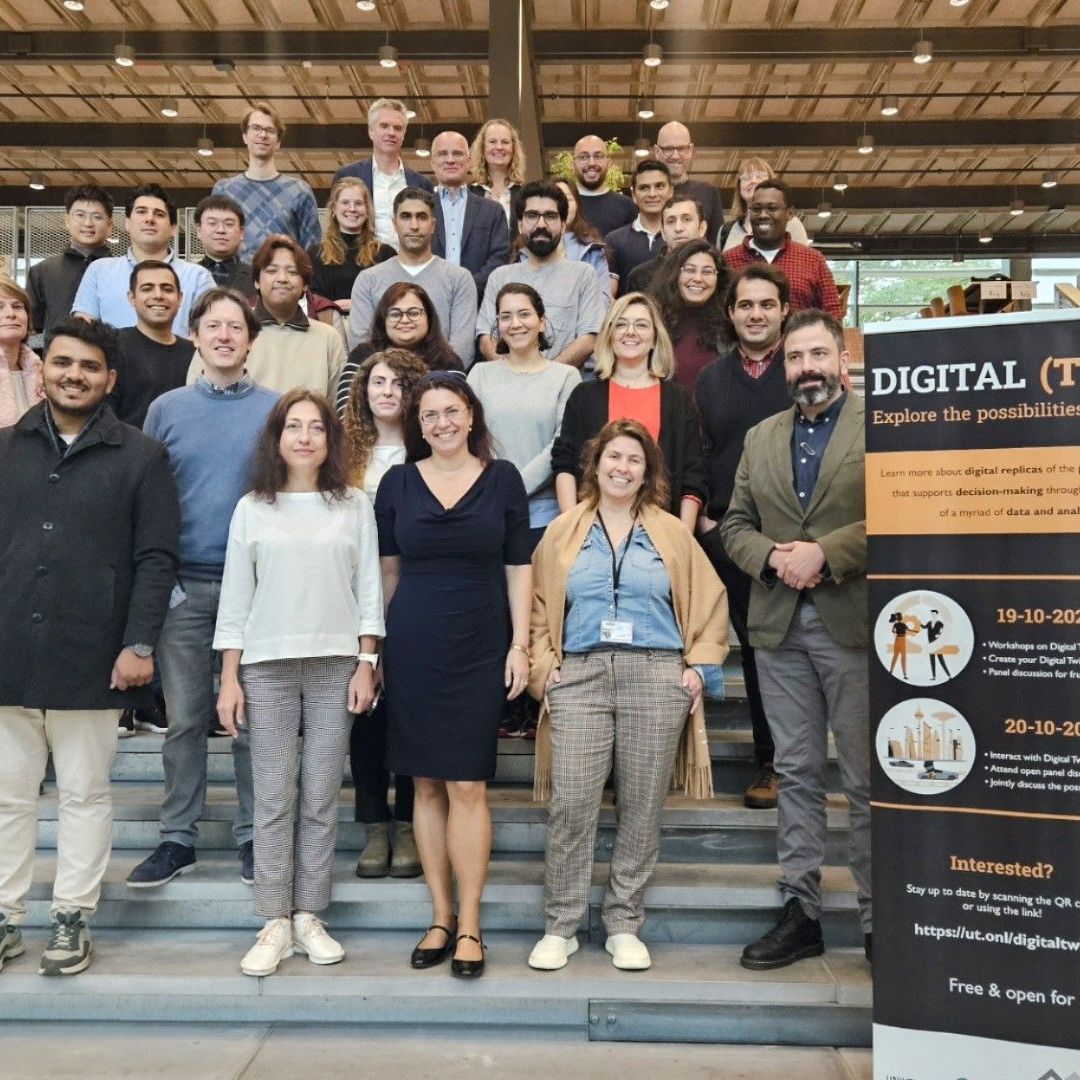


Invited Presentation at DIGITAL (T)WIN IT seminar of Digital Twin GeoHub
I joined the seminar “DIGITAL (T)WIN IT” on October 19-20, 2023, in Enschede in the Netherlands, as part of the Digital Twin Geohub events at the University of Twente. The seminar was a practical overview of the development and applications of City Digital Twins with expert speakers from academia, government, and industry.
As a contribution to this seminar, I gave a talk on Friday, October 20 on “The Use of Virtual Reality for Urban Design and Planning”. The recordings of the seminar can be found here.
Thanks to Mila Koeva and her team for organizing this inspiring event!
Update: 08/11/2023


Vacancy for Researcher Position on “AI-based Decision Support Systems for Urban Development“
Are you passionate about leveraging cutting-edge AI technologies to support urban development processes for building smarter, sustainable, and livable cities? If you’re motivated by the prospect of creating AI-based Decision Support Systems that empower informed decision-making for the cities of the future, we invite you to apply for this job. Collaborate with a team of researchers and our public and private partners, and make an impact in our region and beyond.
For more information on the job and application procedure, please see here! The deadline is 26 October 2023.
Update: 04/10/2023
New EngD Student, Golnoosh Sabahifard, on the topic of Human-centered Urban Digital Twinning
A new EngD student, Golnoosh Sabahifard, joined to strengthen our urban digital twinning efforts in the Brainport region. During a 2-year project, she will develop a human-centered urban digital twin framework for supporting decision-making in the Brainport region. We thank our funder Eindhoven Engine and Paul Desmedt for starting this cross-departmental collaboration between Industrial Design (Prof. Dr. Regina Bernhaupt) and Built Environment (Dr. Dena Kasraian & myself-Dr. Gamze Dane).
We wish her success in this EngD journey!
Update: 16/09/2023

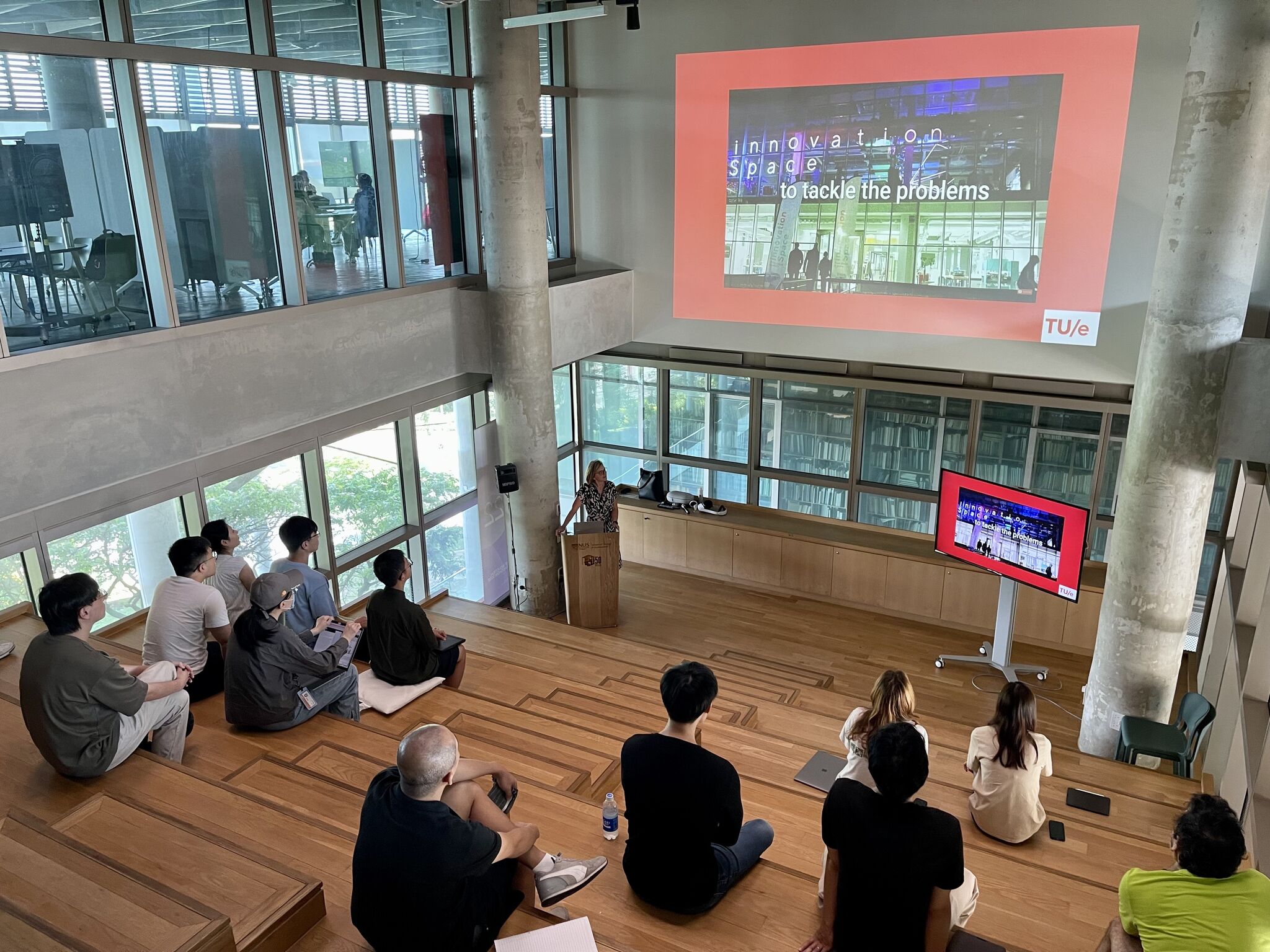

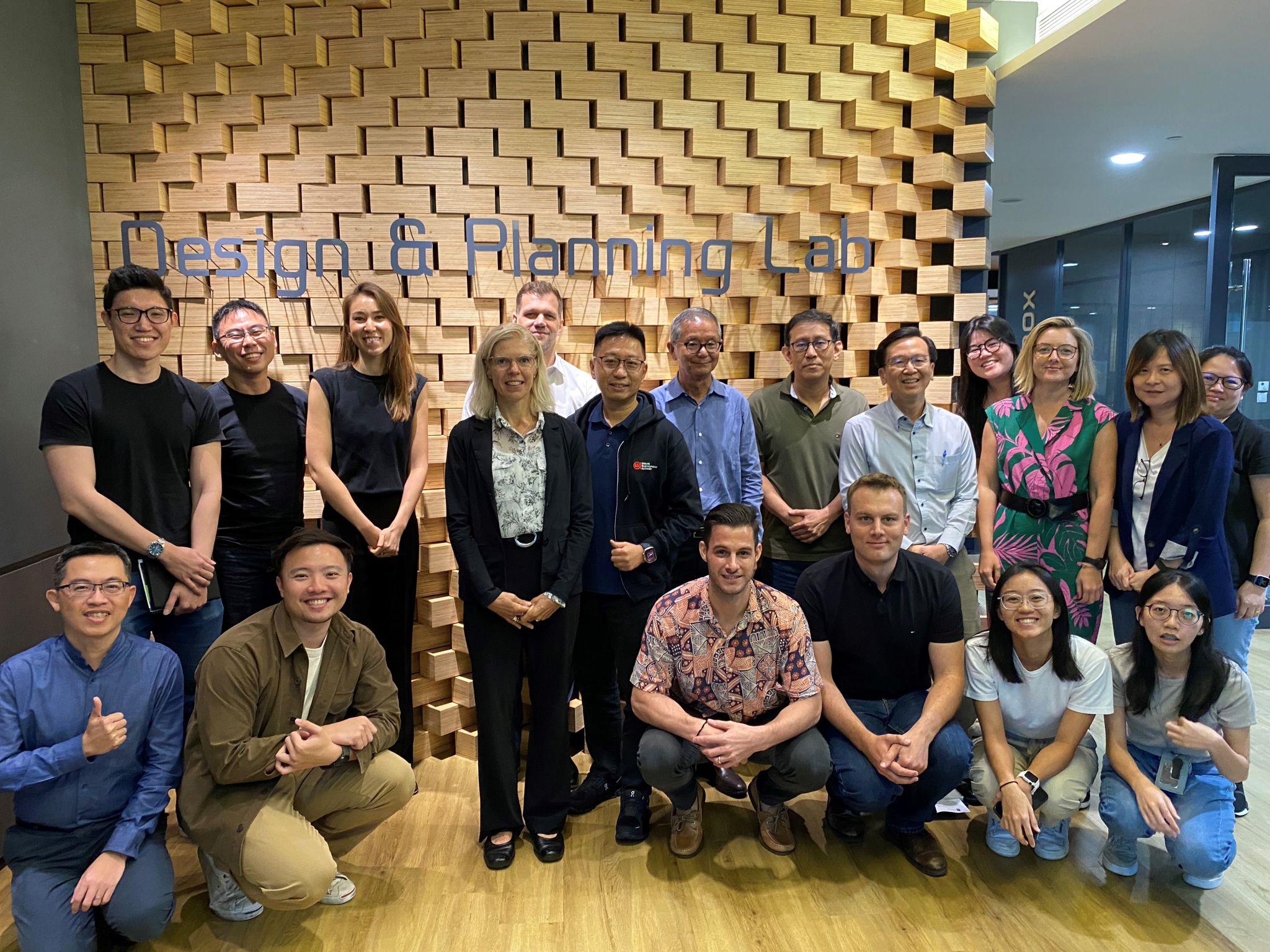
Research Visit at Urban Analytics Lab of National University of Singapore
As a visiting scholar, I was at the Urban Analytics Lab (led by Dr. Filip Biljecki) of the National University of Singapore (NUS) for two weeks in August. Urban Analytics Lab (UAL) focuses on developing innovative methods, datasets, and software to advance data-driven urban planning, digital twins, and geospatial technologies in building and managing the smart cities of tomorrow.
During my visit, I gave a lecture to the Department of Architecture at NUS on “Experiencing the Future of Cities through Virtual Reality” where I focused on my recent research activities about the use of Virtual Reality for urban studies. Additionally, I had the opportunity to have bilateral meetings with other principal investigators such as Prateek Bansal (Behavioural & Cognitive Science Lab), Clayton Miller (Building and Urban Data Science Lab), and Yuan Chao (Urban Climate Design Lab) with whom we discussed possible future collaborations.
I also had the opportunity to join an event on “Urban Digital Twins and Data-driven Decision Making” organized by the Netherlands Innovation Network Singapore and the Singapore Urban Redevelopment Agency. As a follow-up to this event, we will explore the possibilities for future cooperation between Dutch and Singaporean academic and governmental institutions.
Thanks to Filip Biljecki and his team for the hospitality! Looking forward to enhancing our collaborations.
Update: 30/08/2023
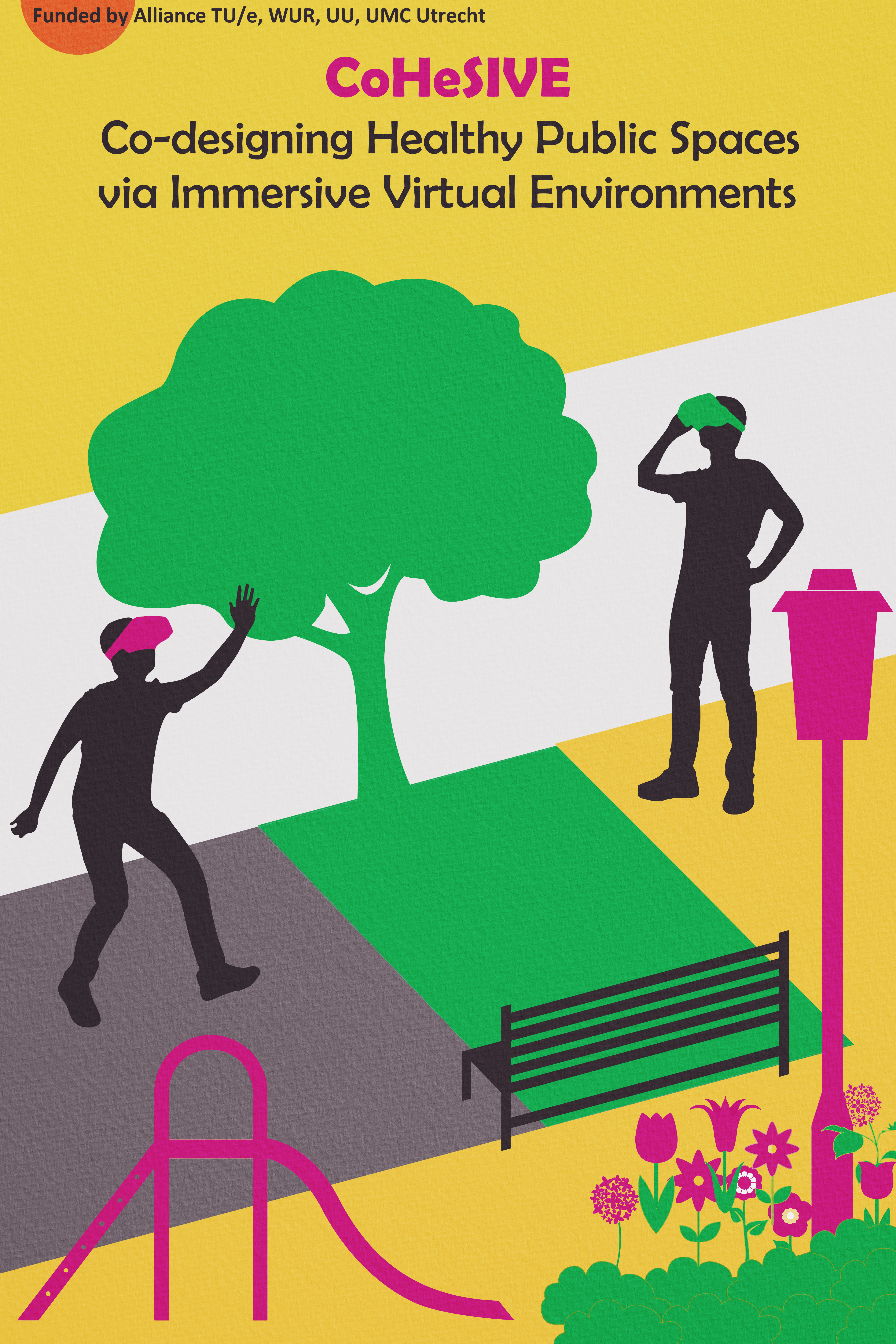

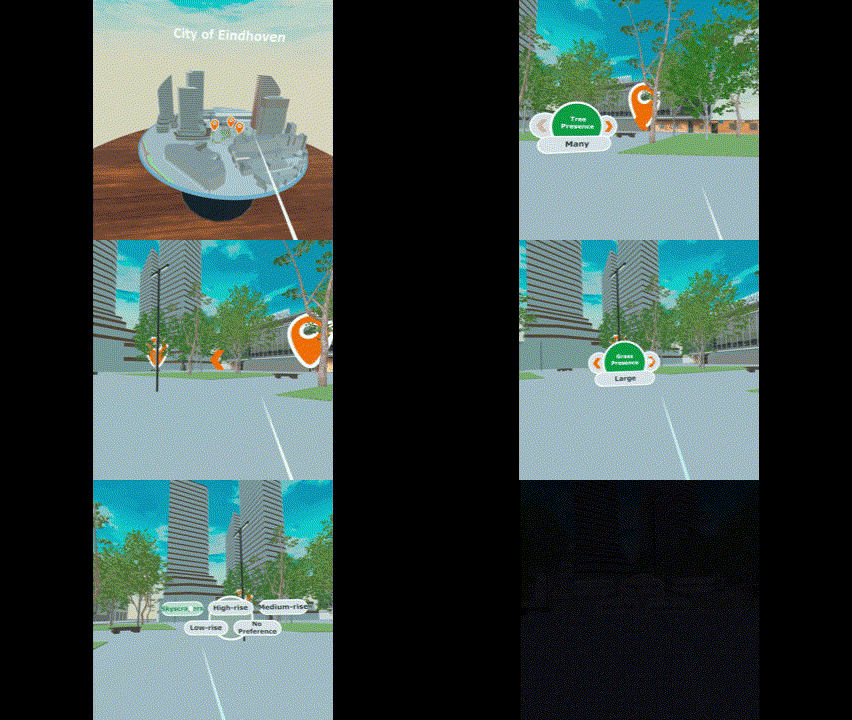
CoHeSIVE interactive immersive virtual reality app is at National XR Day!
The CoHeSIVE application which aims to support citizen participation for the design of public spaces through an interactive immersive virtual reality solution, will be demonstrated at the National XR Day in Delft on July 5. The demonstration of the CoHeSIVE app will be done by project researcher Suzan Evers at Demo Area 2 between 12:00 and 16:00.
The CoHeSIVE project (funded by EWUU) has investigated how an Immersive VR app can be developed with people and for people, and can be used for participatory design processes of healthy public spaces.
Update: 22/06/2023


PhD researcher Senqi Yang presented her project at ICEP 2023 Conference!
PhD researcher Senqi Yang presented the first findings from her PhD project at the International Conference on Environmental Psychology (ICEP2023), with the presentation titled: “Influences of cognitive appraisal and individual characteristics on citizens’ perception and emotion in the urban environment: model development and VR experiment”, co-authored by Gamze Dane, Pauline van den Berg and Theo Arentze.
In her research, so far, she developed an integrative framework to model individuals’ experiences of urban spaces by focusing on individuals’ perceptions (safety, liveliness, comfort, and legibility) and emotions (pleasure, arousal, dominance) toward urban environment attributes. To test this model through path analysis, she collected data via a self-developed online virtual reality (VR) experiment.
Update: 01/07/2023

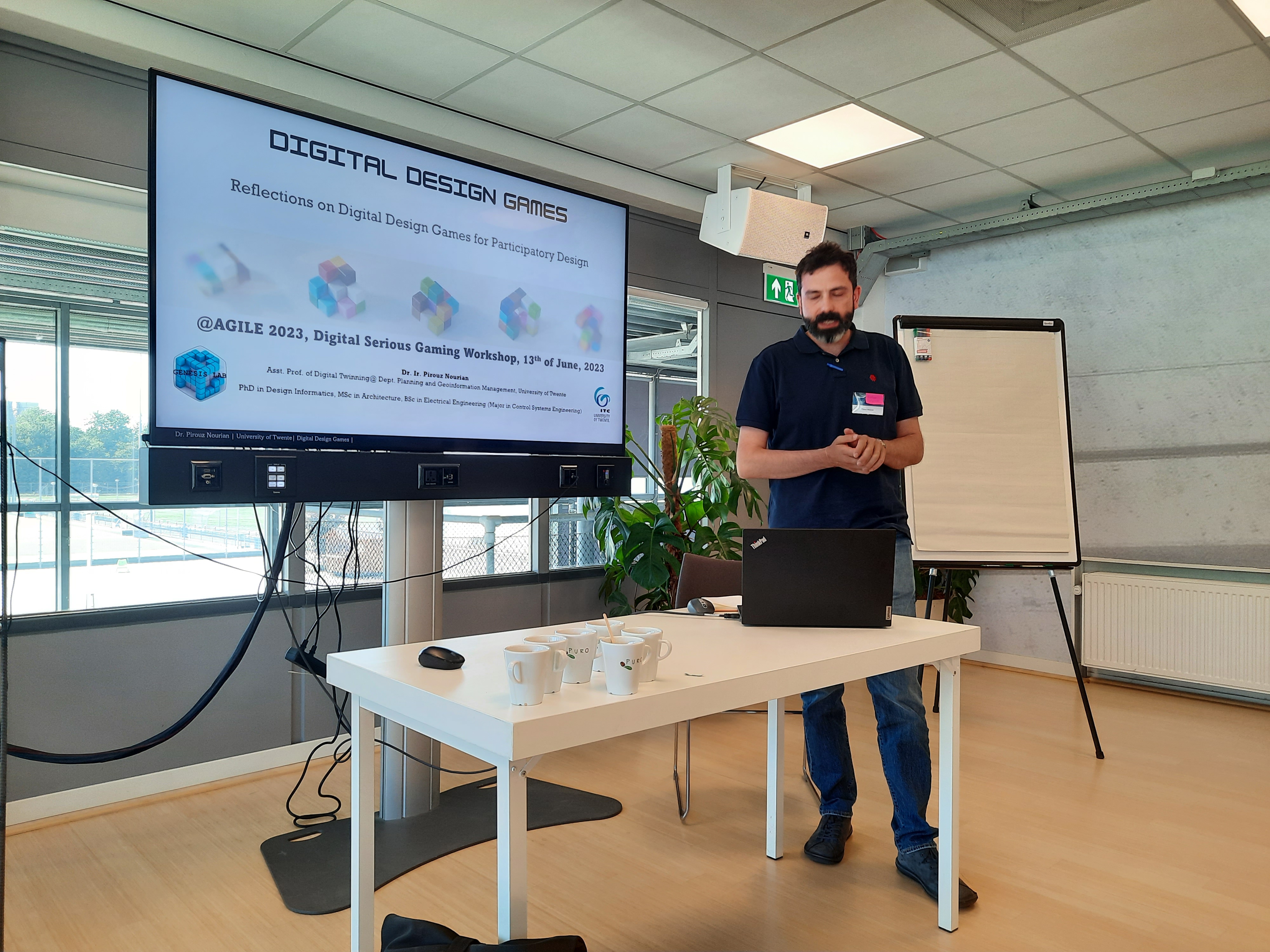
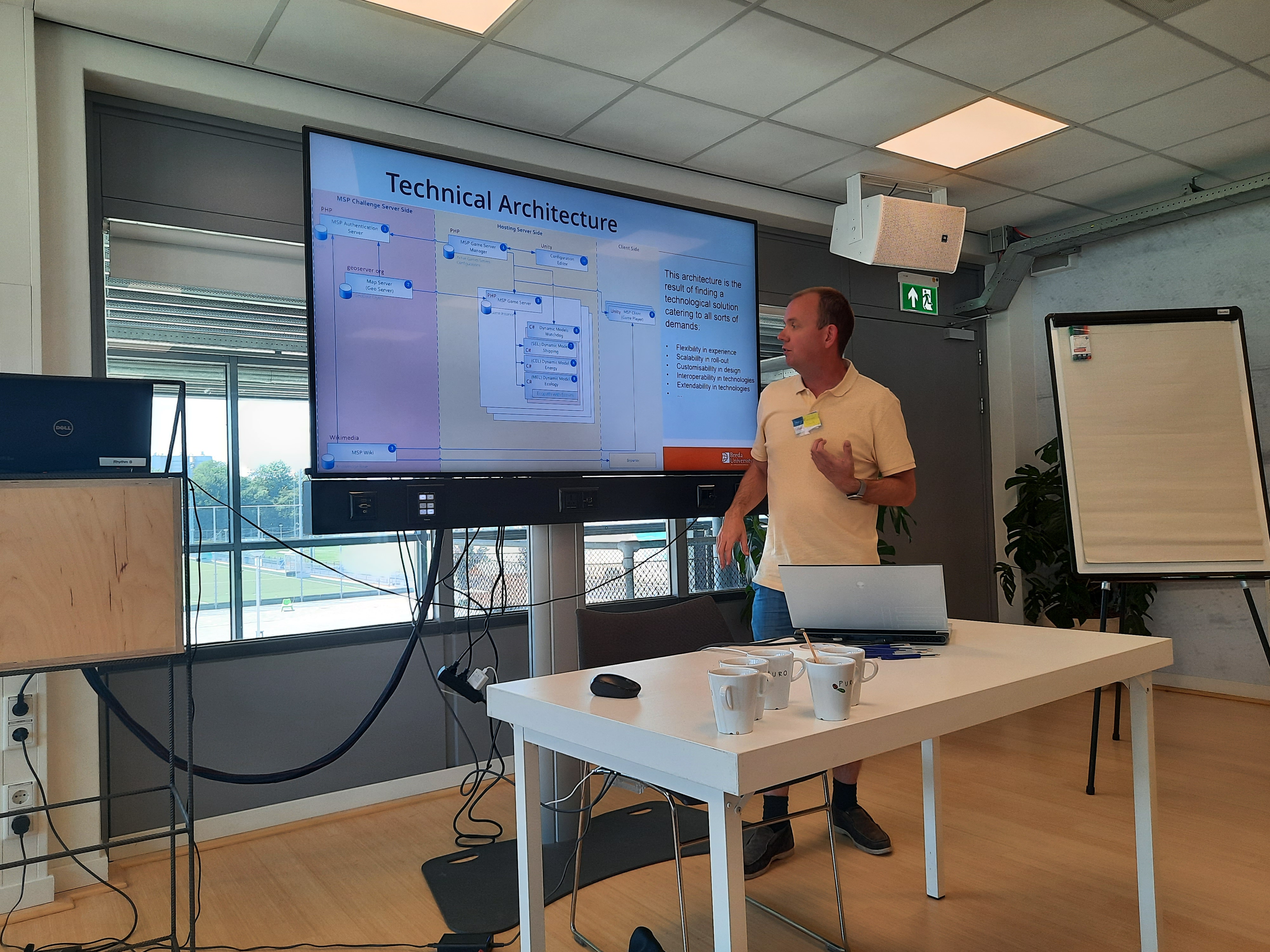
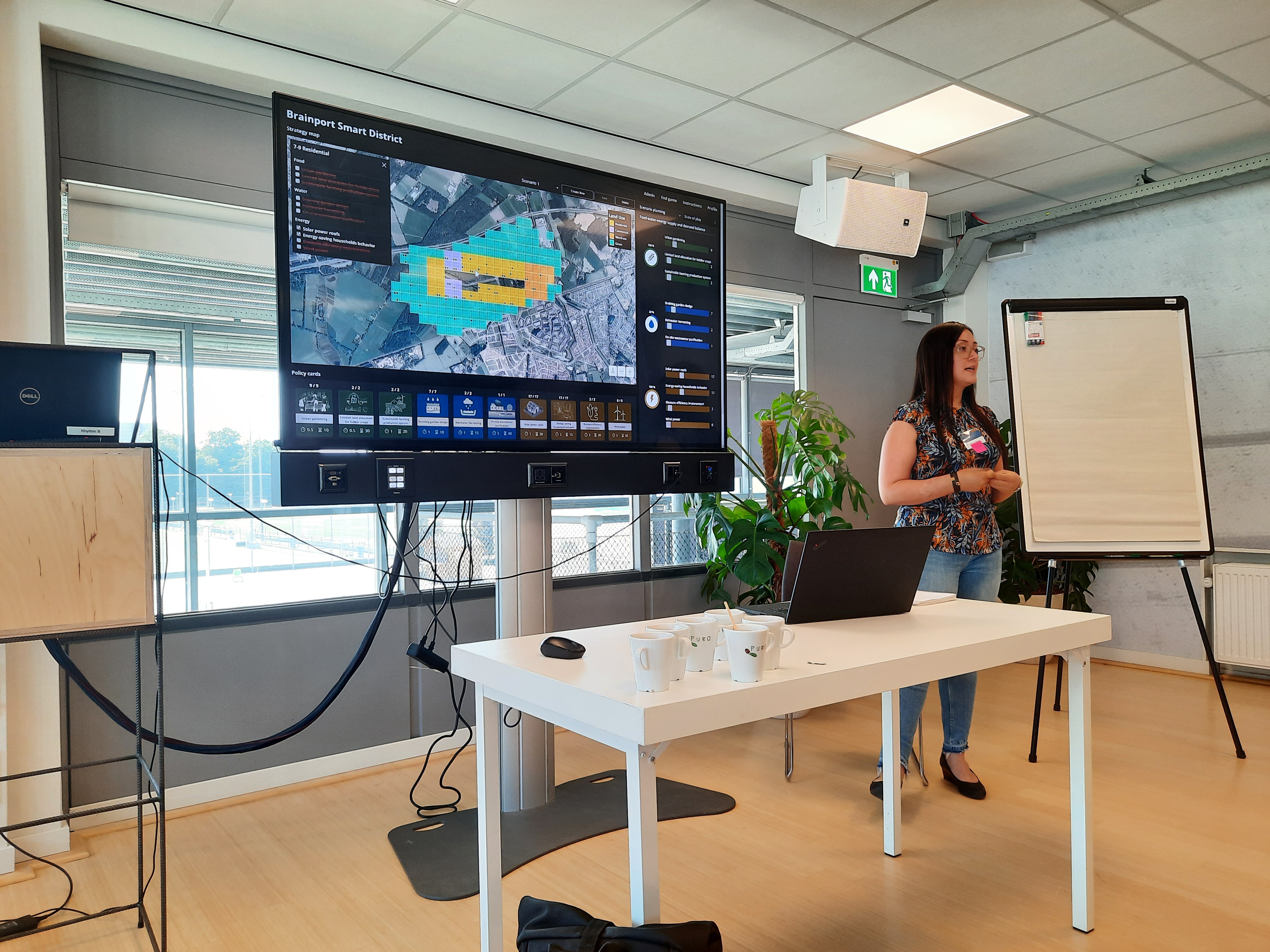
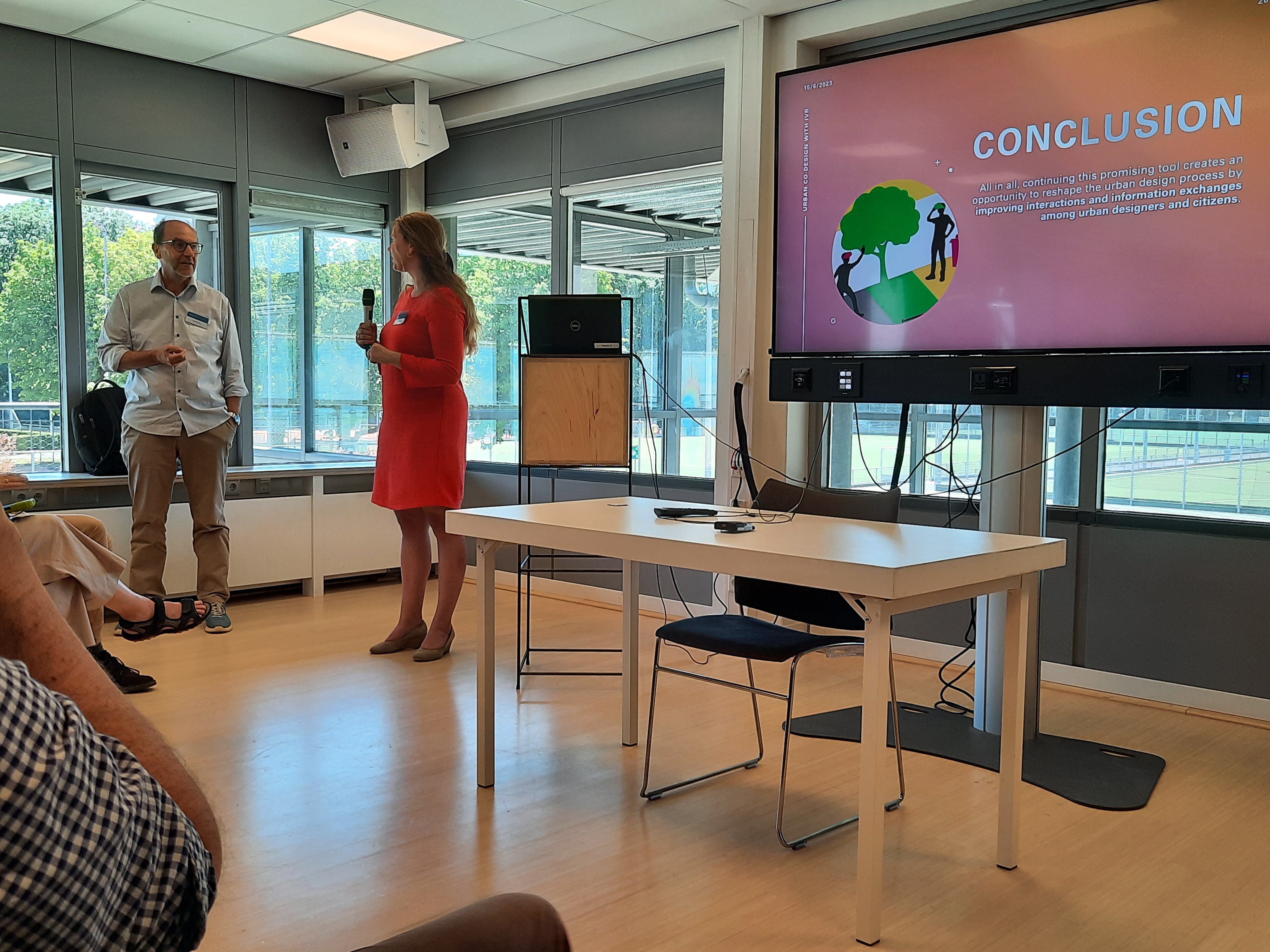
Presence at the AGILE 2023 Conference with a workshop and a presentation
During the AGILE (The Association of Geographic Information Laboratories in Europe) Conference 2023 that took place between 13 and 16 June in Delft, I was present with
– a workshop on “Digital Serious Games: Toward a Design Framework” organized by Gamze Dane (TU/e), Maryam Ghodsvali (TU/e), and Alexander Klippel and Jiayan Zhao (WUR GRS Lab). The aim of the workshop was to start a discussion toward a design framework for (Spatial) Digital Serious Games (DSGs) – a playful and engaging mode of digital twins – that deal with the complexity of spatial decision-making, by gathering a scientific community that can provide feedback on accessibility, adaptability and reusability of data, game mechanics and visualization techniques of DSGs.
During the interactive workshop with discussions, we also had presentations of DSGs from
- Harald Warmelink (BUAS) with Maritime Spatial Planning Challenge,
- Pirouz Nourian (UTwente) with GoDesign and EquiCity ,
- Maryam Ghodsvali (TU/e) with Spatial Nexus Optimization Game (SNOG).
The immense input we gathered while preparing and during the workshop will be summarized and shared soon.
– a presentation of our short paper “Designing healthy public spaces: A participatory approach through immersive virtual reality“, authored by Evers, S., Dane, G., et al. was done. The session chaired by Robert Weibel was lively with interesting presentations and an engaged large audience. Our paper can be accessed here.
Update: 15/06/2023
Our former PhD researcher Maryam Ghodsvali has been nominated for “Best PHD Thesis Award” at Eindhoven University of Technology!
Maryam Ghodsvali has been nominated for the prestigious ‘Best PhD Thesis Award 2023’ at Eindhoven University of Technology, with her work “A Transdisciplinary Decision-Making Approach to Food-Water-Energy Nexus: A Guide towards Sustainable Development”.
In her PhD research, Maryam developed a digital serious game called “Spatial Nexus Optimization Game (S.N.O.G.)” that supports a variety of stakeholders in the decision-making process of Food-Water-Energy nexus spatial interventions. Maryam’s PhD research was supervised by me (Gamze Dane) and Bauke de Vries.
Update: 08/06/2023
Presentation of CoHeSIVE project at the EAISI Health Theme Meeting
On June 5th, I presented the EWUU-funded CoHeSIVE project which aims to support citizen participation through an immersive virtual reality (VR) application for the design of healthy public spaces. The presentation contributed to the regular activities of the Eindhoven Artificial Intelligence Systems Institute (EAISI) Health Theme.
The CoHeSIVE project has investigated how an Immersive VR tool can be developed with people and for people and can be used for participatory design processes of healthy public spaces.
Update: 08/06/2023

Bruno Ávila Eça de Matos successfully defended his EngD thesis
On May 15th, Bruno defended his thesis “Digital Twins for Cities” and successfully received his EngD degree. In his EngD thesis, Bruno looked into the emerging concept of “Urban Digital Twins (UDTs)” which are digital replicas of physical, social, and environmental processes in cities, and, UDTs are used for monitoring, simulation, and management of urban environments. Bruno made an assessment of UDT cases around the globe in terms of their maturity level, use cases, and openness. Furthermore, he developed a guideline for creating and implementing digital twins of cities.
His EngD thesis was a collaboration with the company GeoDan (specialized on GIS & Digital Twins). Bruno was supervised by me (Gamze Dane), Bauke de Vries and Tom van Tilburg. His thesis can be accessed from here.
Update: 08/06/2023


Presented 2 projects at NWO ICT.Open 2023 Conference
We joined NWO ICT.Open 2023 Conference on 20 April for presenting two research projects.
Suzan Evers and I made a demo presentation of our CoHeSIVE app, an Immersive Virtual Reality application developed for the participatory design of public spaces. We were also happy that our demo presentation was nominated for the best demo award as one of the nine selected demos out of 29.
Maryam Ghodsvali made an oral presentation of a part of her Ph.D. project “Spatial Nexus Optimization Game (S.N.O.G.)” supervised by me and Bauke de Vries. S.N.O.G. is an online serious game that supports a variety of stakeholders in the decision-making process of Food-Water-Energy nexus spatial interventions.
Update: 22/04/2023


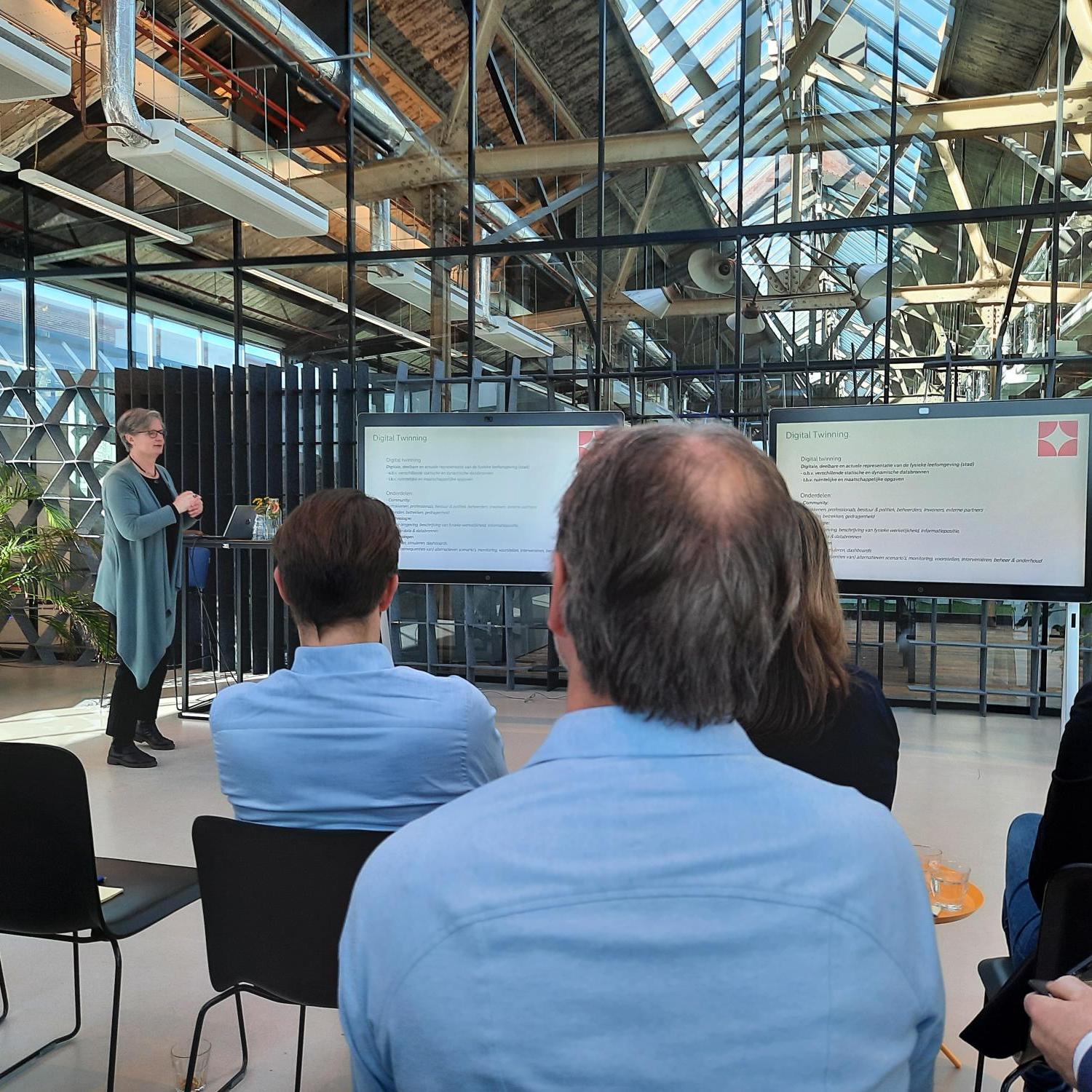

EU-funded Dutch Societal Innovation Hub (DSIH) project kicked off in Rotterdam!
DSIH project funded by the Digital Europe Program of the European Commission and the Dutch Ministry of the Interior, aims to help cities and regions with major societal transformations using innovation, digitization and new technology. For that purpose, it focuses on Digital Twinning and Urban Platforms and their use for Sustainable, Safe and Healthy Cities by creating a multiple helix ecosystem where citizen participation is the center of attention.
DSIH is led by 2 public organizations (VNG and IPO), representing local and regional players, and 5 private parties that focus on the needs of public services, namely: Brightland Smart Services Campus, Data and Knowledge Hub Healthy Urban Living, Digicampus, Municipality of Rotterdam and the Urban Development Initiative (UDI). Each party brings its own experience from existing projects, test and experimentation facilities and a decentralized public-private network.
TU/e is involved in the project as a founding partner of UDI and is represented by Dena Kasraian and myself.
Update: 07/04/2023

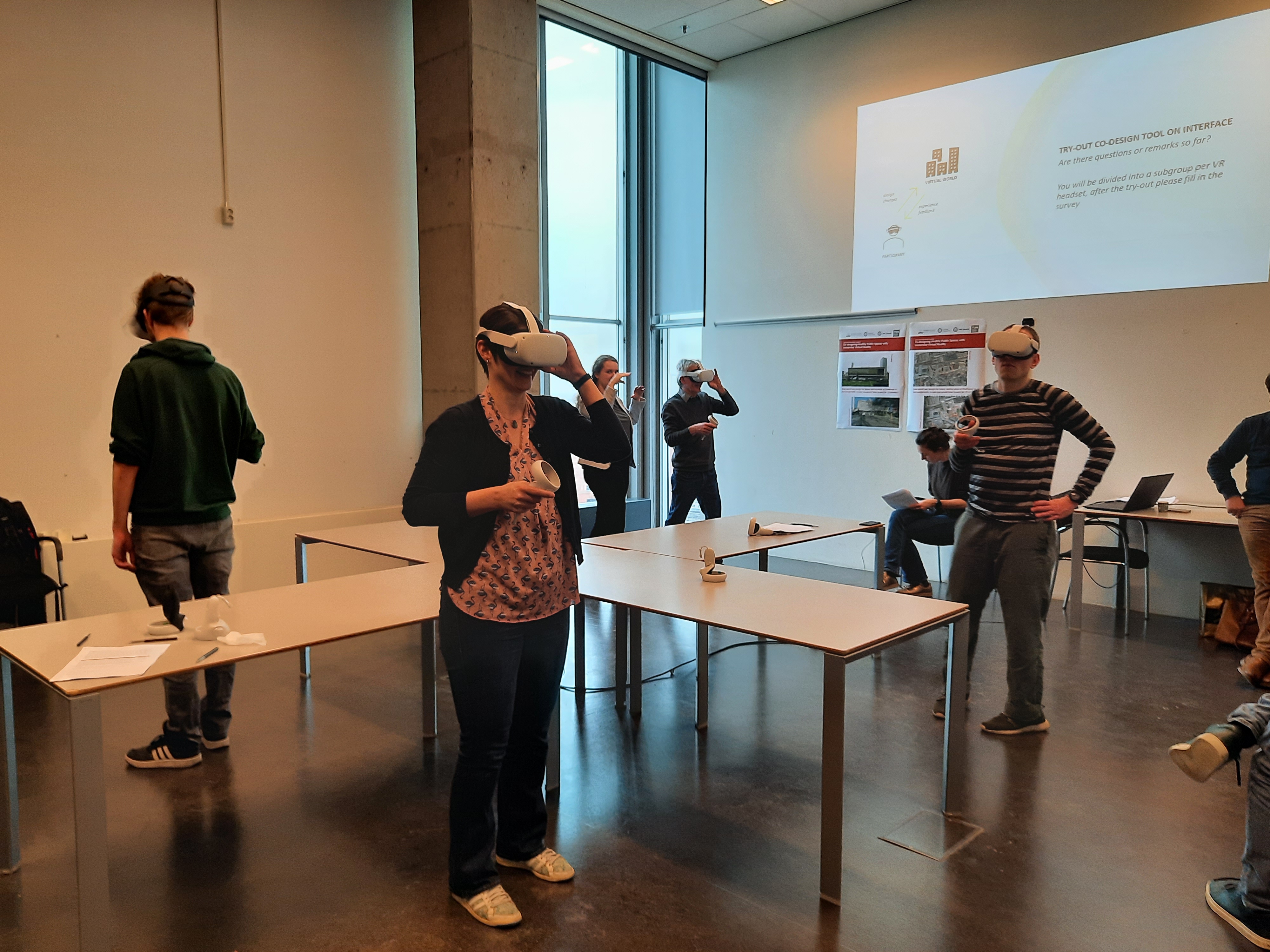
3rd Workshop of CoHeSIVE Project was held
On March 22, we held the 3rd workshop of CoHeSIVE (Co-designing Healthy Public Spaces via Immersive Virtual Environments) project.
During the workshop, we tested our CoHeSIVE app, an Immersive Virtual Reality application developed for the participatory design of public spaces. It aims to support participatory design processes by allowing users to explore, create and discuss different design options for healthy public space design. We hosted 30 participants in order to test the app and its use for participatory design. It was great to have a diverse group of participants from academia, municipalities, citizen initiatives, and design companies. We co-created ideas to further investigate and develop the application.
Update: 22/03/2023

PhD researcher Benshuo Wang successfully defended his thesis on 30 November!
On 30 November, Benshuo Wang defended his Ph.D. thesis on “Increasing awareness of urban cultural heritage using digital technologies: Empirical design and analysis of a new multi-media web platform“, supervised by Dr. Gamze Dane and Prof. Dr. Theo Arentze. The thesis addressed two shortcomings: (i) Existing ICT platforms for cultural heritage are usually developed without explicitly considering potential users’ preferences on content, media types and functionalities offered, (ii) It is not thoroughly researched to what extent the dedicated ICT platforms developed for cultural heritage sites fulfill their intended purposes (increasing knowledge, awareness and experience). To fill these research gaps, the objective of this thesis was to design and test a dedicated multi-media web platform prototype and analyze the effectiveness of such a platform to enhance experiences and increase the public’s awareness of cultural heritage. Congrats Benshuo!
Update: 30/11/2022

Seminar at Urban Analytics Lab of the National University of Singapore (NUS)
On 25 November, I gave a seminar at the Urban Analytics Lab (UAL) of NUS, on my current research interests under the title of “The Role of Digital Tools and Data for Citizen Engagement and Participatory Planning“. My talk covered the topics of (i) developing and applying digital tools and citizen science methods for supporting public participation and citizen engagement in urban transformation processes, (ii) performing urban (big) data science within people as sensors concept for understanding and predicting citizens’ behavior, opinions and experiences towards urban interventions. Many thanks to Filip Biljecki and Marcel Ignatius for hosting me.
Update: 28/11/2022
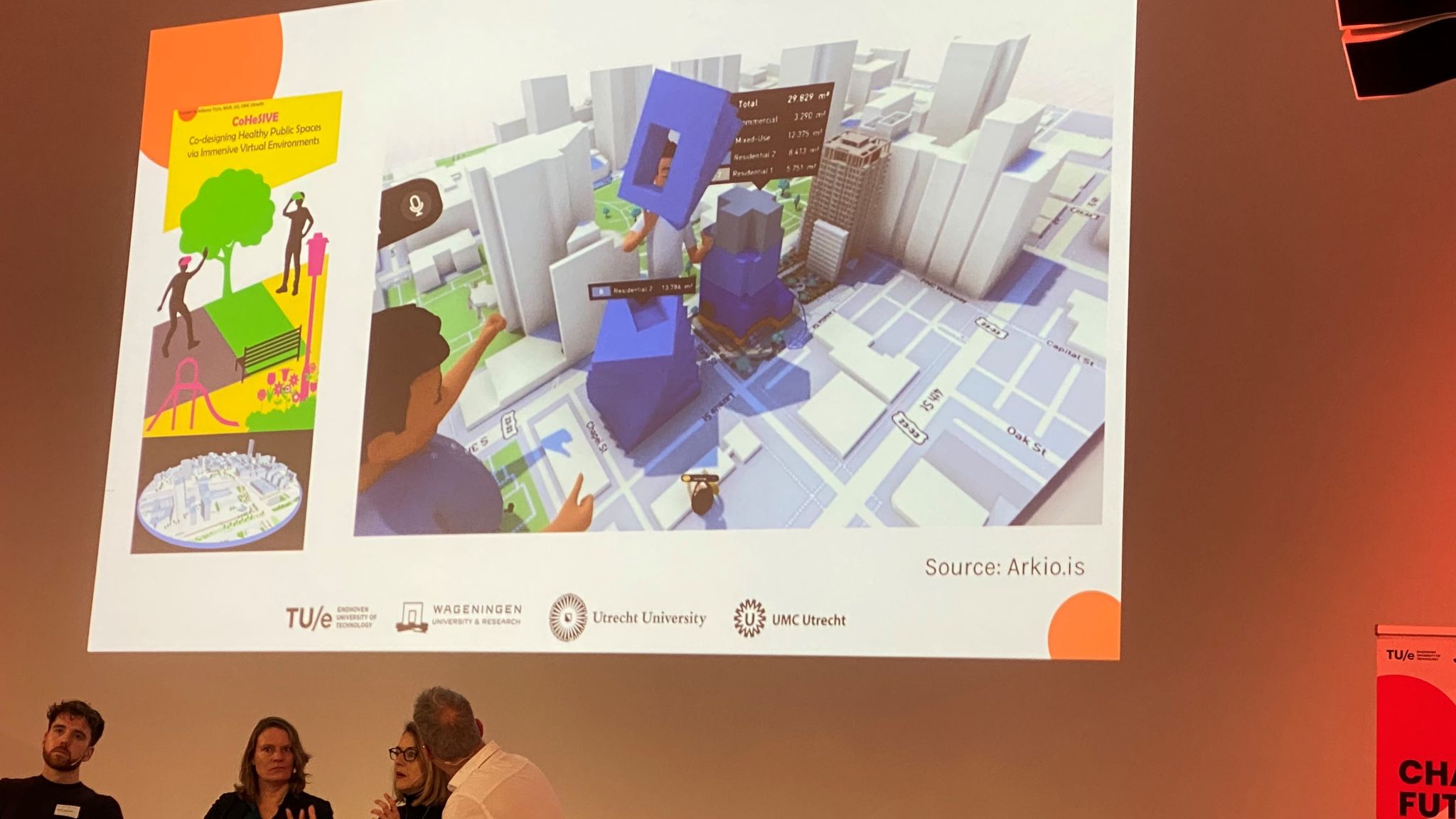

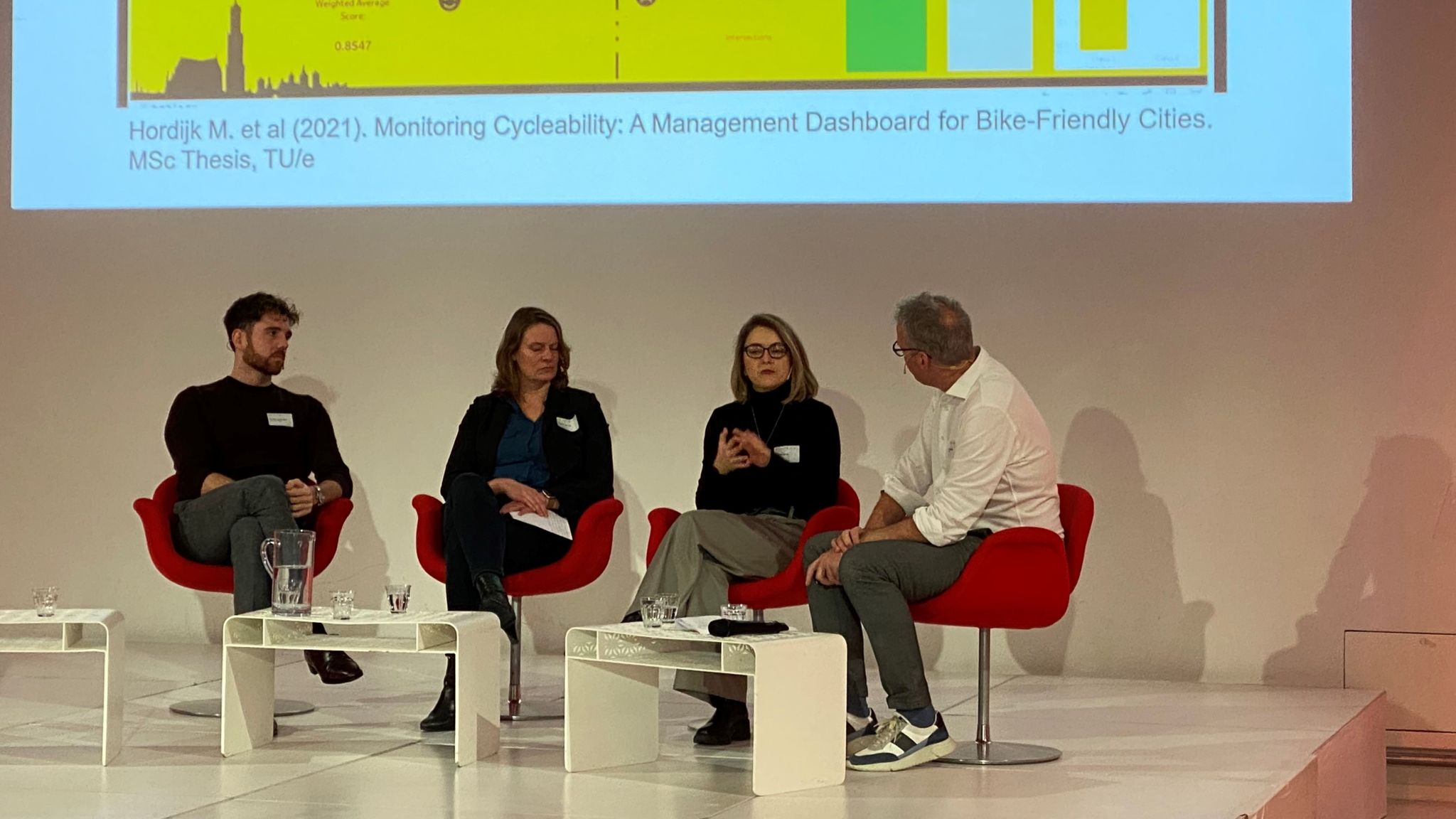
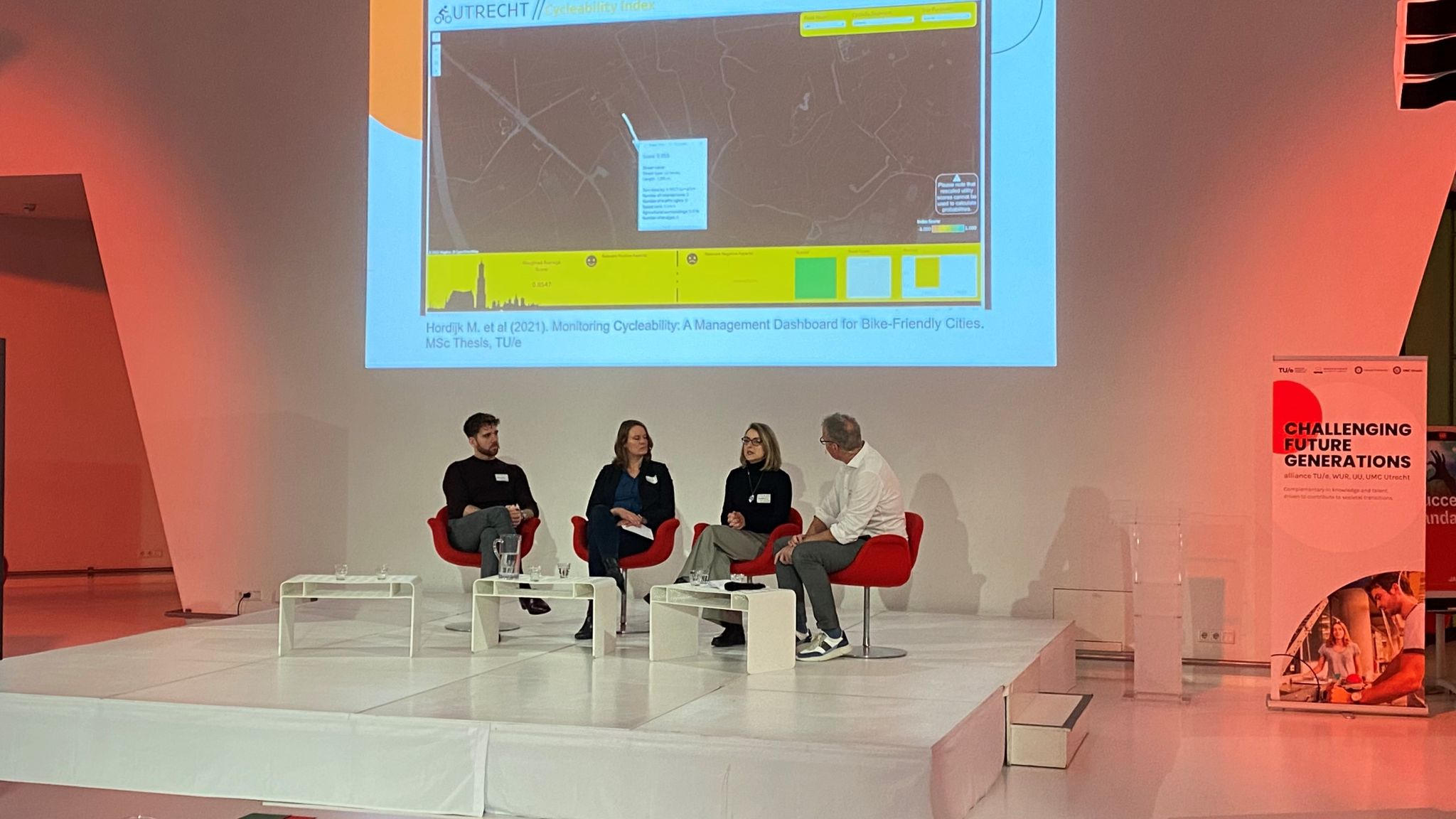
Joined as a panelist to the “Co-shaping future cities: towards a healthy environment” discussion at Preventive Health Conference
On 23 November, I joined as a panelist in the “Co-shaping future cities: towards a healthy environment” discussion at Preventive Health Conference organized by the EWUU alliance. During the panel discussion, I brought my perspective on how digital tools (such as digital twins) and urban data can support active behavior and healthy urban environments.
Update: 28/11/2022

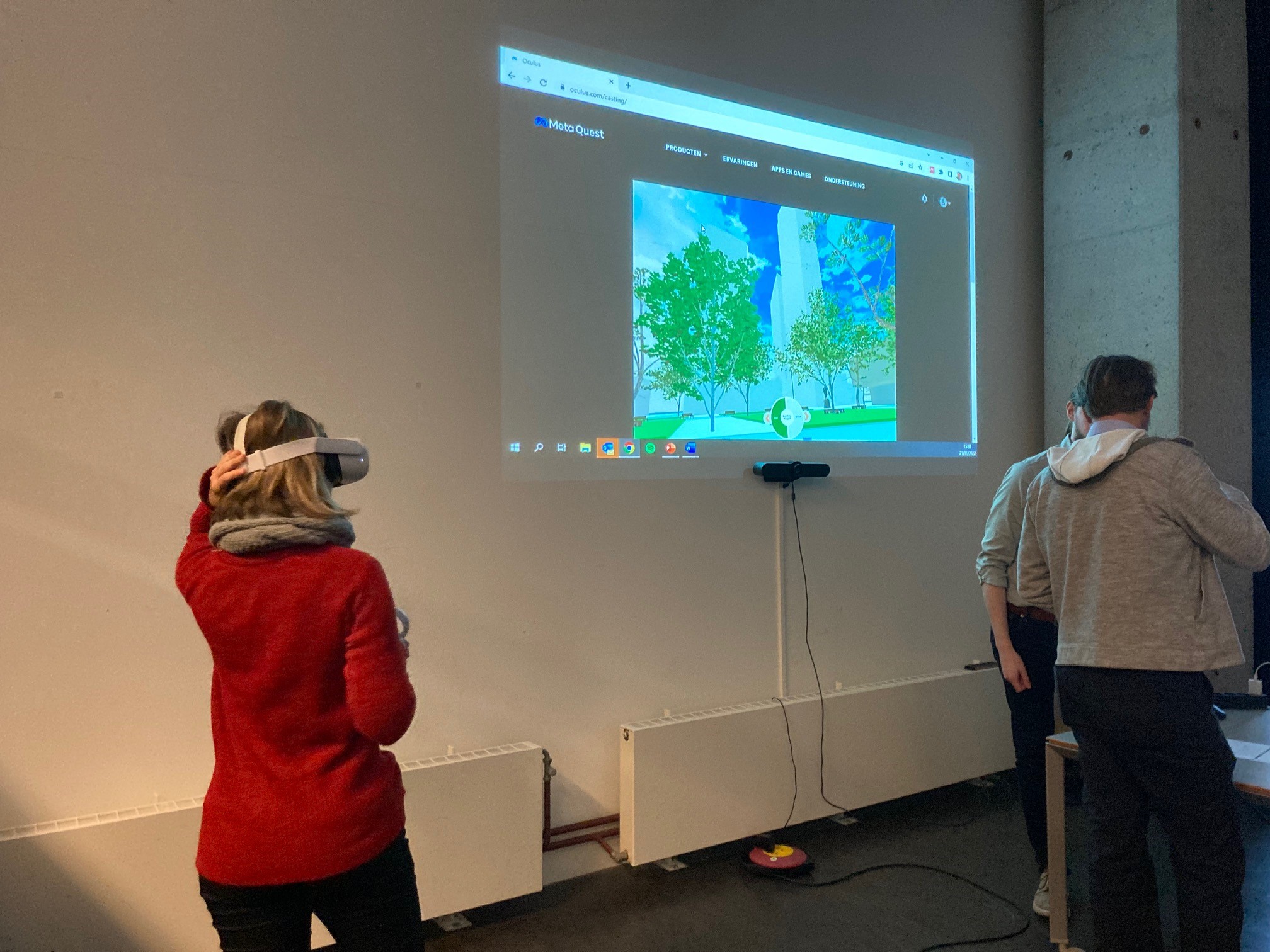

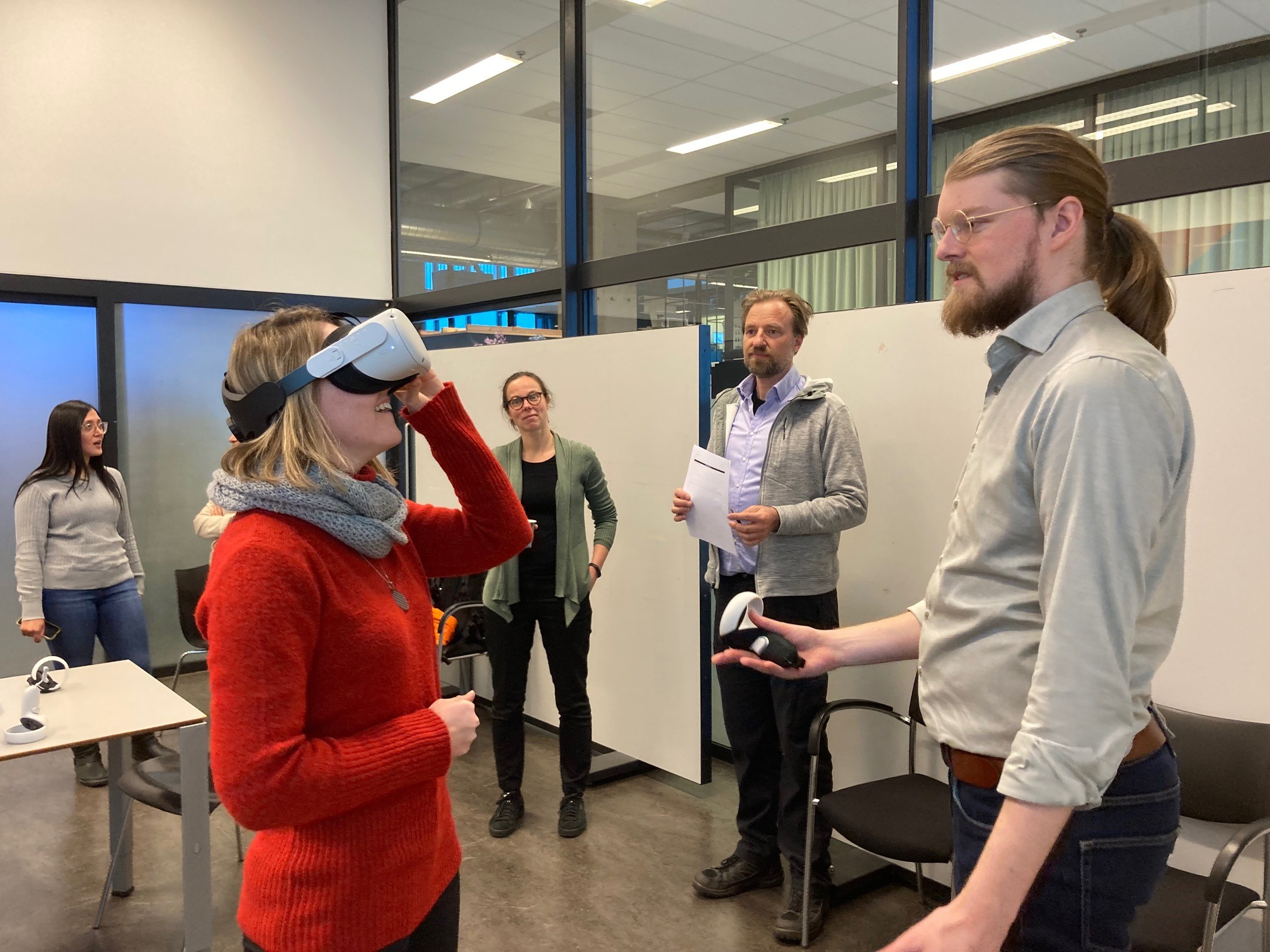
2nd Workshop of CoHeSIVE Project was held
On 21 November, we (with Suzan Evers and Pauline van den Berg) organized the 2nd workshop of CoHeSIVE (Codesigning Healthy Public Spaces via Immersive Virtual Environments) project funded by alliance TU/e, WUR, UU, UMC Utrecht (EWUU). In this workshop, with 20 participants, we evaluated the first prototype of the developed codesign tool and discussed possibilities to further enhance it. We look forward to the next steps. Many thanks to our colleagues from WUR (Alexander Klippel, Timon Verduijn, Orkun Cagri Tekeli) and UMC (Yvonne Vendrih – de Punder) for the pleasant and fruitful collaboration.
Update: 22/11/2022

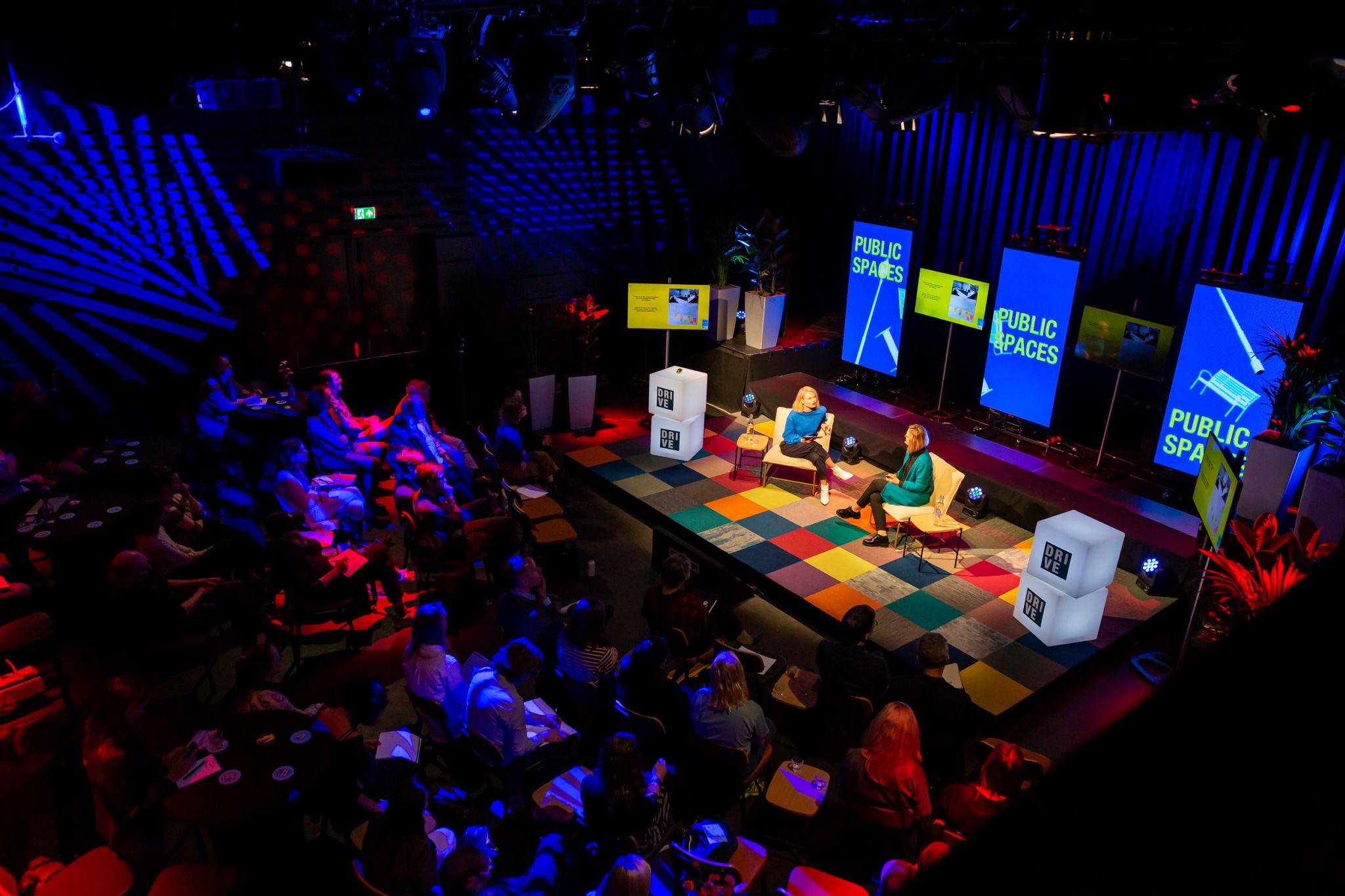
Talked about Public Space Design at DRIVE Festival during Dutch Design Week 2022
On 25 October, at DRIVE Festival during Dutch Design Week 22, I talked about our recent research on the impact of public space design on citizens’ well-being and how digital tools can help to integrate citizens into public space design. The recording of the livestream can be watched here.
Update: 27/10/2022
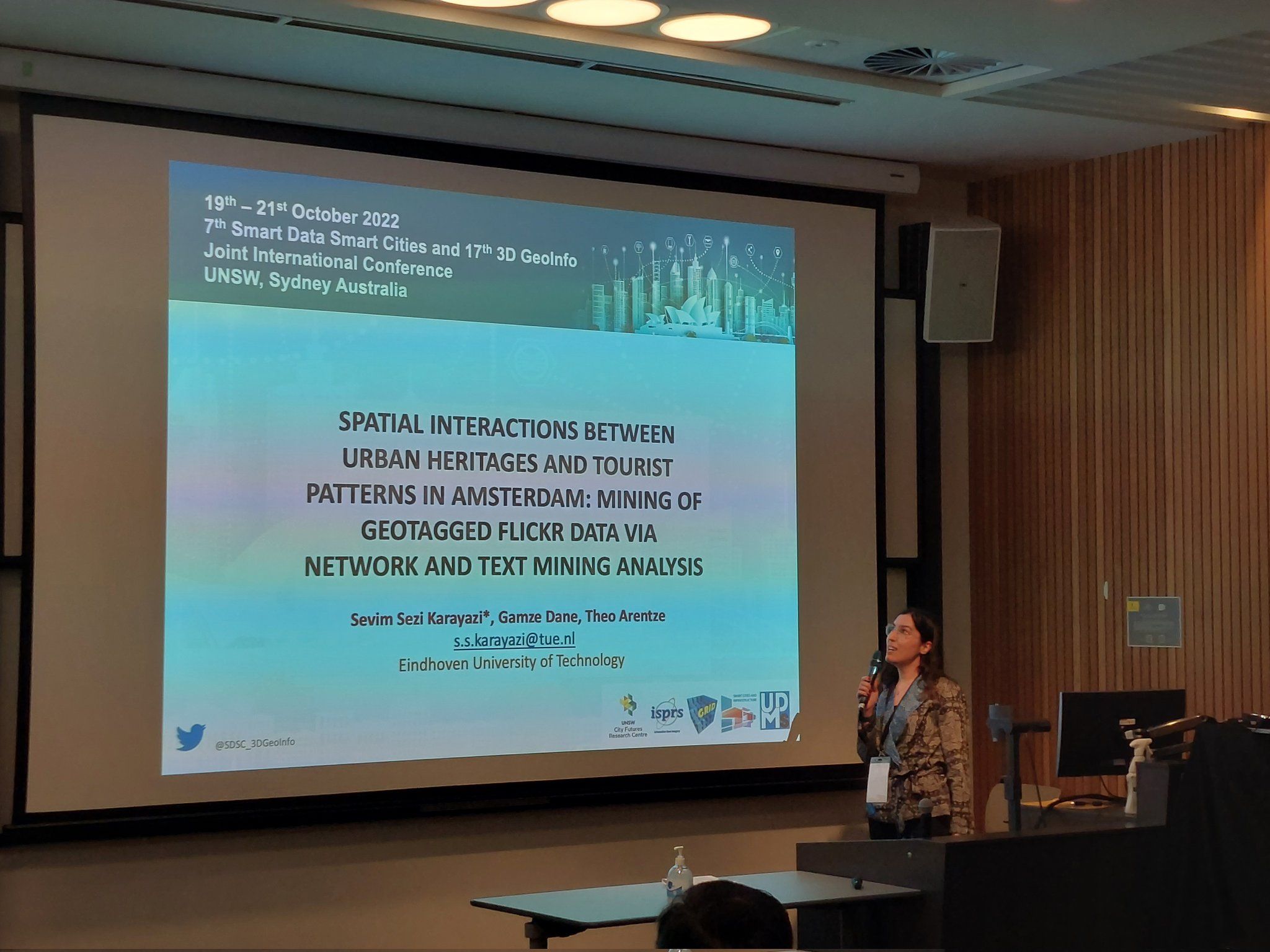

Ph.D. researcher Sezi Karayazi presented her work at 7th Smart Data Smart Cities & 17th 3D GeoInfo Joint International Conference
Ph.D. researcher Sezi Karayazi was at the 7th Smart Data Smart Cities & 17th 3D GeoInfo Joint International Conference at UNSW Sydney Australia, where she presented our work “An Exploration of Interactions Between Urban Heritages and Tourist’s Digital Footprint: Network and Textual Analysis via Geotagged Flickr Data in Amsterdam”. If you wish to explore how we utilized the social media data for overtourism issue, you can access the paper here: https://lnkd.in/eWkb7gPm .
Update: 27/10/2022
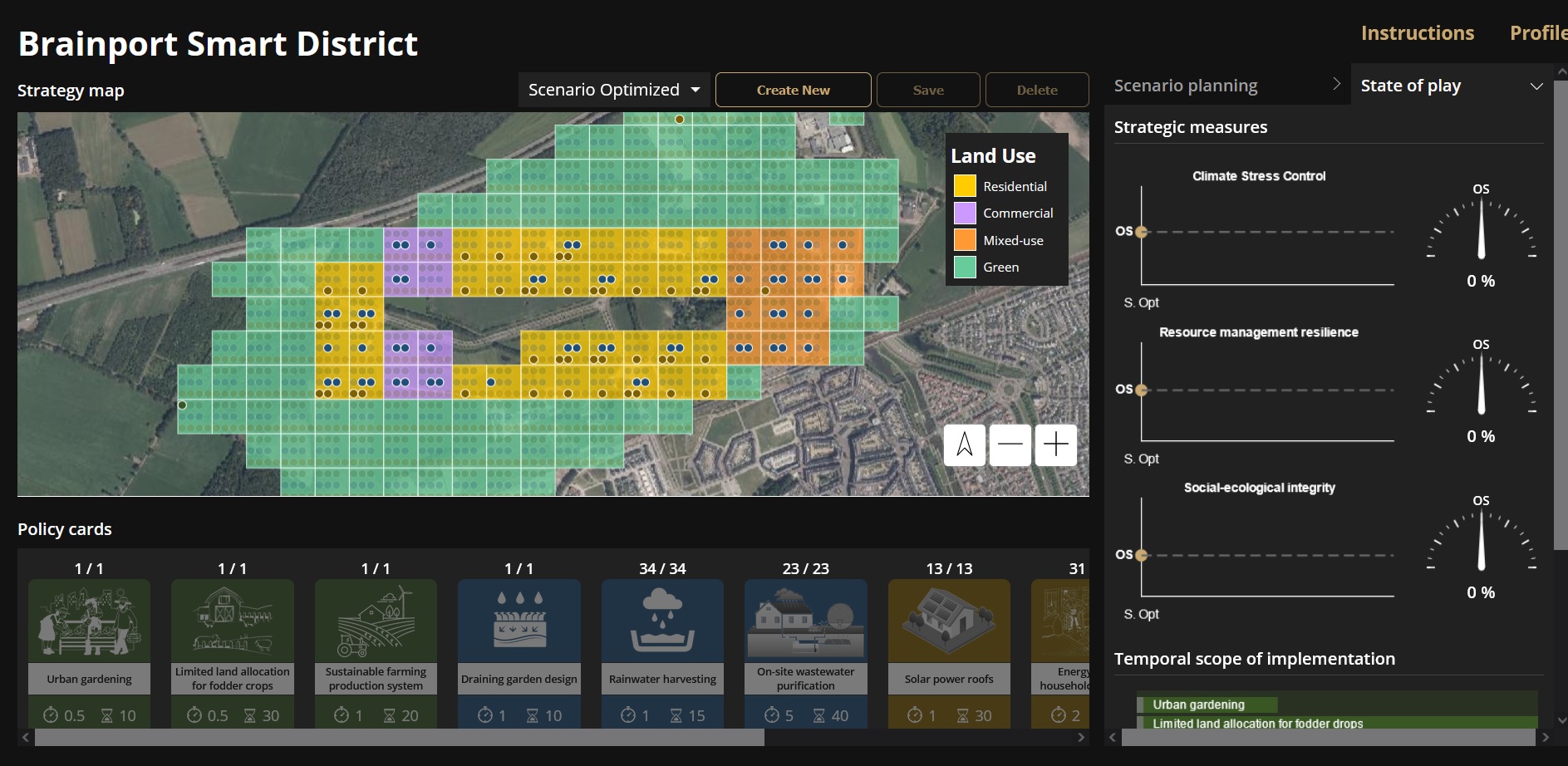
New paper on “An online serious game for decision-making on food-water-energy nexus policy”
Have you ever thought of serious games as effective means of decision-making for urban developments? In this new paper led by Maryam Ghodsvali, we developed a serious game, namely S.N.O.G., for integrated decision-making on food-water-energy resource management. In S.N.O.G., the problem is divided into manageable interventions (i.e., policies) expressing the ground situation spatially in order to allow players to learn by doing. In an interactive and entertaining way, players learn about the complex interplay of the multiple disciplines that need to be integrated in order to properly manage the resources and subsequently the environment and the society. Find the full article here.
Update: 27/10/2022

Joining Talk Show at the Design Research & Innovation Festival
On 25 October, I will speak at the Design Research & Innovation (DRIVE) Festival. My talk will be about our recent research on the impact of public space design on citizens’ well-being and how digital tools can help to integrate citizens into public space design. DRIVE Festival which is organized by CLICKNL and 4TU.Design United, will take place in De Effenaar and streamed online, during the Dutch Design Week in Eindhoven. You can sign up here.
Update: 01/09/2022

A Visit to “WANDER Lab” at Wageningen University
As the CoHeSIVE project team, we visited our partner WANDER Lab of Wageningen University. WANDER Lab develops 3D visualizations and immersive experiences (i.e. #VR, #AR, #XR, #webplatforms) for content-driven researchers. It was great to experience all the immersive tech tools with interesting use cases and to brainstorm about CoHeSIVE’s tool. Looking forward to a more intense collaboration.
Update: 04/08/2022

A Visit to “Experience Lab” at Breda University
As a small group of researchers from TU/e, we were invited to visit the Experience Lab at Breda University and their guest lecturer Dr. Amit Birenboim from the Hebrew University of Jerusalem on 7 July. We had a fun and fruitful day with discussions on experiencing the built environment, lectures on the use of digital tools for measuring experiences, and experimenting with the lab toys (#VR, #skinconductance, #EEG, etc.). Looking forward to our further collaborations.
Update: 08/07/2022

First Workshop of CoHeSIVE project
First workshop of CoHeSIVE (Codesigning Healthy Public Spaces via Immersive Virtual Environments) project was conducted online on 6 July. This workshop focused on identifying the attributes and characteristics of health-stimulating public spaces. The workshop enabled discussions on good/bad public space practices, and future public space design of Eindhoven Station area (case are of CoHeSIVE project). The attendees were representing a citizen initiative from Eindhoven, UDI, the municipality of Eindhoven and TU/e.
Update: 08/07/2022
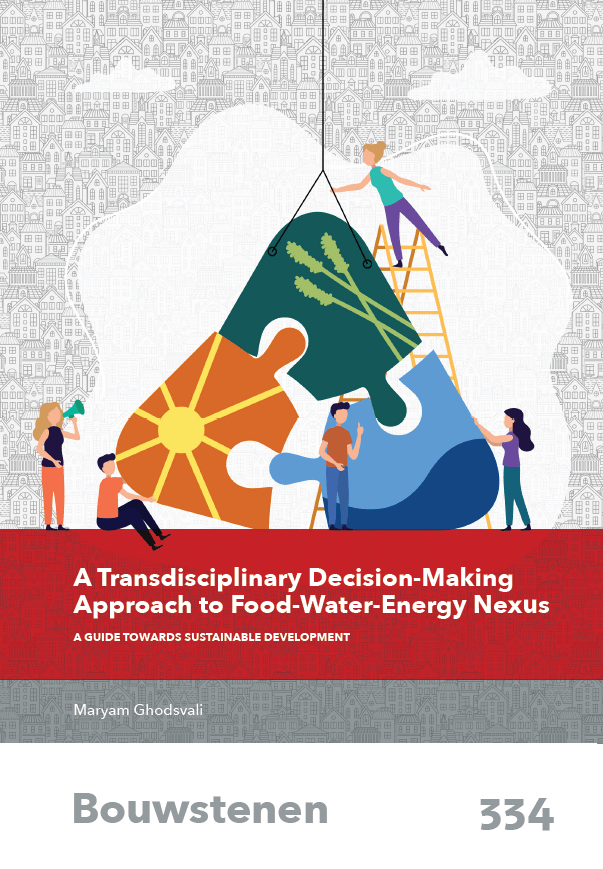
Ph.D. Maryam Ghodsvali defended her thesis successfully on 5 July 2022!
Maryam Ghodsvali successfully defended her Ph.D. thesis titled “A transdisciplinary decision-making approach to food-water-energy nexus: A guide towards sustainable development” on 5 July. This PhD research approached transdisciplinary decision-making problem for the food-water-energy nexus in four steps: (1) understanding key drivers for an integrated…
Update: 08/07/2022

New Project! CoHeSIVE: Co-designing Healthy Public Spaces via Immersive Virtual Environments
Co-designing Healthy Public Spaces via Immersive Virtual Environments (CoHeSIVE) has been funded by the EWUU alliance. CoHeSIVE aims to develop a co-design methodology that considers place-specific attributes, the variety of user groups, and their needs via the immersive virtual environment (IVE) technology and citizen-centric data.
Update:20/05/2022
Ph.D. researcher Sezi Karayazi received the ISPRS travel award
Ph.D. researcher Sezi Karayazi has won the IJGI 2022 Travel Award granted by the ISPRS International Journal of Geo-Information (IJGI) for her project.
Update: 11/05/2022

Ph.D. researcher Maryam Ghodsvali is at International Conference on Water-Energy-Food Nexus
Ph.D. researcher Maryam Ghodsvali will host a discussion table at International Conference on ‘Water-Energy-Food Nexus in Cities’ on May 12 in Almere, the Netherlands. She will also present the online serious game she developed for Water-Energy-Food nexus spatial optimization in Brainport Smart District in Helmond, the Netherlands.
Update:11/05/2022
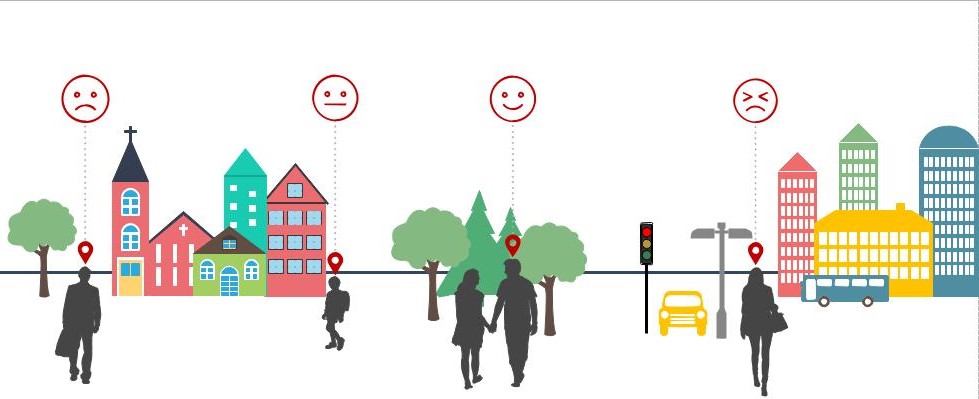
Special Issue 2nd Edition: Experiencing the City is now open
The 2nd edition of the special issue on Experiencing the City: The Relation between Urban Design and People’s Wellbeing at the International Journal of Environmental Research and Public Health is now open until 31 July 2022.
Update:05/11/2021
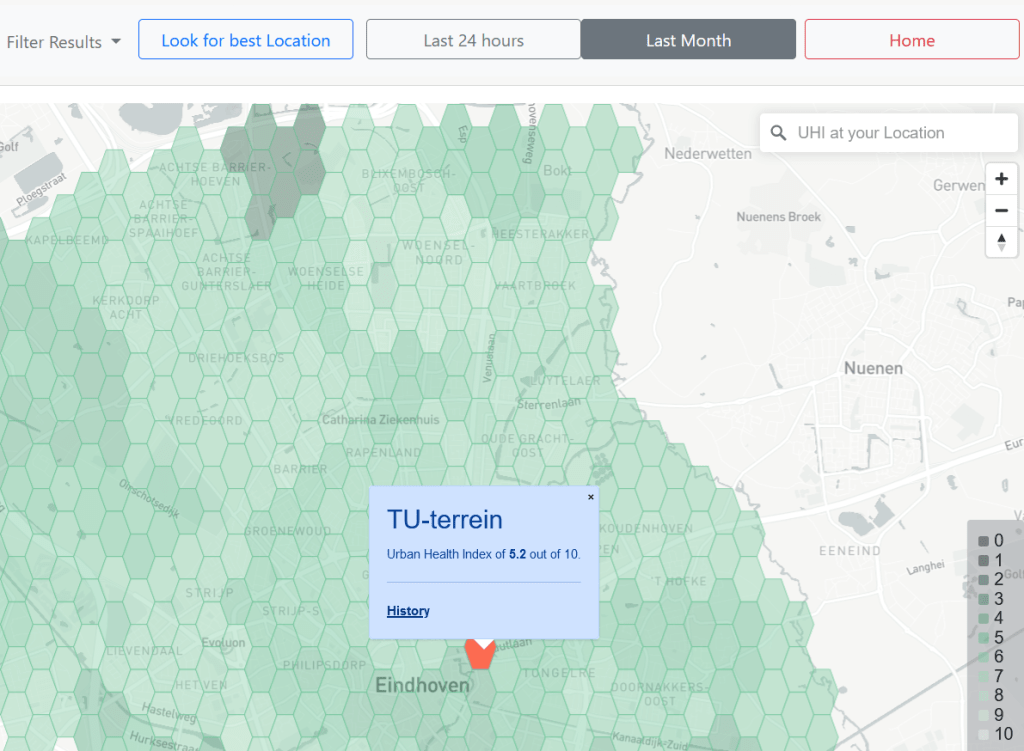
Sander de Meij’s master graduation project is at Dutch Design Week 2021
Student Sander de Meij’s master’s graduation project, which I supervised together with Milos Viktorovic, has been selected for the Dutch Design Week 2021 Drivers of Change Exhibition. In his project, Sander developed a web tool that provides a location-based health index…
Update:05/11/2021
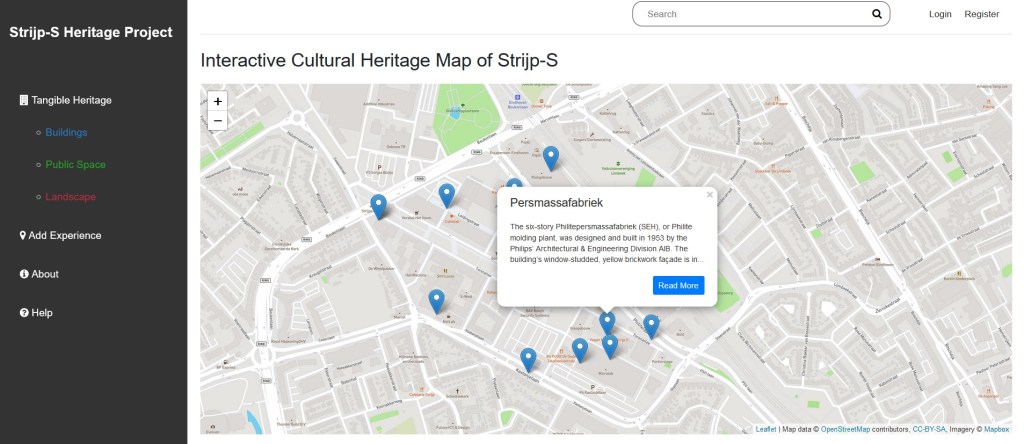
“Interactive Cultural Heritage Map of Strijp-S” has been launched
Interactive Cultural Heritage Map of Strijp-S”, a new digital resource for exploring the heritage of Strijp-S district in Eindhoven has been launched. This multi-media web platform can be accessed …
Update:05/11/2021
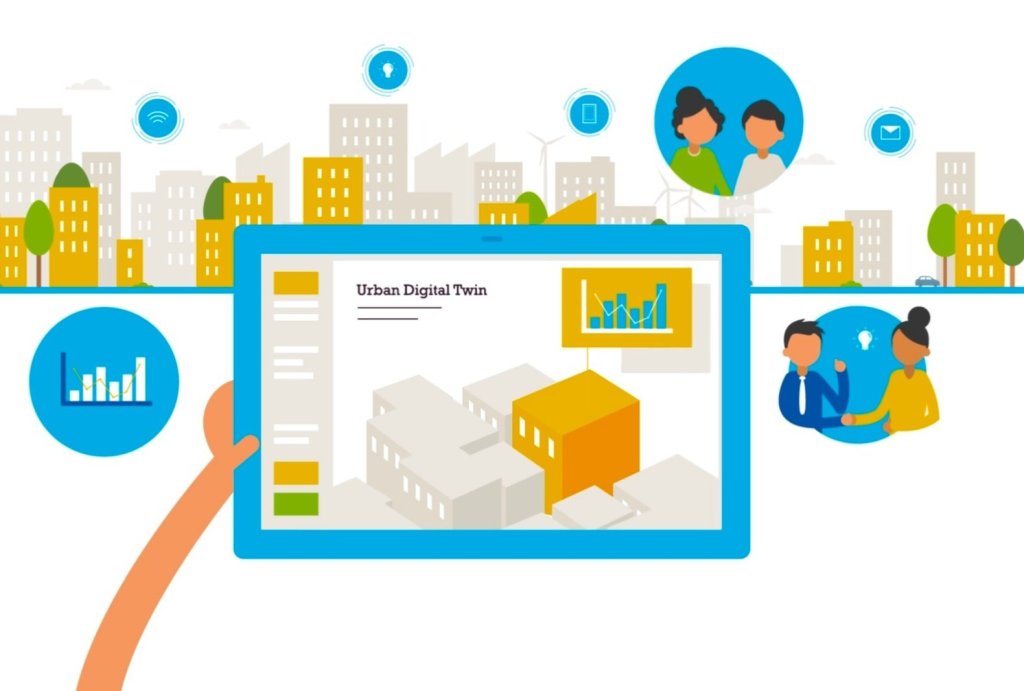
Urban Development Initiative (UDI)’s Digital City Program has been launched
Urban Development Initiative (UDI)’s Digital City Program has been launched in July 2021. This program focuses on citizen-centered and evidence-based urban planning and design with the support of digital tools such as digital twins, virtual reality, sensor applications and big (spatial) data analytics. In this program…
Update:05/11/2021
Boost! Project – Virtual TU/e Built Environment Community
Boost! Project “Virtual TU/e Built Environment Community” received funding in June, 2020. The project has been initiated by Dena Kasraian, Pieter van Wesemael and myself. The project aims to develop a digital…
Update:05/11/2021
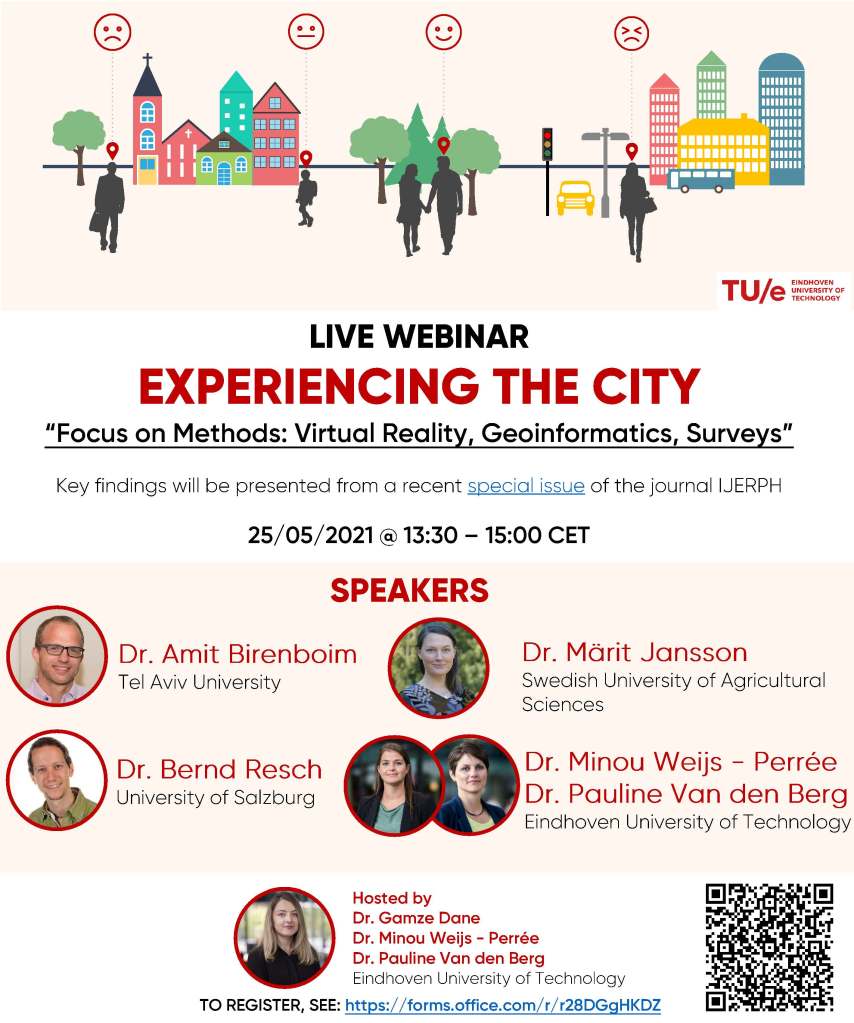
Webinar “Experiencing the City”
Webinar “Experiencing the City” was held on 25 May. The webinar focused on the questions “How do people experience the cities? and How can methods like #virtualreality, #geoinformatics and #surveys help to measure and quantify people’s experiences in cities?”. During the webinar, chaired by Gamze Dane, speakers Amit Birenboim,…
Update:05/11/2021

Citizen Science Experiment for Accessible Bologna
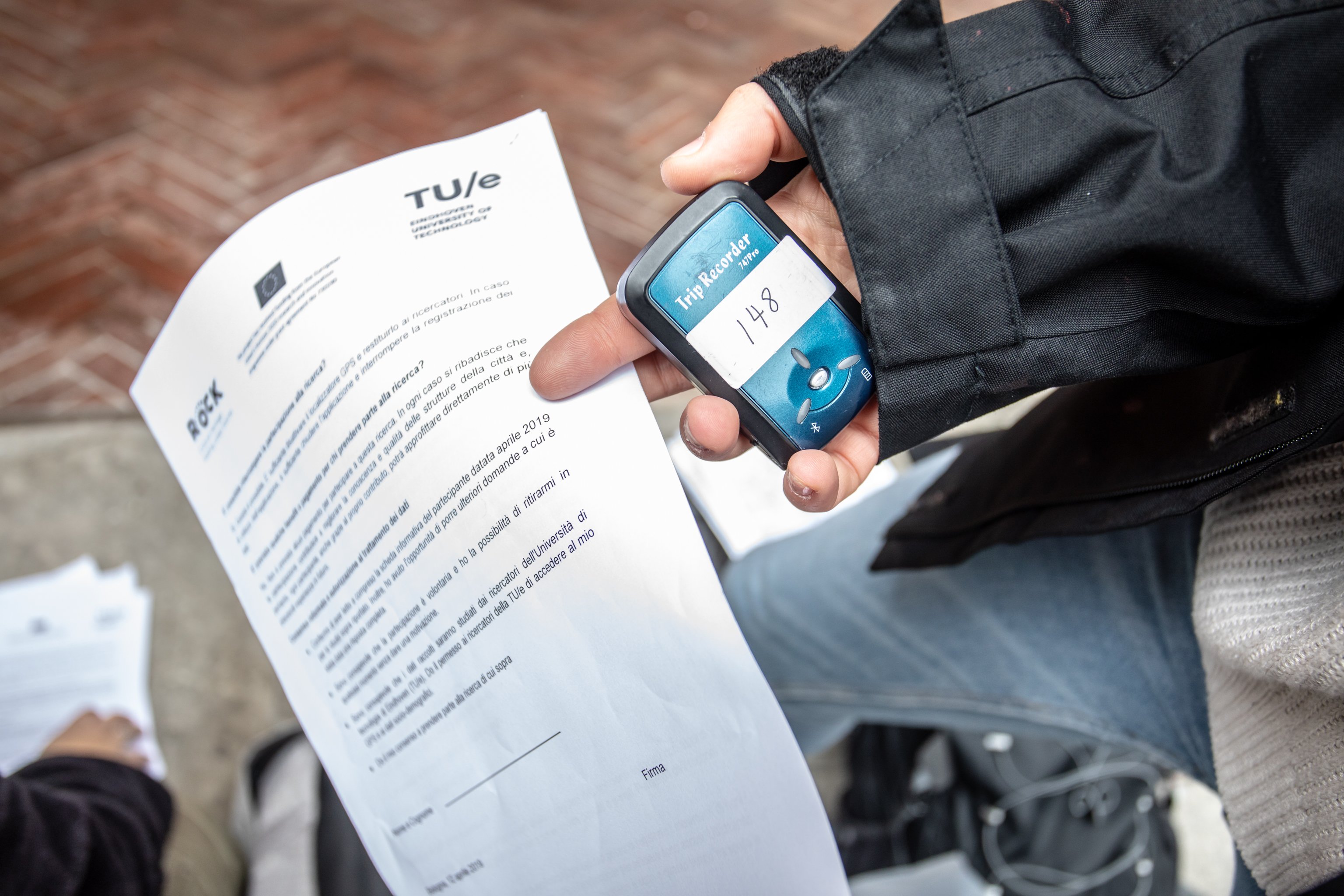
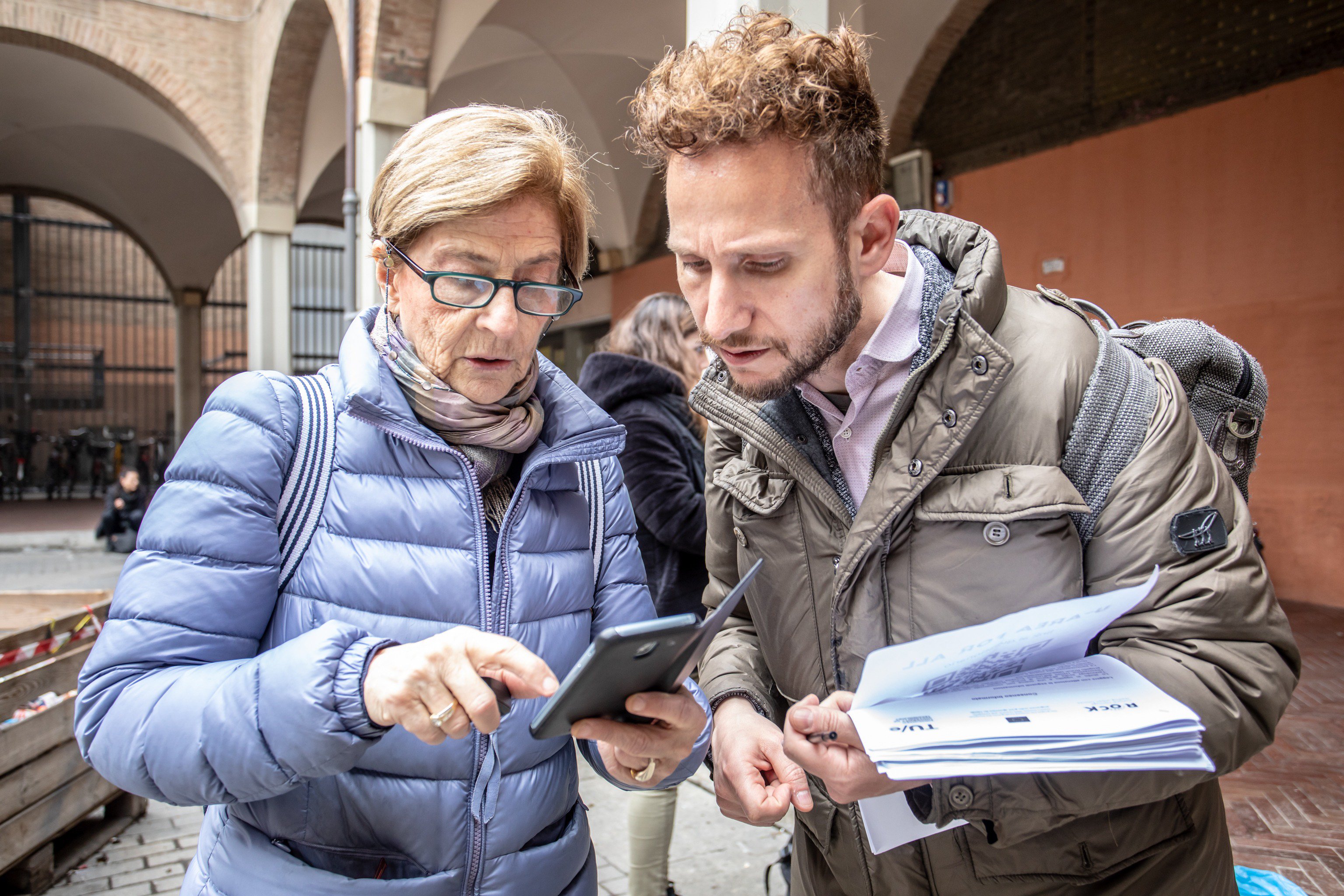
ROCK project TU/e team was in Bologna Living Lab, experimenting GPS-enabled participatory mapping with citizens in order to identify people’s flow, spatial barriers, and points of interest in the university area. Citizens joining the experiment were recruited via Bologna Living Lab and included a variety of socio-demographic backgrounds, e.g. vulnerable groups and students. Please check the video and the paper for more information.
Update:05/11/2021
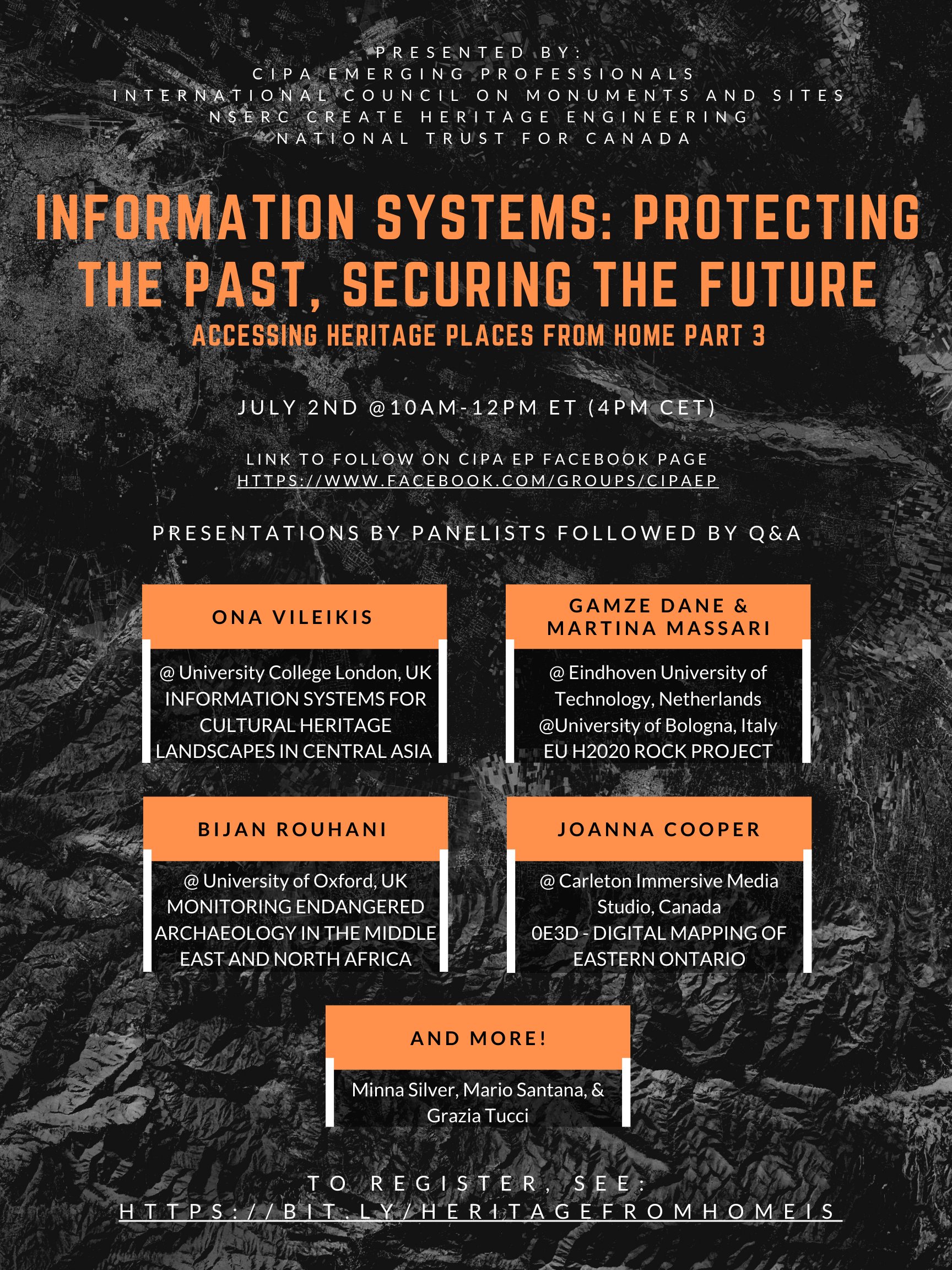
Gamze is at the webinar “Information Systems: Protecting the Past, Securing the Future”
On July 2, 2020, Gamze has joined the webinar “Information Systems: Protecting the past, securing the future” that was organized by ICOMOS and National Trust for Canada. Gamze, together with Martina Massari from the University of Bologna, has talked about the European H2020…
Update:05/11/2021

